

28.11.2025

A lawyer’s warning about modern marriages and the rise of authoritarian wives

A Malaysian lawyer shares eye-opening real cases of modern marriages where men continue providing financially yet live in fear, controlled by authoritarian wives. This GC analysis explores shifting gender dynamics, why traditional frameworks are collapsing, and what today’s men are quietly suffering behind closed doors.
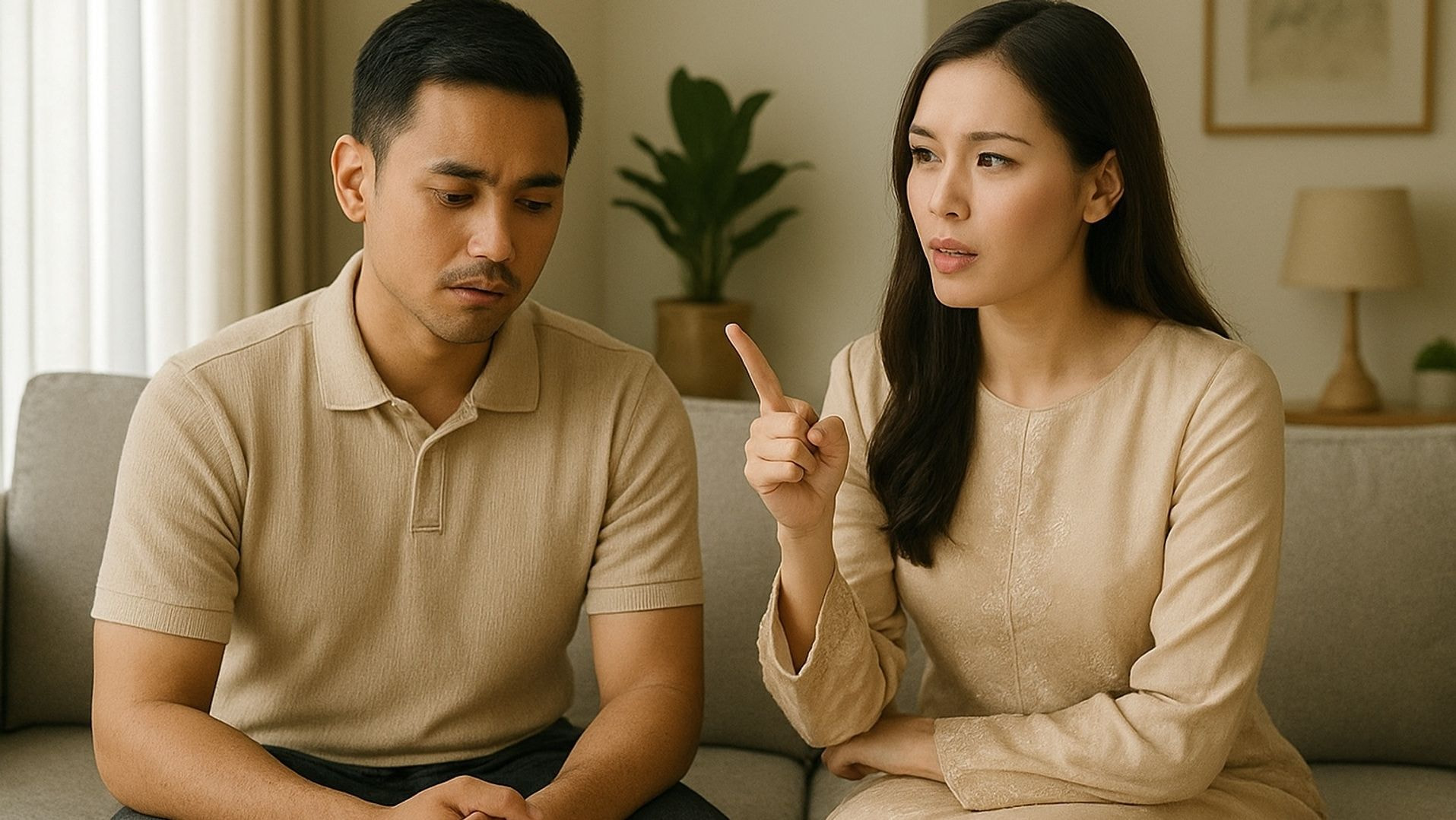
GC illustration.


Letter's Summary
In courtrooms across Malaysia, men fight criminals, defend corporations, and argue cases with steel nerves - yet many of these same men return home to something far more frightening: their own wives. Behind curated social-media smiles and the illusion of “modern equality,” a quiet crisis is unfolding. Men are still providing, still sacrificing, still carrying the financial weight… but instead of partnership, many now face surveillance, fear, and authoritarian control.

This is not the marriage our fathers knew - and according to one lawyer who has witnessed thousands of relationship cases, we are entering dangerous new territory.


Good day GC,

How are you? I have some observations which I think would be appropriate to share with you mainly because your content is heavily focused on a lot of current male issues and the most prevalent are matters regarding relationships. I am a lawyer by profession and I usually converse based on evidence. I have read some of the feedback on your site, especially the recent ones. Personally, there is nothing wrong with men preferring traditional marriage because it benefits them more than a modern marriage would. But your viewers have correctly pointed out the pain points of a modern marriage where we men continue to provide financial aid, like in the past, but today, while we continue to provide financial assistance/ aid, we lose all the benefits that we expect from a marriage.

The care from a woman, the softness of a woman, their virtuousness in short has completely vanished in today's modern world.

Frankly speaking, since my life revolves around the court and that the people within my circle are mostly lawyers and judges, divorce case alone in Malaysia was at 60,000 last year and that is based on what was reported. If you include unreported cases (e.g. the ones settled internationally), it warrants major attention. To aggravate the matter, those numbers do not include numbers from the Marriage Tribunal where the other party doesn't agree with the divorce settlement which such a process would take a long time to complete. That is another substantial number. How about the numbers coming from those that are unhappily staying in a broken down marriage? This is where I'd like to touch on because I have lawyers who are currently married but they are afraid of their own wives. Men who are older and physically bigger than their own wives yet they are afraid of them because they just don't want to get into a fight. Lawyers who have prosecuted criminals, thugs, drug addicts who are willing to interact with these thugs knowing that their safety is at risk......are afraid of their own wives. How can you comprehend that reality? They are not afraid of confronting criminals in court but they are afraid of their own wives.

Is it right for a man to be afraid of his own wife while he continues providing for the wife, he drives his wife around, he puts food on the table, yet he fears his own wife? What life is that? It just doesn't make sense for one to be in a marriage when you are in such a state but this is happening right in front of my own eyes.

You talk about marriage as a life long partnership which is something often raised in the court but the response we get is always one sided. I have known my colleague in the legal firm for 5 years whom I follow on social media. He puts up happy pictures with his wife on social media. They go here and there together and judging by their pictures, you would think that they could be in a happy marriage but unfortunately they are not. The more I get to know him, the more he shares with me his personal issues at home. He puts up happy photos on social media because he doesn't want people to know he is unhappy. But he is afraid of his wife because of her authoritarianism. He needs to seek her permission if he wants to stay back after work. He needs to periodically take a photo of who he is with. His car even has a tracker for her to verify his location. I never knew this at all until I became close to him. I had my suspicions at times because each time when we wanted to gather after work, he would always give the reason that he needed to go to the washroom. Unfortunately the washroom was just an excuse, he just didn't want others to see him calling his wife to seek permission. The way he asks his wife for permission goes beyond normal spousal communication about running late, it’s more like asking a superior for authorization. You might ask what led his wife to act like this. It wasn’t related to my colleague at all. He did nothing. Her friends, who tend to be wary of men, often told her to keep a close eye on her husband. Since she valued their advice more than her own husband, she ended up creating these excessive rules which were non-negotiable.

My cousin is an engineer working in an oil & gas MNC company. He works long hours. He loves working not because of the job, but he gets to be away from his wife because he just can't stand her orders. He pays the household bills, he gives money to her yet he would need to listen to her orders. He even has a curfew where certain days he needs to be at home. Which wife would ever give a curfew to her own husband? If I remember, the ones that need curfews are the women because it is always not a good sight for women to come back home late. Unfortunately in our world today, we men are imposed curfews by our own wives. I have asked my cousin why don't you fight back because you are providing support, his response to me was he is afraid things would get brutal. He says she is capable of retaliating. He can't talk to her because she can't be reasoned with. It would end up in domestic violence between the two. To manage his marriage, he needed to work overtime so that he could forget what was happening at home. He has never mentioned separating from her because he is afraid the situation would turn uglier than it already is.

Were women truly so dissatisfied in the past that it justified such a dramatic shift today? There is little evidence to support the claim that women were universally oppressed simply because they had fewer decision-making roles. From a legal perspective, I often emphasize that rules create structure, and a clear division of responsibilities helps maintain order in society. Men and women are not identical. We both have our own strengths and contributions. I don’t see why there needs to be a competition to determine who should be “at the top,” when both roles are equally important in their own ways.

In the past, responsibilities within a marriage were more clearly defined. A man’s role was often linked to his ability to earn a living and provide for the family, while women typically managed the household and raised the children. Within that framework, the wife offered emotional, physical, and familial support, and these principles formed the foundation of many relationships. By upholding that framework, marriage became a symbol of hope and happiness because roles were clearly defined. Today, some feel that marriages are becoming more strained because these traditional frameworks are no longer being followed. Women would question the framework itself. There is a perception that, in seeking greater independence and opportunities, some women are moving away from roles they historically held. Some also believe this shift stems from the view that women were previously disadvantaged or restricted, though many argue that such claims are not always supported by clear evidence.

I am not married, as I’m only 32, and I have no immediate plans to settle down. Still, I support the idea that men who prefer traditional values should continue seeking partners who share those values, even if such partners seem harder to find. If that is what brings a man happiness, then he should keep looking.

Men today still carry the same fundamental responsibility we always have: providing financial support. Because of that, many men question why they should commit to a relationship in which they invest substantial time and money with someone who may not share the qualities or values they are looking for especially if the dynamic eventually becomes one they fear rather than cherish. In that sense, some wonder what the “return on investment” truly is when the outcome is feeling controlled.

From what I’ve observed, some modern relationships face tension around financial expectations. There are cases where a man’s tireless efforts or contributions seem to go unnoticed, and requests or demands continue despite what has already been given to the woman. By contrast, many in the older generation appeared more understanding when financial struggles occurred; they were patient, supportive, and didn’t react harshly when money was tight. In some situations today, however, men feel pressured or even threatened when they cannot meet certain expectations, which creates a dynamic where they feel more afraid of conflict than supported as partners. These are just two examples I’ve encountered, but I’ve heard similar stories where men feel intimidated or anxious within their own marriages.

Are we man to blame education for this change? I have not seen any education that encourages women to over power men or to be cautious when it comes to men. Education would be teaching us to be refined and to make us into a better human being not to compete against another gender for domination. This is a wrong ideology. It isn't the lack of education. Our education system has always been the same. Education doesn't tell you to compete against one another or to control your own spouse.

What went wrong here? I think it is because we keep thinking that by giving in to a woman as an act of being a gentleman that we completely forget that the more we give in, the more we lose our leverage as men because people will always take advantage of each other regardless of gender.

How much must we yield because consistently yielding or giving in can blur the boundaries. How much can be discussed? Should there be firm boundaries where NO means NO? Should we start being stern to a woman? If we are stern, we create some form of fear and ultimately we gain some respect because it pains me to see men being afraid of women. I have had friendly debates over this with female lawyers who disagree with me that men shouldn't be afraid of their own wifes. They think we should because they have "dominance" over men. It is scary yet interesting to hear a bunch of young female lawyers agreeing that we should be afraid of women because they have dominance over us. Times have truly changed.

My observation as a lawyer who has seen thousands of relationship cases in court is this, we are in a dangerous territory as women have increasingly begun to take over the mantle. Not as any leader but as a just human who wants the freedom. They are changing the rules, reinventing power, and reshaping the very idea of equality. Today, we are witnessing men who fear their own woman. This is more than just equality. It is absolute power. What is next for us men, as we head toward the future? Are we turning into henpecked men instead of gentlemen? What else or what more can we lose while women continue to gain more and more?

I love a great discussion, looking forward to some healthy points from you on this matter.

Isaac Y.

Answer by The Gent:

Dear Isaac,

Thank you for your detailed and thoughtful letter. Your professional perspective as a lawyer adds significant weight to your observations, and we appreciate your evidence-based approach. The examples you've shared paint a concerning picture that deserves serious attention.

We want to begin by saying this clearly: We hear you, and what you're describing is real.

The men in your examples are experiencing something no person should experience in a committed relationship - walking on eggshells in their own homes, needing permission for ordinary decisions, being monitored despite fulfilling their responsibilities. Your colleague who pretends to use the washroom just to call his wife, your cousin who works overtime to avoid going home - these aren't portraits of happy partnerships. These are portraits of people who feel trapped.

The irony you've highlighted is profound: lawyers who face down criminals in court yet shrink from conflict with their own wives. This isn't physical fear; it's fear of emotional warfare, of escalation, of domestic situations spiraling into something worse than the status quo.

What strike us most: you're witnessing men suffering in silence. They post happy photos while living with anxiety. They provide financially, fulfill traditional responsibilities yet receive control instead of partnership, surveillance instead of respect, demands instead of appreciation.

You've raised a fundamental question: What's the point of marriage if a man invests everything only to feel diminished rather than elevated? Marriage should be a source of strength and companionship. When it becomes a source of anxiety, something has gone profoundly wrong.

The 60,000 divorce cases you cite from Malaysian courts suggest we're facing a widespread crisis in how men and women relate to each other. And those who stay in broken marriages may face the most tragic fate through serving life sentences in relationships that drain rather than nourish them.

We want to acknowledge the specific challenge facing modern men. You still carry the traditional expectation of being providers. Society expects you to be financially responsible, to work hard, to "man up." That burden hasn't been lifted. But the corresponding respect and partnership that traditionally came with that role? For many men, that seems to have evaporated.

You provide but aren't honored. You work but it's taken for granted. You commit but face suspicion. This creates a painful asymmetry: modern men are judged by traditional standards of provision without receiving the traditional respect for fulfilling that role.

Your example of female lawyers saying men "should be afraid" of women because they have "dominance" is particularly troubling. This isn't equality or partnership talking. This is the language of dominance and submission, which has no place in healthy relationships.

The men you've described aren't failing to handle "strong women." They're enduring controlling partners. There's a world of difference. A strong woman is confident, capable, contributes meaningfully, and treats her partner with respect. A controlling woman - like a controlling man - uses anxiety, surveillance, and emotional pressure to dominate. What you're describing is the latter.

Men deserve better. You deserve relationships where you feel respected, where contributions are valued, where you can have adult conversations without fear of emotional retaliation. You deserve partnerships, not principalities where you're the subject.

Understanding What's Actually Happening

Isaac, here's what might surprise you: We don't think these are examples of successful modern relationships. They're what happens when relationships get trapped in a painful transition zone - where old models have broken down but new, healthy models haven't been established.

Your colleague with the GPS tracker? That's surveillance and control, not modern partnership. Your cousin with the curfew? That's avoidance of dysfunction, not healthy assertiveness. These dynamics aren't the natural result of women gaining education or equality. These are dysfunctional relationships where control has replaced communication and anxiety has replaced trust.

Think about your colleague's wife. She's spending her days monitoring her husband, living in suspicion, managing surveillance systems. This isn't freedom or empowerment. It's exhausting and joyless for everyone involved.

What you're witnessing isn't "what happens when women get power" but "what happens when people don't know how to build healthy modern relationships."

We're living through a massive social transition. The old template - men provide and decide, women manage homes - is dissolving for largely irreversible reasons. Women are educated, work, earn, have legal rights and options. This won't change, and frankly, from a justice perspective, it shouldn't.

But when you dissolve an old system, you create a vacuum. Into that vacuum rush a new order - a confused, sometimes harmful attempts to figure out "how do we do this now?"

Some women interpret the new reality as "now it's our turn to control." This is understandable psychologically but completely wrong as a relationship model. Trading one form of domination for another isn't progress - it's just different dysfunction.

Some men interpret modern partnership as "I should accept any treatment to avoid seeming regressive." They continue providing because that's the script they know, but they've lost the script for self-respect and boundaries.

Neither response represents successful adaptation. They represent the painful flailing that happens when social change outraces our ability to build functional new models.

Women's Increased Assertiveness

Let us address this directly: Women ARE more assertive than a generation ago. This is real, observable, and significant.

Women speak up more. They have expectations beyond "he provides, I endure." They want emotional partnership, valued domestic labor, input into decisions. They're less willing to stay silent when unhappy.

And in principle, this is actually positive. A woman who can speak up about her needs is a better partner than one who silently resents you. A woman who expects emotional engagement invites you into deeper relationship. A woman who won't tolerate being dismissed holds both of you to higher standards of mutual respect.

The problem isn't women's assertiveness. The problem is some people - both genders - confusing assertiveness with control, equality with dominance, having a voice with having THE voice.

Assertiveness says: "I need to be heard. My views matter. I won't be dismissed."
Control says: "You need my permission. I will monitor you. You will comply."

These are completely different. Your colleague's wife demanding constant location updates? That's control, not assertiveness. A wife saying "let's discuss major purchases together"? That's assertiveness, and it's reasonable.

The women in your examples aren't exemplars of healthy modern womanhood. They're exemplars of controlling behavior - which is wrong regardless of gender.

The Principle of Balance

Before we discuss what a just society looks like, we want to share something profound that speaks to the heart of this matter. In Surah Ar-Rahman, verses 7-8, we find these words:

"And the heaven He raised and imposed the balance. That you not transgress within the balance."

These verses speak to a universal principle: balance is not merely desirable - it is essential to the proper functioning of all things. The Divine established balance in the heavens and earth, and warned against transgressing it. When balance is destroyed, when one force dominates absolutely over another, the natural order breaks down.

This principle applies not only to the cosmos, but to human relationships and societies. When balance is transgressed - whether through male domination historically or through the controlling behaviors you've described today - everyone suffers. No one feels secure. No one feels at peace.

In 2007, Russian President Vladimir Putin delivered a speech in Munich Security Conference where he lamented:

"Today we are witnessing an almost uncontained hyper use of force - military force - in international relations, force that is plunging the world into an abyss of permanent conflicts. This is extremely dangerous. It results in the fact that no one feels safe. I want to emphasise this – no-one feels safe!"

While Putin was speaking about geopolitics, his observation applies with striking accuracy to household relationships. When one partner exercises uncontained force - whether physical, emotional, financial, or psychological - it plunges the relationship into an abyss of permanent conflict. It becomes extremely dangerous. And critically: no one feels safe. Not the person being controlled, and ultimately, not even the one doing the controlling.

Your colleague's wife, monitoring his every movement, doesn't feel safe - that's why she's monitoring. Your colleague, being monitored, doesn't feel safe either. Your cousin, working overtime to avoid home, doesn't feel safe. His wife, imposing curfews, is also operating from a place of fear, not security. When the balance is transgressed, everyone loses.

The old model transgressed the balance in one direction. Some modern relationships transgress it in another. But transgression is transgression - the direction matters less than the fundamental violation of balance itself.

What a Just Society Looks Like: The Complementarity of Masculine and Feminine Grace

A just society isn't one where men fear women or women fear men. It's not one where either gender has dominance. A just society is one that honors the balance - where neither partner transgresses against the other, where force (of any kind) is not used uncontained.

In this balanced society, relationships flourish through the complementarity of masculine and feminine grace. This means recognizing that men and women bring different strengths, different ways of being, different gifts to partnership - and that both are essential, both are valuable, neither is superior. Masculine grace provides strength, protection, provision, and steady resolve. Feminine grace provides nurture, intuition, emotional wisdom, and the capacity to create home. When these work together in harmony, when each respects and honors the other, something beautiful emerges that neither could create alone.

This complementarity requires that both partners have genuine voice in the relationship. Neither makes unilateral decisions on major issues that affect their shared life. Both people's input is valued not as a concession but as essential - because wisdom comes from seeing through both masculine and feminine perspectives. A man's rational problem-solving approach and a woman's intuitive relational awareness, when combined, create better decisions than either would make alone.

In such a society, different contributions are recognized as equally valuable. Financial provision, domestic labor, emotional caregiving, childcare - all these are real contributions to partnership. A man's financial provision should be genuinely appreciated, not taken for granted or viewed merely as his "duty" while everything he does is scrutinized. Similarly, a woman's domestic and emotional labor should be honored, not dismissed as less valuable because it doesn't appear on a paycheck. The balance recognizes that both partners are working, both are contributing, both are essential - just in different ways.

This vision of complementarity means that neither partner controls the other through fear, surveillance, or manipulation. This applies equally regardless of gender. Just as a man should not use his physical strength or economic power to dominate, a woman should not use emotional manipulation or social pressure to control. Both masculine and feminine power can be used destructively when unbalanced, and both must be exercised with restraint and respect.

In a just society built on complementarity, both partners maintain healthy boundaries and self-respect. Both should be able to say "no" to unreasonable requests and be honest about their needs without catastrophic consequences. A man's masculine strength includes the strength to set boundaries; a woman's feminine strength includes the grace to respect them. Conversely, a woman's voice deserves to be heard; a man's strength includes the wisdom to listen.

Such a society also ensures that people can exit genuinely unhealthy relationships without being destroyed in the process. Fair legal processes protect human dignity for both parties. This is not about making divorce easy or desirable, but about recognizing that when balance has been so badly transgressed that the relationship has become toxic, both parties deserve a path forward that doesn't punish them for seeking safety and peace.

At the foundation of all this lies mutual respect - not the respect of fear, but the respect of recognition. This is not a model where "men should lead" or where "women should lead," but where partners collaborate, each bringing their masculine or feminine strengths to create something greater than either could build alone. It's the respect that says: I need what you bring to this partnership. Your way of seeing, your way of being, your gifts - they complete what I lack. Together, we are balanced. Together, we honor the divine principle of balance itself.

Where Men Need to Go From Here

1. Recognize these dynamics are NOT acceptable.

The men you've described should not accept these situations. Not because they need to "dominate," but because no person should live in fear of their partner or be subjected to constant surveillance.

2. Understand the difference between setting boundaries and creating fear.

You asked whether men should "be stern" and "create fear" to gain respect. We must respectfully but firmly disagree.

Creating fear in your partner isn't the solution - it's replacing one dysfunction with another. But setting firm boundaries is completely different.

Boundaries sound like: "I'm happy to discuss my schedule, but I won't accept GPS tracking. That's not negotiable." Or "I work hard to provide, and I need that contribution appreciated, not just expected."

Creating fear sounds like intimidation, threats, aggression.

Respect doesn't come from fear. It comes from consistency, integrity, and mutual recognition of each other's worth.

3. Choose partners carefully, based on compatibility and values.

Isaac, You're 32 and unmarried. You can still choose. If you value traditional marriage, seek women who genuinely value it too. Not women who submit from fear, but women who actively want that model. They exist.

If you're open to modern partnership, seek women who understand partnership means mutual respect, not female dominance. Look for women who are assertive but not controlling, who have their own lives but value yours too.

Look for these qualities: Does she respect you? Can she handle disagreement without control? Does she appreciate your contributions? Can she be reasoned with? Does she trust you?

4. Be willing to walk away from situations that diminish you.

The men you've described should seriously consider whether their marriages are salvageable. This might mean counseling, honest conversations, setting boundaries. If none works, considering separation.

Gender equality means this cuts both ways. A man should no more accept being controlled than a woman should.

5. Build a new model of masculinity that includes self-respect.

Being a good modern man means treating women as equals, being emotionally present, sharing domestic responsibilities, not using power to dominate, and being willing to compromise.

But it ALSO means: maintaining self-respect, having boundaries, expecting kindness, addressing problems rather than enduring them, and not accepting controlling behavior.

You can respect women without being a doormat. You can support equality without accepting mistreatment. These aren't contradictory - they're completely compatible.

What This Means for Women

With greater power comes greater responsibility. If women want equal partnership, they need to act like equal partners, not new overlords. They need to recognize and appreciate contributions, exercise voice without demanding total control, understand that assertiveness isn't always getting their way, compromise, and treat partners with respect.

Just as we shouldn't excuse controlling behavior when men do it, we shouldn't excuse it when women do it.

Final Thoughts

Your observations are valid. The men you've described are suffering in ways that deserve empathy. The dynamics are unhealthy and shouldn't be normalized.

But the solution isn't returning to male dominance or creating fear in women. The solution is building genuinely healthy partnerships - choosing right partners, maintaining self-respect, setting boundaries, and walking away from situations that diminish you.

Women's increased assertiveness isn't the problem. Women having voices, education, and rights is good for society. The problem is when people confuse equality with dominance, or when transition creates confusion about what's acceptable.

You're in a position to choose wisely. What comes next for men is what we build. We can build relationships based on mutual respect and genuine partnership, or continue cycling through dysfunction.

The choice is ours - individually in who we partner with, and collectively in what standards we accept for ourselves and model for the next generation.

Thank you for your thoughtful letter and for this opportunity to engage with these important questions. We hope this offers clarity and a path forward.

We welcome your thoughts on what we've shared here.


With respect,

The Gent


RELATED: A mother’s heartfelt plea for the return of grace in modern woman
RELATED: A woman’s perspective on the unfiltered truth about money and relationships


Gentlemen's Code has your back! We're thrilled to announce our brand new section on our website: "Ask the Gentleman." Submit your burning questions on all things refined living, health & fitness, relationships, culture, style, and etiquette by emailing editor@gentlemanscodes.com.

Please note:

1. We no longer accept letters on divorce issues.

2. We do not entertain unconstructive correspondence, race and religion topics, or hate speech.

3. If you are writing on behalf of an institution, organisation, or formal body and wish to submit a letter to GC, we kindly request that you provide reasonable proof of your affiliation or existence. This helps us maintain the integrity of all correspondence.

4. We reserve the right to adjust the tone or language of any published letter- without altering its core content or context - to ensure that the standards of tact, respect, and public discourse are upheld.

Thank you for your understanding.

Related posts