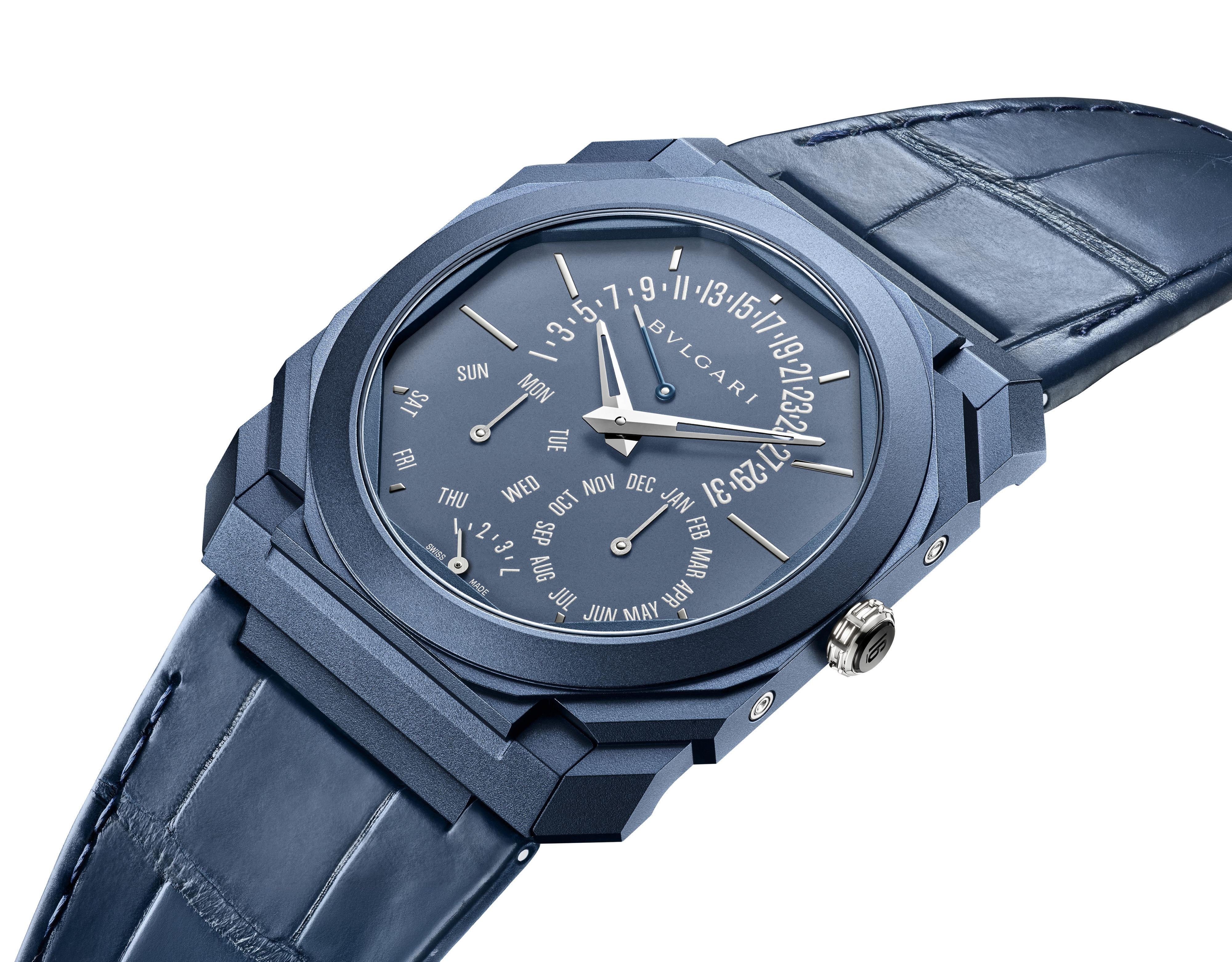
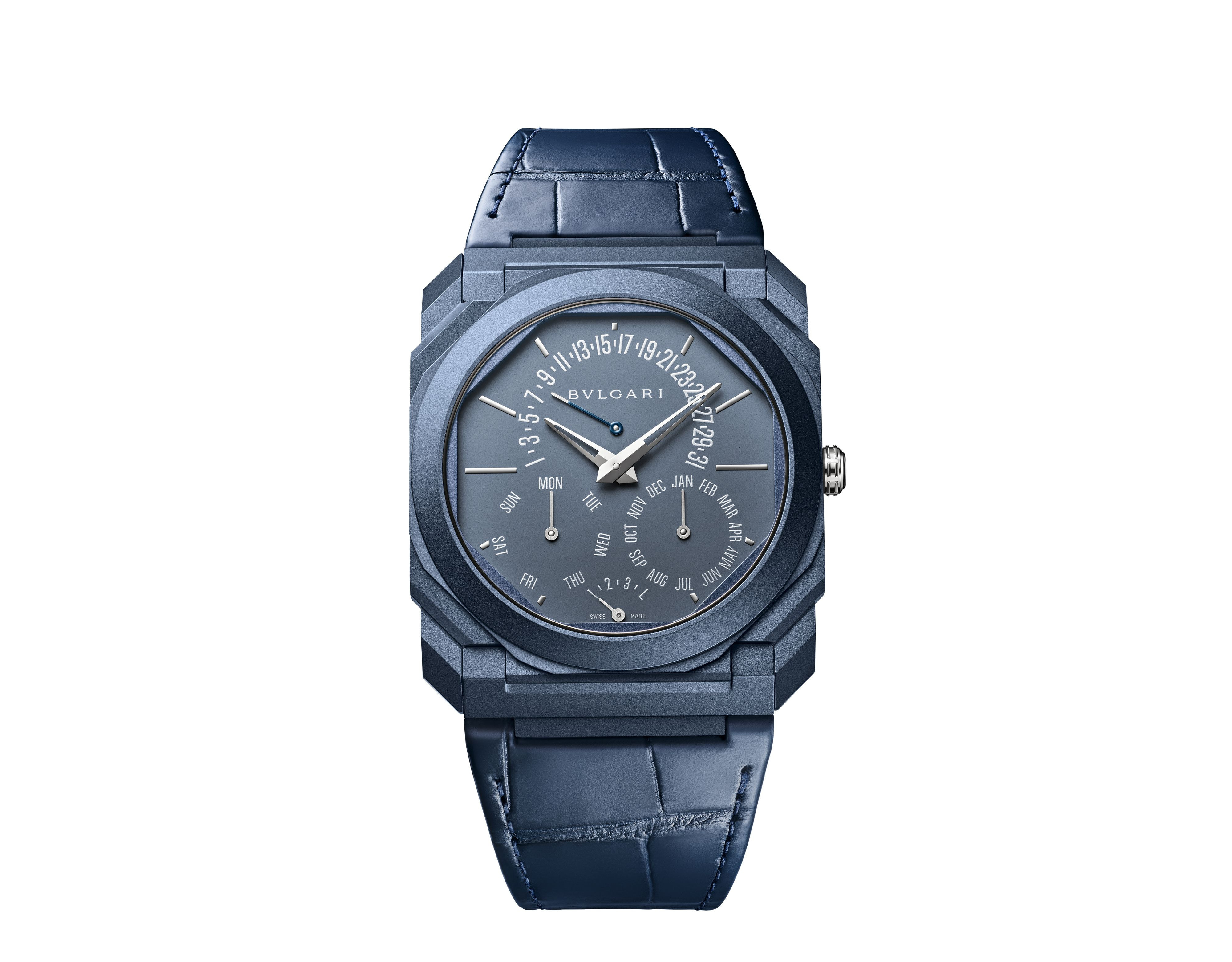
This is a familiar reference and that is part of the point. The original launched in 2021, won the Aiguille d'Or at the Grand Prix d'Horlogerie de Genève (watchmaking's most coveted prize), and simultaneously held the world record for the thinnest perpetual calendar ever made. Bvlgari has since revisited it in carbon gold and rose gold, but this monochromatic blue iteration feels like the most complete expression of what the Octo Finissimo has always been trying to say.
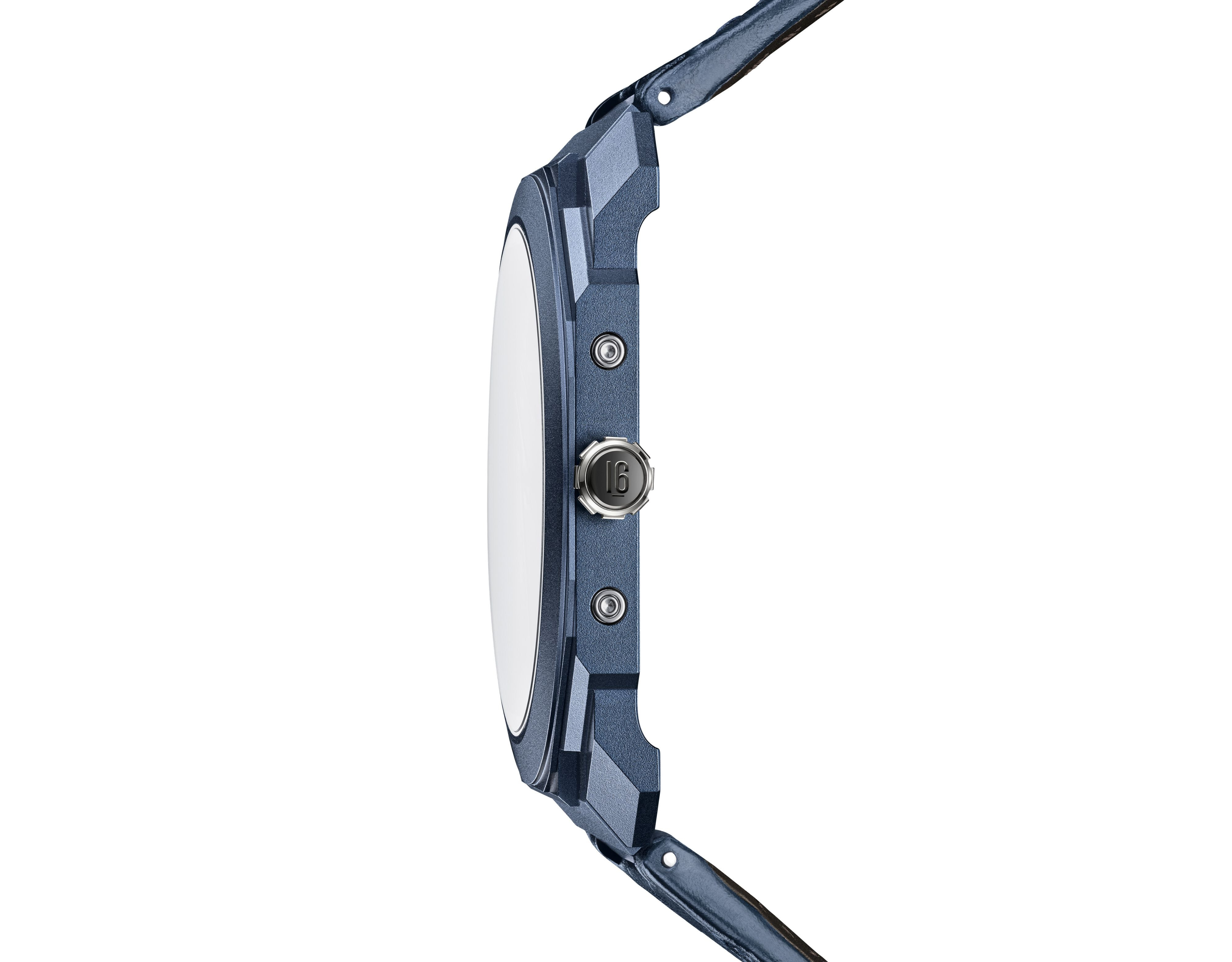
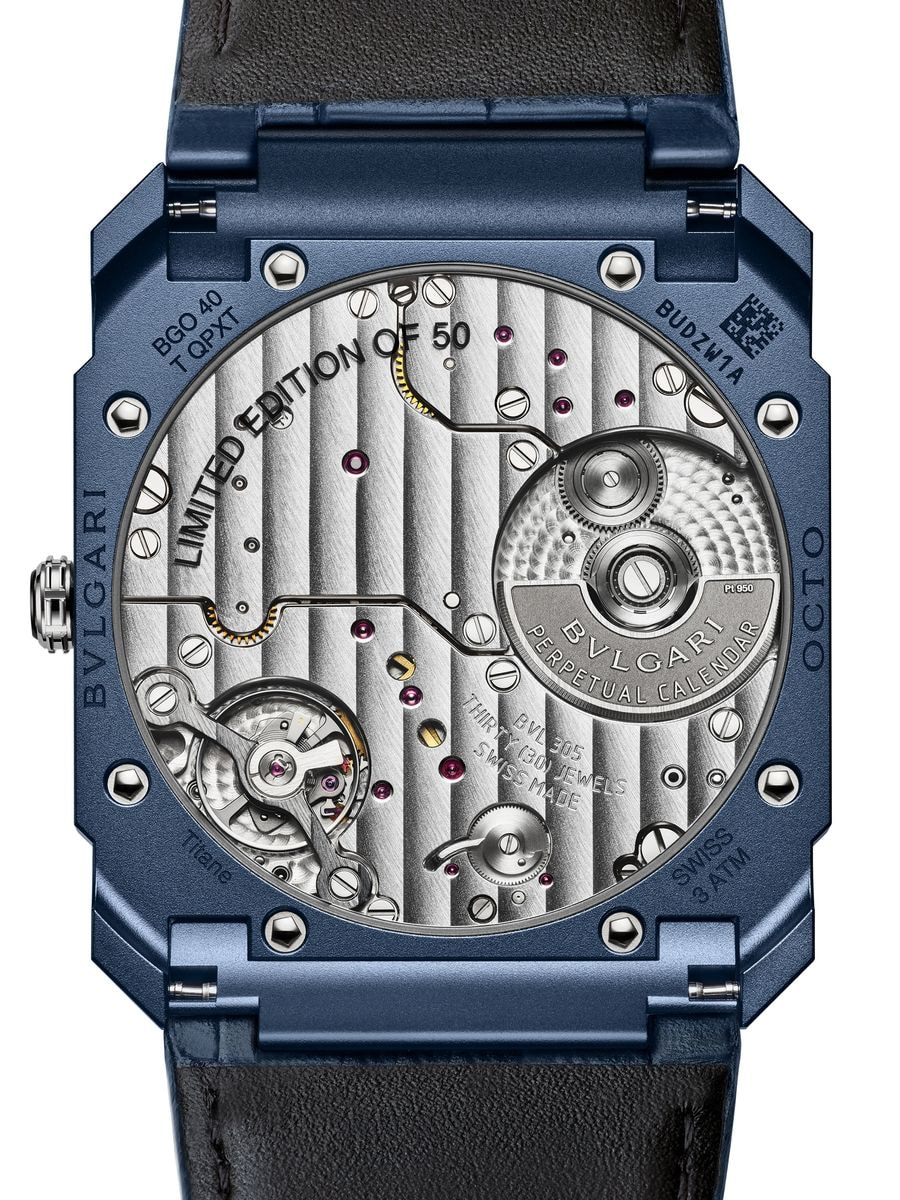
At 5.80mm total case thickness and 2.75mm for the movement alone, the BVL 305 calibre accomplishes something that still seems conceptually impossible: it packs a full perpetual calendar into a package thinner than most dress watches, with little beyond a seconds hand. The movement breathes at 21,600 vph and offers 60 hours of power reserve, which is, frankly, generous by ultra-thin standards. Bvlgari's engineers went far beyond merely shaving millimetres off an existing architecture; they rethought the spatial logic of haute horlogerie entirely.
The blue PVD-treated titanium case and its sandblasted finish absorb light rather than reflect it. The dial, equally blue and varnished, is offset by grey rhodium-plated hands and silvered indices, creating just enough tonal contrast for the perpetual calendar's layered information to remain immediately legible. This is a detail worth pausing on: legibility in a perpetual calendar is never accidental. It is, in fact, harder to achieve than it looks.