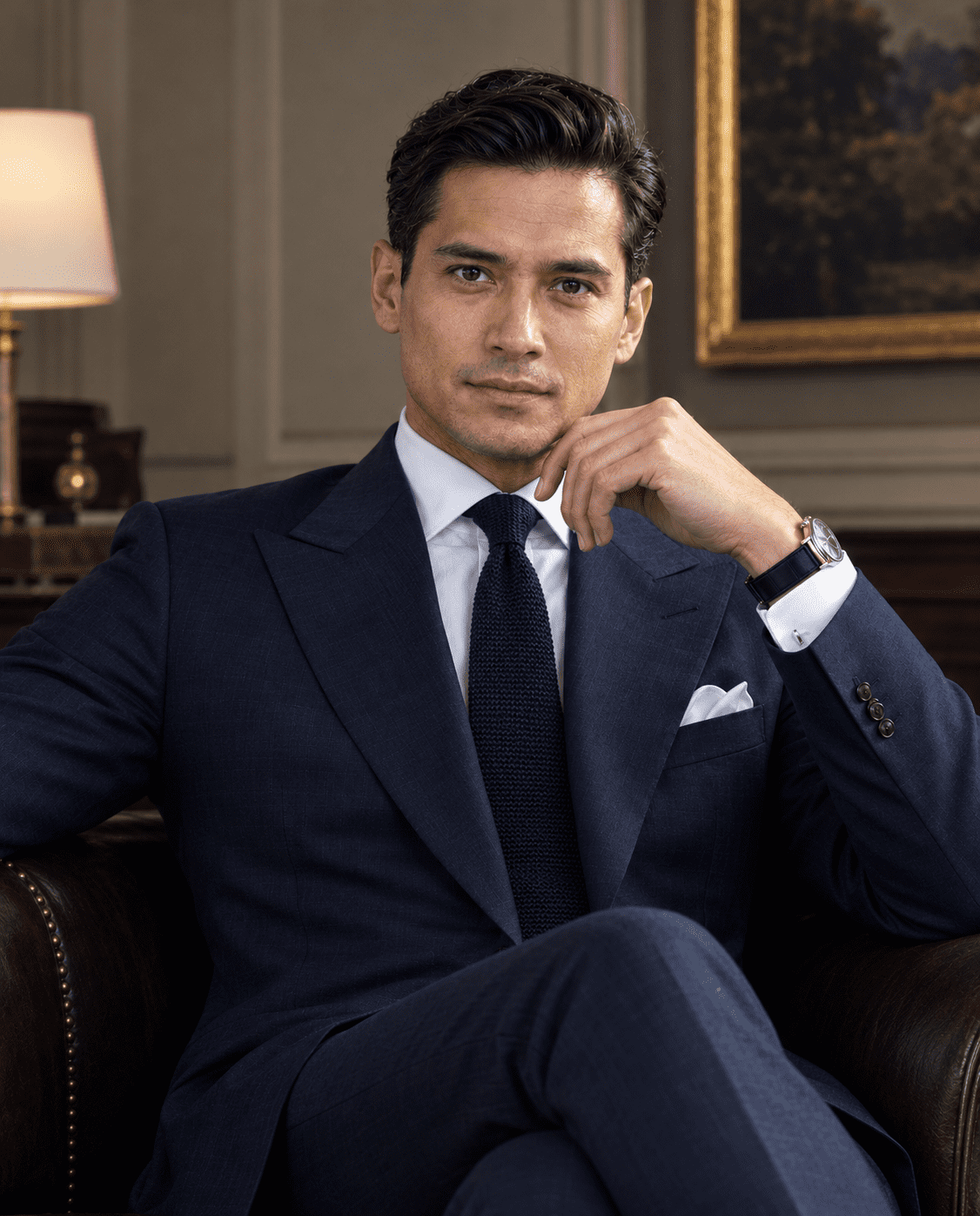

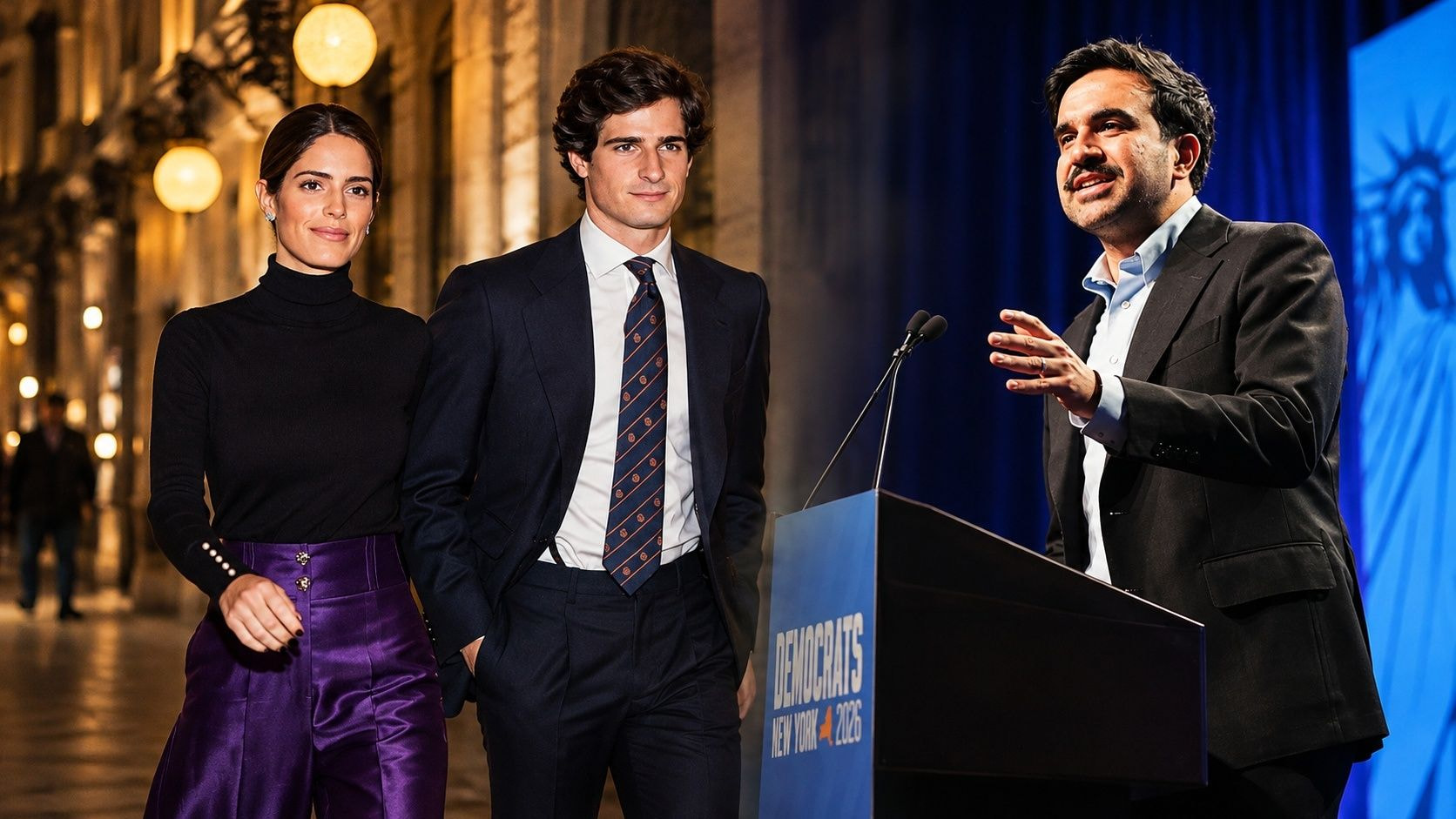
From L to R: Sofia Palazuelo and Spanish aristocrat Fernando Fitz James Stuart, and politician Zohran Mamdani.
Words: Tengku Putera
Disclaimer: The views and opinions expressed in this article are those of the author and do not necessarily reflect the views, opinions, or position of Gentleman’s Code (GC), its editorial team, or its associates.
There is something my father used to say when I was growing up. Whenever the subject of well-dressed men came up, his advice was always rather simple.
"If you want to understand the epitome of a well-dressed man, look at a Tengku (royal descendant / aristocrat), not a politician."
Related: What if Kennedy's style were Malaysian? Tengku Zafrul’s 2026 Istanbul visit gives the answer
I remember hearing those words as a boy. At the time, I probably thought he was making another one of his observations about life. Fathers have a way of saying things that children only begin to understand many years later. Some lessons take a lifetime to settle.
Today, I find myself returning to that particular memory.
Perhaps it was his way of explaining something that goes beyond tailoring, expensive watches or the occasional beautifully knotted silk tie. He was talking about taste and bearing. About the way a man carries himself, the way he occupies a room, and the confidence that comes from knowing who you are and where you come from.
A politician, in my father's eyes, dresses to project refinement. An aristocrat embodies it.
There is a rather amusing distinction between the two.
Watch a politician preparing for a public appearance. The suit is carefully selected, the tie coordinated, the hair arranged and the shoes polished. Somewhere along the way, an image consultant has probably had a say in the proceedings. Every detail contributes to the impression of authority, credibility and sophistication.
Understandable. Politics has its own theatre, and appearances are part of the performance, or dare I say, a political striptease.
Bruce Wayne is an embodiment of aristocratic ideal.
DC
An aristocrat, however, belongs to a different tradition of dressing. At least, the ideal of one. His appearance should reflect an upbringing shaped by protocol, culture, family traditions and an inherited understanding of dignity. His clothes become an extension of his bearing.
I suppose this is what my father was trying to tell me all those years ago.
Growing up with an appreciation for Malay royal heritage, I remember being particularly fascinated by the way certain gentlemen presented themselves. There was something captivating about the blue-bloods. Their mannerisms, their measured speech, their posture and the way they wore their clothes. Even an ordinary afternoon gathering could feel like an occasion.
I remember the fascination with the aristocrats - Bruce Wayne, Alexander the Great, Tunku Abdul Rahman - and the almost instinctive understanding of when a particular occasion called for a particular standard of dress.
Perhaps childhood has a way of romanticising these things. But I suspect some of that romance comes from witnessing a generation that treated presentation as part of good upbringing.
There was a certain discipline to it.
And that discipline seems increasingly interesting in today's world.
The modern gentleman lives in an age of personal branding. Everybody is building an image. The entrepreneur dresses for success, the politician dresses for authority, the influencer dresses for visibility, and the young man on Instagram seems to have acquired an entire wardrobe of quiet luxury before acquiring his first mortgage.
We have certainly become very good at looking the part.
Zohran Mamdani speaking at an event on election night. Mamdani also ditched his tie on Tuesday, in line with some of his fellow Democrats.
Bloomberg/Getty Images
The recent Vanity Fair Fit Check commentary on Democratic men offers an interesting glimpse into this changing relationship between fashion and public identity. Men such as Jon Ossoff, Abdul El-Sayed and Zohran Mamdani are embracing a more relaxed interpretation of political dressing. Open collars, tailored jackets, casual knitwear and a less conventional approach to formalwear are becoming part of their public image.
There is something refreshing about this evolution. A man can be serious about his responsibilities while dressing with a little more personality.
Yet I keep returning to my father's observation.
The distinction between dressing well and possessing an instinct for good taste is worth considering. A beautifully tailored suit can certainly improve a man's appearance. A classic watch can tell the time rather elegantly. A pair of bespoke shoes can make an entrance considerably more enjoyable.
But good taste is a much longer education.
And sometimes, the most expensive thing a man wears is his upbringing.
Of course, aristocratic lineage comes with its own collection of characters. I have encountered enough people with impressive family histories to appreciate that a distinguished surname and impeccable manners are two entirely separate achievements. Some family trees produce wonderful gentlemen. Others produce excellent dinner-table stories.
There is humour in that, but also a serious point.
The old Malay understanding of nobility carries an expectation of adab and moderation in everything. A gentleman's refinement should be reflected in his conduct as much as his wardrobe. His bearing, his restraint, his generosity and his treatment of others are all part of the same inheritance.
Sofia Palazuelo and Fernando Fitz James Stuart, the 15th Duke of Huéscar and the heir to the dukedom of Alba.
Angel Naval / MARINA PRESS / Shutterstock
Perhaps this is why I have always found the blue-bloods style so compelling. At its finest, it represents a continuity between appearance, upbringing and responsibility.
I sometimes wish I could sit with my father again and ask him to elaborate on that little observation. I would probably ask him which aristocrats or princes he had in mind, what he considered an impeccably-dressed dressed man, and whether he thought the modern generation had lost its appreciation for such things.
Knowing him, he would probably give me another short answer and leave me to work out the rest.
Fathers are rather good at that.
As the years pass, I find that some of the things we remember most clearly are the seemingly ordinary conversations we once had with them. A sentence over dinner. An observation during a family gathering. A remark made while watching someone walk into a room.
We grow older, acquire our own experiences, and suddenly those little remarks begin to make sense.
So, whenever someone asks me what makes a man exceptionally well dressed, I find myself returning to that childhood memory.
My father's answer remains a rather good place to start.
Look at the blood royal.
Study his bearing, his restraint, his sense of occasion and his understanding of tradition. Appreciate the tailoring, certainly, but look beyond the clothes.
Because a man may spend a fortune dressing like a prince, but the real class lies in everything that money cannot teach.
And somewhere in that thought, I can still hear my father's voice.