

24.04.2026

Prince Vincent of Denmark is the best-dressed young man of the month

At his confirmation at Fredensborg Palace Church, Prince Vincent of Denmark bearing and suit taste said everything about inherited style, royal institution, and the quiet authority of a young man stepping into his character.

Photos courtesy of detdanskekongehus/Facebook.


Words: Harrison Montgomery Blackwell III


My dear readers,

There are moments in the life of an institution when ceremony transcends the merely liturgical and becomes, quite without announcement, an act of civilisational continuity. The confirmation of Their Royal Highnesses Prince Vincent and Princess Josephine at Fredensborg Palace Church, Denmark on the eighteenth of April was precisely such a moment.

And in the midst of it, standing in the great tradition of a house that has endured longer than most nations have managed to hold themselves together, stood a young man dressed in a manner that, I confess, stopped me entirely.
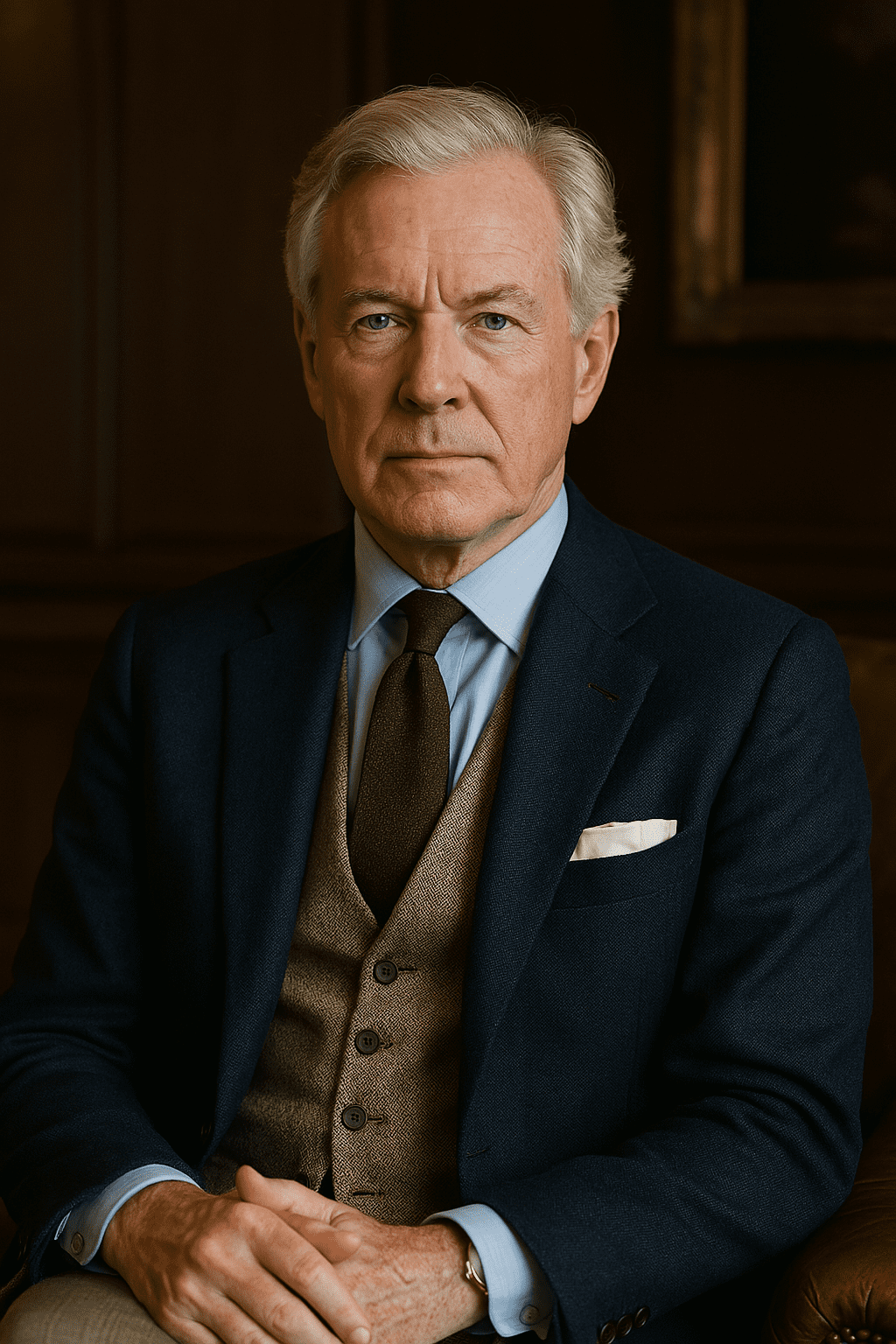
Prince Vincent of Denmark.


Prince Vincent of Denmark is fifteen. One does not expect, at fifteen, to witness that particular quality of self-possession in dress. It is a quality that cannot be purchased at a fitting. The Loro Piana custom navy chalk-stripe double-breasted suit he wore spoke not of a boy costumed for occasion, but of a young man who has begun to understand what clothes, at their most serious, are meant to say.

Let us be precise, because precision is what distinguishes the gentleman from the merely well-attired. The suit itself — a six-button double-breasted in a wool of evident weight and drape, its pinstripe fine enough to read as chalk rather than contrast — belongs to a tradition of English tailoring that men of my grandfather's generation would have recognised without introduction. The lapels carry genuine width and roll. The shoulders are built, not borrowed from some contemporary attenuation. The trousers break correctly. One notices the lavender pocket square; restrained, not performing. One notices the wristwatch, modest and well-chosen. One notices, above all, that nothing announces itself.

This is the paradox at the heart of inherited style: the louder a garment, the less it tells you about the man wearing it. Prince Vincent's suit tells you everything. It tells you that someone understood that the confirmation is not merely a religious rite but a sartorial declaration. The boy who enters the church in a navy chalk-stripe double-breasted is making a statement about who he intends to become.

I have spent the better part of seven decades observing how institutions dress themselves, and I remain convinced that the royal house serves a function no republic has yet managed to replicate: it embodies continuity. It reminds a society, with every portrait and every public appearance, that there are standards older than any one generation's preference, and that those standards carry weight precisely because they have survived. The genteel requires custodians. It requires young men willing to stand in a palace church and make of their dress an argument for permanence.

Prince Vincent did exactly that. In an age that rewards the conspicuous and mistakes novelty for originality, he appeared in Fredensborg looking precisely as a prince confirming his faith in a two-hundred-year-old church ought to look: composed, considered, and entirely at ease with the weight of where he was standing.

That ease is the final and most important detail. Clothes worn with discomfort are merely fancy dress. What one observed in Prince Vincent, in the way he stood, hands clasped before him, in the way he sat on that gilded chair, was the beginning of what I can only describe as authority. Not the borrowed authority of office, but the more durable kind that emerges when a young man begins to inhabit his own character.

For that reason alone, Prince Vincent of Denmark is, without question, the best-dressed young man of this month. Perhaps of this season.

About the Contributor

Harrison Montgomery Blackwell III is the Style Writer of Gentleman Code Magazine and divides his time between his ancestral estate in the Cotswolds, his apartment in Mayfair, and various private clubs around the globe.

Related posts