
.jpg)
Photo: GC Illustration
Words: Harrison Montgomery Blackwell III
My distinguished readers,
As we stand at the threshold of 2026, it becomes instructive to examine the sartorial currents that defined the year now passing. 2025 marked a decisive turning point in masculine elegance, a moment when the pendulum swung decisively away from the tyranny of logomania and aggressive casualization.
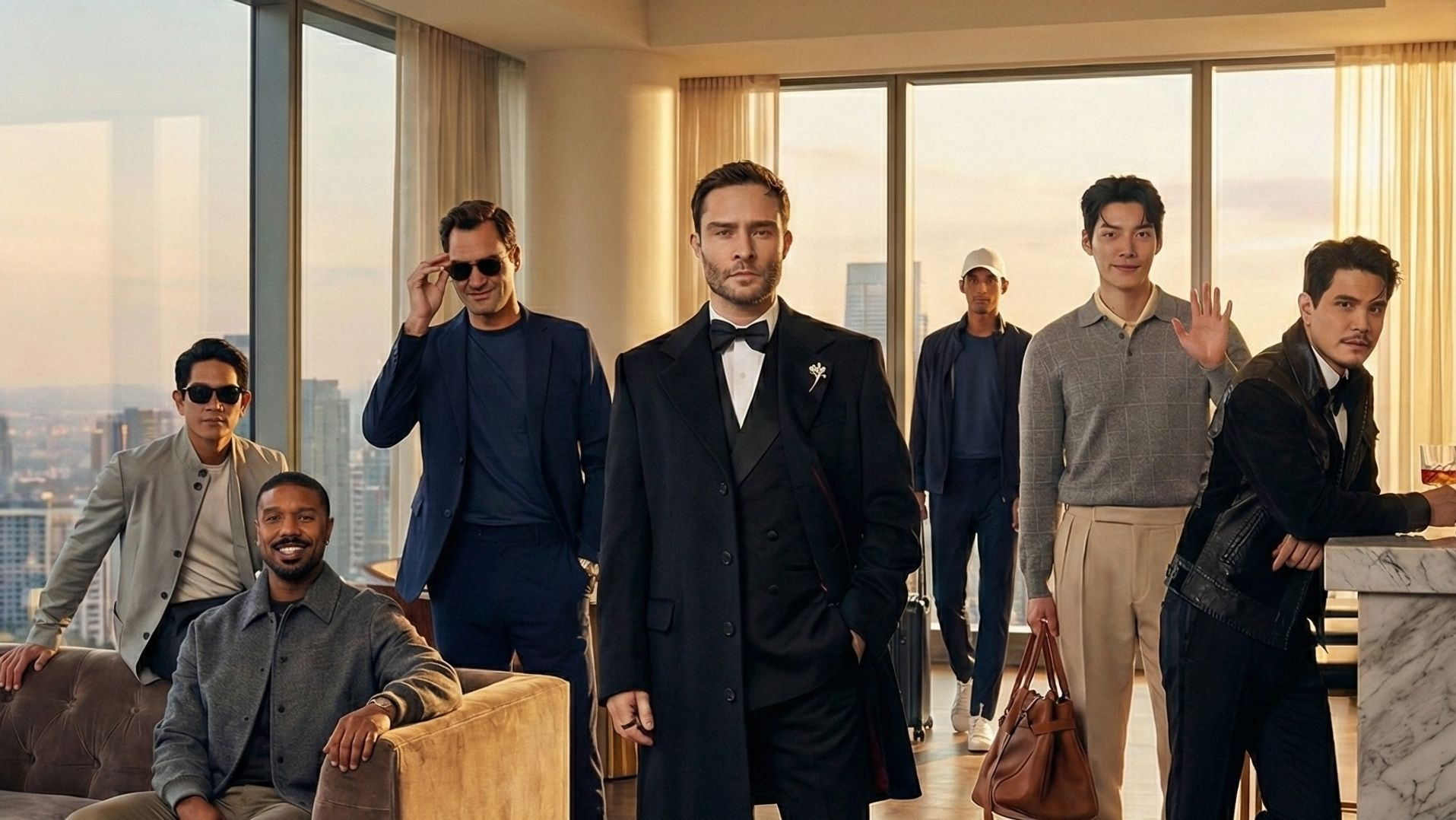
The seven gentlemen examined herein represent not a fashion followers but architects of a new aesthetic philosophy - one that honors heritage while refusing to be imprisoned by it, that embraces innovation while maintaining reverence for craft, that demonstrates conviction through detail rather than volume. Each has contributed a distinct verse to what amounts to a manifesto: that modern elegance emerges on correctness and character.
Let us examine the seven pillars upon which modern masculine elegance now rests.
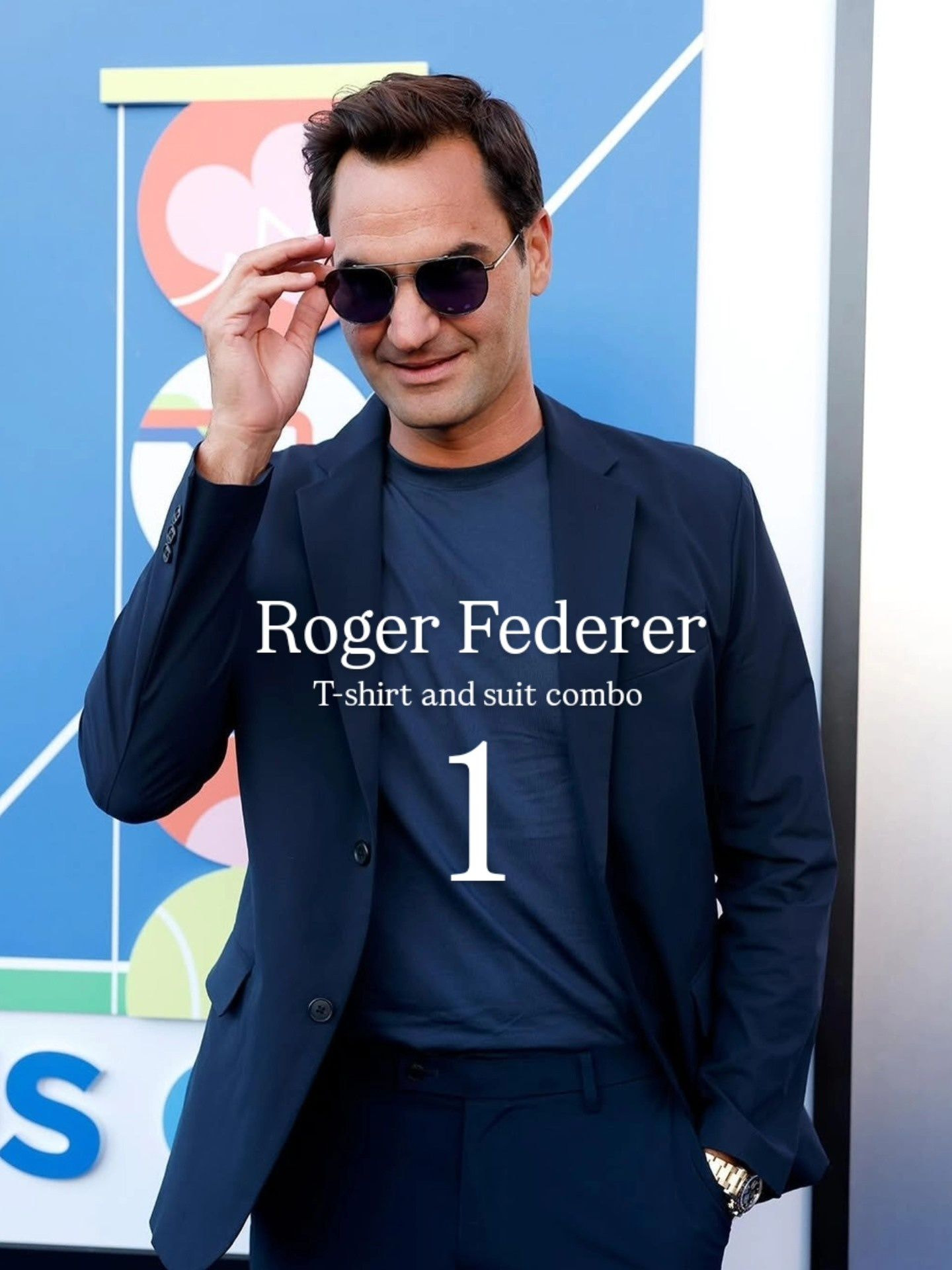
Photo credit: Roger Federer/Instagram.
In Federer's sartorial choices, we observe the same meticulous attention that characterized his backhand: clean lines, impeccable fit, zero tolerance for the superfluous. The navy suit demonstrates the essential Swiss principle that sophistication and functionality need not be adversaries.
Note the details in his signature look: the sunglasses positioned just so, the watch visible at the wrist, the fabric that drapes without clinging. These are not accidents but the accumulation of decades spent understanding that presentation is not vanity but respect -for oneself, for one's craft, for those in one's presence.
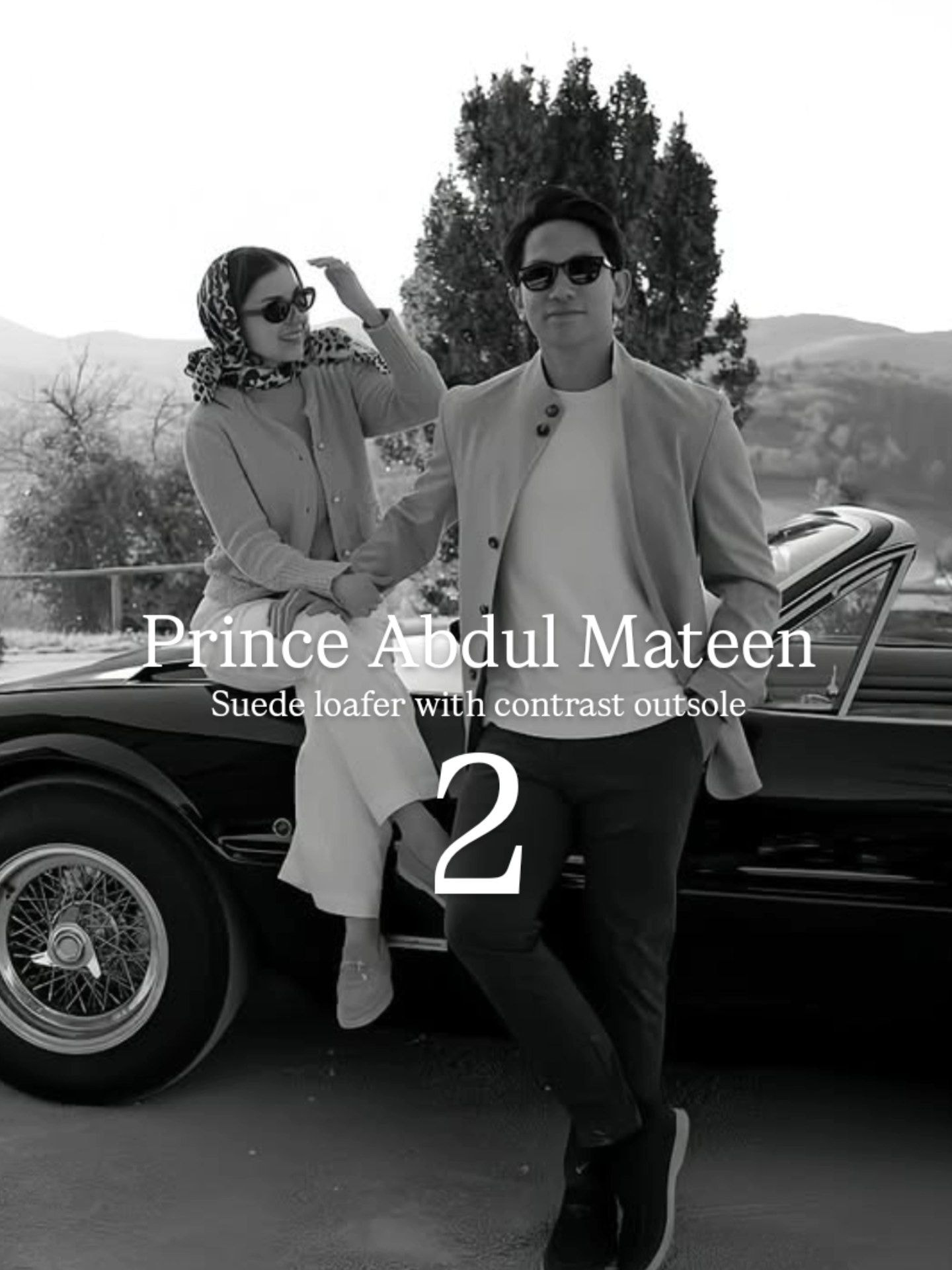
Photo credit: Anishaik.tmski/Instagram
Observe the prince's chosen armor: the Il Conte jacket, a masterpiece of Neapolitan construction that understands the fundamental truth of modern tailoring - that structure need not strangle, that elegance flows from ease rather than rigidity. The higher button stance, the clean mandarin-inspired collar, the streamlined silhouette - these are not merely design choices but philosophical statements.
This is the jacket of a man who pilots helicopters and attends state functions with equal composure. The Il Conte's architectural lines provide authority without pomposity, formality without stuffiness. It is, in essence, the uniform of the modern aristocrat: rooted in tradition yet entirely of the moment.
But it is at ground level where Prince Mateen's aesthetic philosophy truly crystallizes. The suede loafer with translucent sole represents a masterstroke of modern refinement - a detail so subtle that lesser observers might miss it entirely, yet so significant that it redefines the entire ensemble.
The translucent sole is not gimmick but evolution. It represents the contemporary gentleman's rejection of the heavy, traditional leather sole in favor of something more nuanced - transparency as metaphor, lightness as luxury. The suede upper, timeless in its appeal, gains new life through this innovation at its foundation.
This is the essential Mateen principle: respect the canon, but refuse to be imprisoned by it.
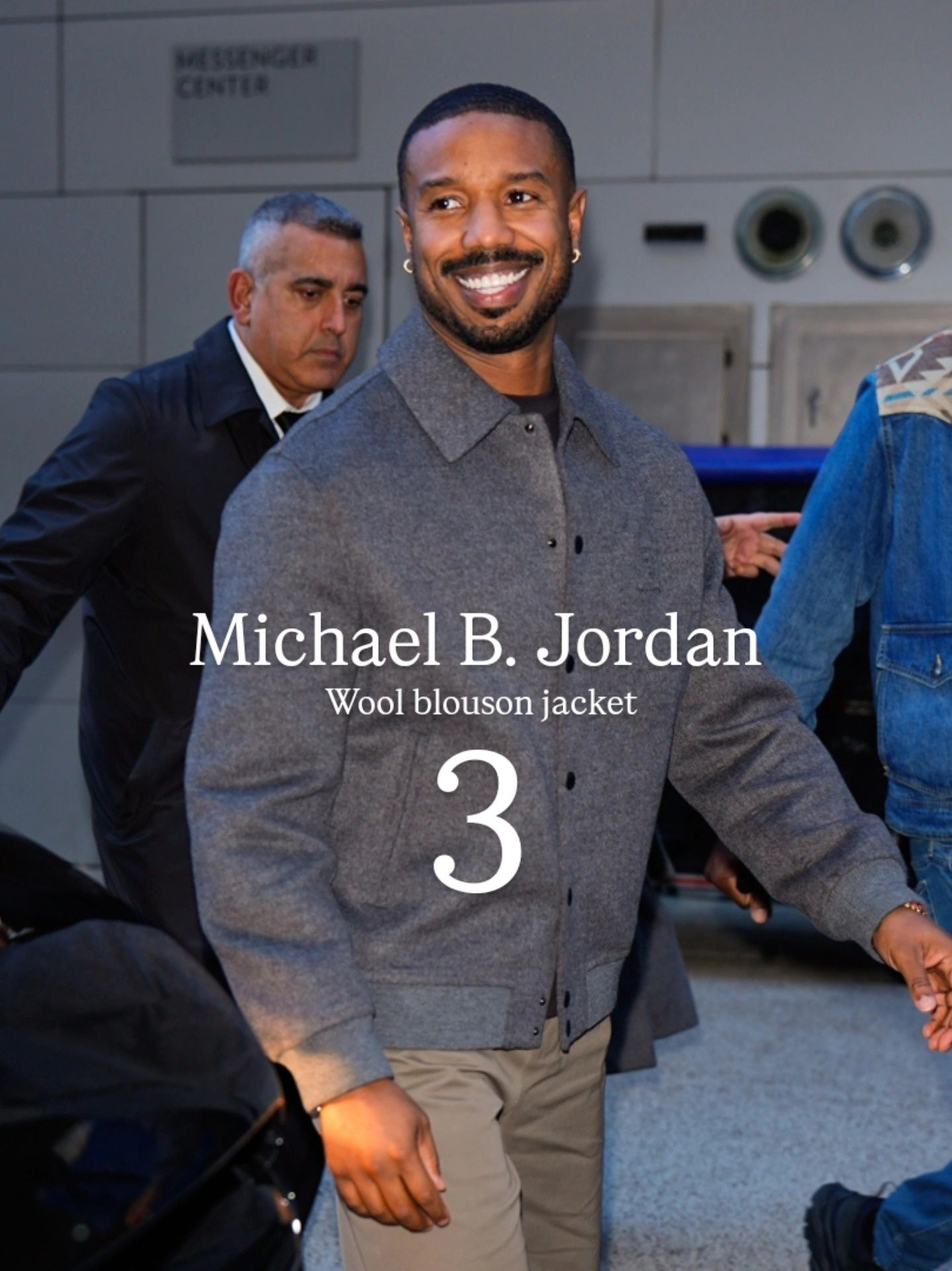
Photo credit: FENDI
The selection of wool as fabrication deserves particular attention. In an era dominated by technical fabrics and synthetic innovations, wool represents a return to materials that have proven themselves across centuries. It breathes, it drapes, it ages with grace. The wool blouson is neither summer-weight frivolity nor winter-only necessity - it occupies that versatile middle ground that defines truly useful elegance.
Here lies Jordan's greatest contribution to contemporary menswear: the proof that elegance need not erect barriers between wearer and world. The wool blouson is not the bespoke suit, not the evening tailcoat, not the obvious markers of exclusivity. It is, instead, a piece that invites rather than intimidates, that suggests refinement is accessible to those who understand the fundamentals of fit, fabric, and finish.
This is style as democracy without sacrificing standards. The blouson can be sourced, can be worn, can be incorporated into the daily wardrobe without requiring aristocratic budgets or insider knowledge. Yet in Jordan's hands, it demonstrates that the ordinary, when executed with precision and worn with confidence, transcends ordinariness entirely.
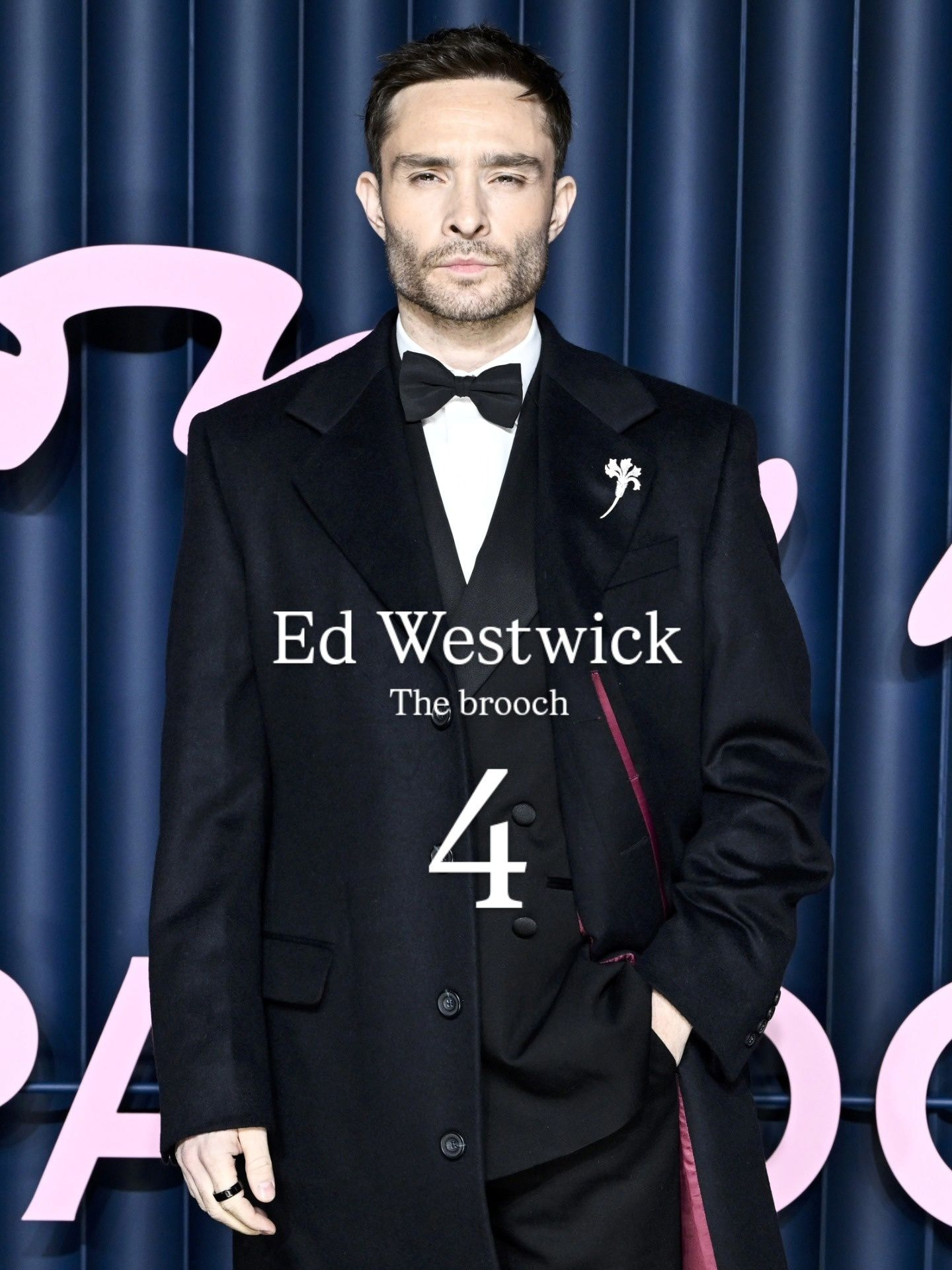
Photo credit: Chaumet
Gentlemen of a certain historical literacy will recognize in Westwick's choice an echo of earlier eras. The Edwardians adorned their lapels with jeweled pins; the Victorians before them understood that formality need not preclude personality. The brooch represents a conscious connection to this lineage - a rejection of the notion that contemporary black tie must exist in a sterile, ahistorical vacuum.
What separates the gentleman from the merely well-dressed is the understanding of when to conform and when to distinguish. At prestigious black-tie events, the temptation toward either absolute uniformity or garish differentiation runs high. Most men choose the former out of safety; a smaller cohort chooses the latter out of insecurity.
Westwick charts a third path: foundational correctness with singular distinction. The brooch announces, "I understand the rules so thoroughly that I can bend them with precision." This is confidence made tangible, judgment made visible. It whispers rather than shouts, suggests rather than demands.
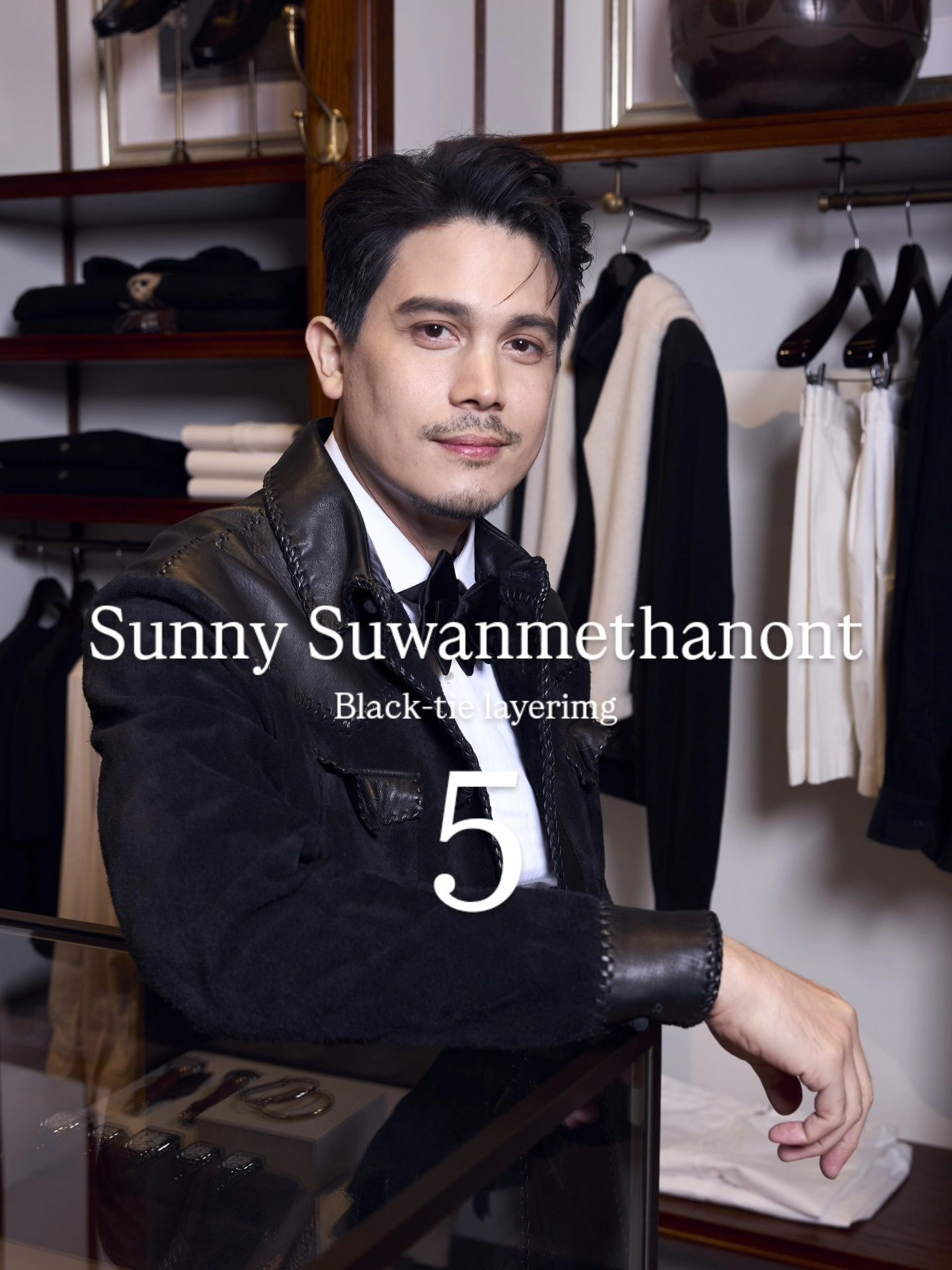
Photo credit: Ralph lauren
Sunny Suwanmethanont navigates this territory with the confidence of one who understands that black-tie codes, while venerable, need not be static.
Observe his masterful construction: the foundation remains impeccable. Crisp white shirt, proper black bow tie, the non-negotiable elements of evening dress. But atop this classical base, Suwanmethanont introduces textural complexity through his black leather jacket, its quilted detailing and utilitarian pockets transforming what might have been transgression into triumph.
This is the essential lesson: rebellion works only when anchored by respect. The leather jacket here becomes sophisticated outerwear precisely because everything beneath it honors tradition. The contrast of materials speaks volumes: supple leather against starched cotton, matte texture against glossy silk, contemporary edge against timeless formality.
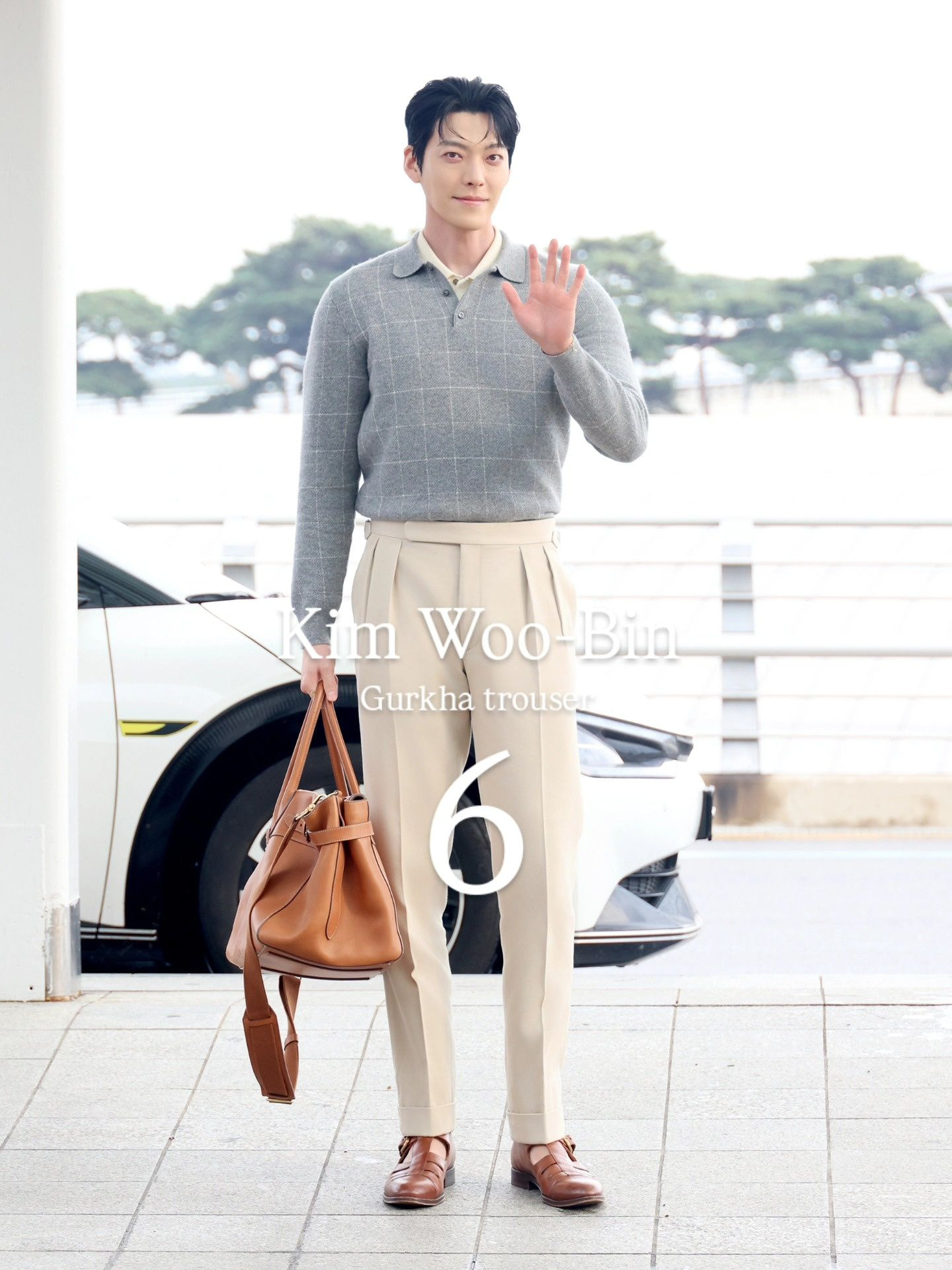
Photo credit: Ralph Lauren
There exists in menswear a hierarchy of trousers - from the pedestrian chino to the exalted Gurkha. Kim Woo-Bin has taste, demonstrating that true sophistication lies not in following trends but in resurrecting forgotten excellence.
Observe the Gurkha's distinctive architecture: the double-pleated front creates elegant fullness through the thigh while maintaining a clean, high-rise waistline. These are not the apologetic pleats of 1990s mediocrity but rather the confident pleats of mid-century mastery - designed to provide comfort and drape without sacrificing line. The extended waistband tabs, crossing at the front in their characteristic wrap closure, eliminate the need for belt loops, creating an uninterrupted silhouette of remarkable elegance.
The proportion is everything here. Note how the fuller cut through the leg tapers gently toward the ankle, where cognac leather loafers - double monk straps, naturally - provide visual punctuation. This is the leg line that flatters rather than clings, that suggests rather than announces.
Against the minimalist backdrop of modern architecture and luxury automobiles, Kim demonstrates that the most contemporary silhouette often requires looking backward - to an era when trousers possessed both character and craft, when proportion mattered more than price tags.
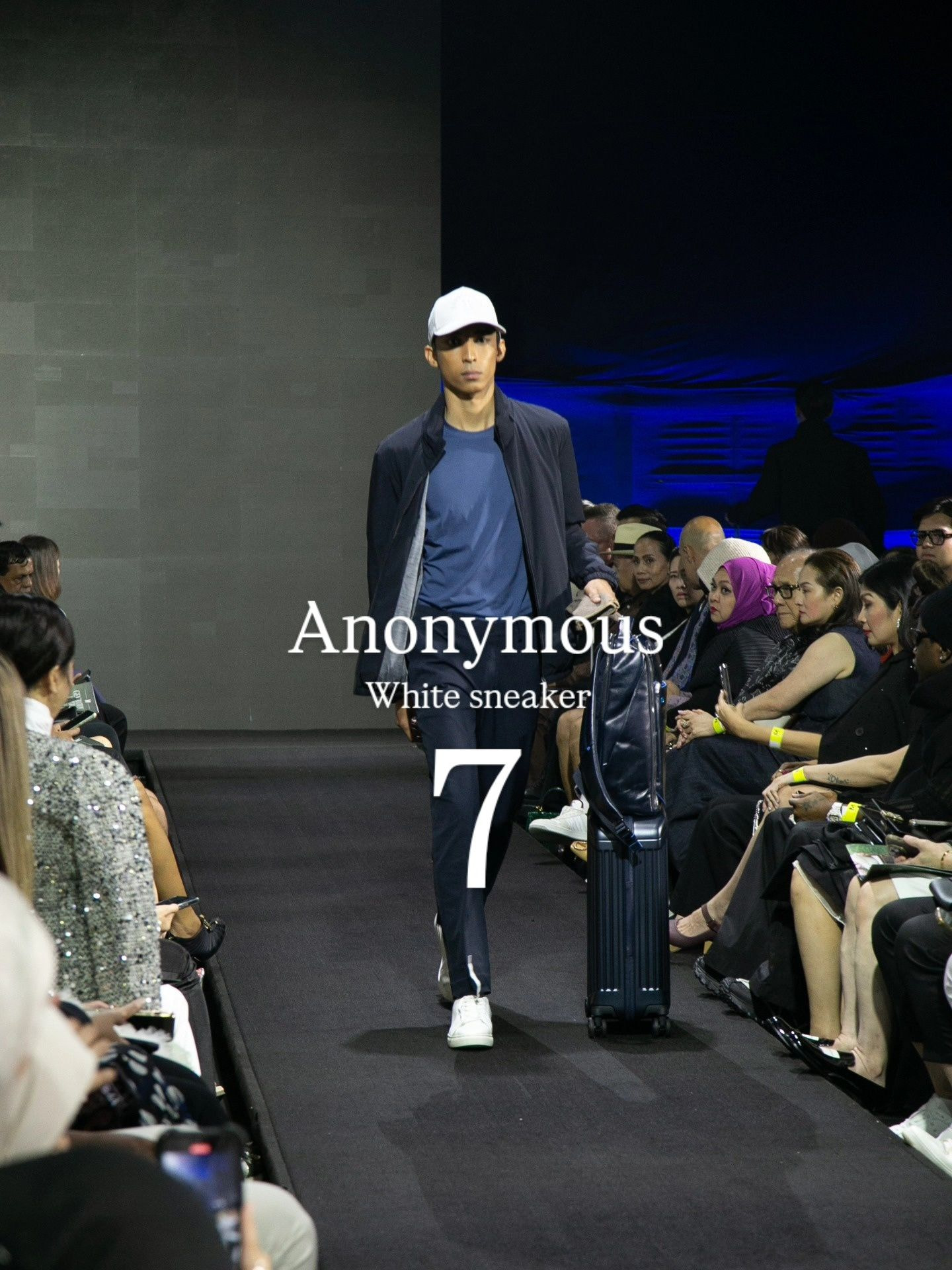
Photo credit: Boggi Milano
Observe this runway presentation: a masterclass in chromatic restraint. The white sneaker anchors a palette of midnight navy and slate grey, creating visual punctuation that draws the eye downward while maintaining overall harmony. This is not accident but architecture - the understanding that white functions as both foundation and exclamation, grounding darker tones while providing essential contrast.
The ensemble demonstrates perfect tonal balance: navy blazer, slate tee, charcoal trousers, pristine white sneakers. Each element exists in conversation with the others, creating a gradient from dark to light that guides the viewer's eye with inevitable logic. The white baseball cap echoes the footwear, bookending the silhouette with symmetrical brightness.
This is the essential lesson of the white sneaker revolution: that casualization need not mean the abandonment of compositional rigor. The white sneaker succeeds here precisely because everything else has been considered - fabrics coordinate, proportions balance, the color story unfolds with mathematical precision.
Closing: The Seven Lessons for 2026 and Beyond
My distinguished readers,
As we distill these seven exemplars into actionable wisdom for the year ahead, certain principles crystallize with unmistakable clarity. The gentlemen of 2025 have offered us not trends to be followed, but rather philosophies to be thoughtfully adapted.
First: Master the foundation before attempting the flourish. Whether Federer's navy blazer, Westwick's impeccable dinner jacket, or the anonymous model's tonal coordination - excellence begins with correctness. Only from this platform can distinction emerge.
Second: Understand that innovation honors tradition rather than discards it. Prince Mateen's translucent-soled loafers and Sunny's leather-over-black-tie demonstrate that evolution requires reverence for what came before.
Third: Recognize that true luxury often lies in the unexpected detail. Westwick's brooch, Kim Woo-Bin's Gurkha trousers, the white sneaker's chromatic precision - these are the whispered signatures that separate the merely well-dressed from the genuinely distinguished.
Fourth: Embrace materials that possess both heritage and honesty. Michael B. Jordan's wool blouson reminds us that natural fabrics connect us to centuries of craft while serving contemporary needs with quiet dignity.
Fifth: Proportion supersedes price. Not one of these gentlemen succeeds through logo worship or obvious luxury, but rather through the intelligent understanding of line, silhouette, and spatial harmony.
Sixth: Confidence cannot be purchased but must be cultivated. The ease with which these men inhabit their choices suggests years of consideration, of trial and refinement, of developing an aesthetic philosophy rather than following algorithmic dictates.
Seventh: Style is not costume for occasions but consistent expression of character. Whether on runways or red carpets, in vintage automobiles or research centers, these gentlemen maintain their aesthetic convictions across contexts.
As you construct your wardrobe for 2026, consider not what is trending but what is enduring. Invest in the blazer that will serve you for decades, the loafers that improve with age, the trousers cut with such precision they transcend seasonal cycles. Learn your proportions, understand your palette, develop your signatures.
The gentlemen of 2025 teach us that modern elegance demands neither rebellion against all tradition nor slavish adherence to outdated codes, but rather the wisdom to distinguish between what deserves preservation and what requires evolution. They demonstrate that in an age of algorithmic fashion and manufactured virality, the most radical act remains the cultivation of personal conviction expressed through considered choice.
As you move forward, remember: trends fade, but principles endure. Logos date, but quality persists. Flash attracts momentary attention, but genuine sophistication commands lasting respect.
The question is not "What should I wear in 2026?" but rather "Who am I becoming, and how shall I dress like a man of true class?"
These seven gentlemen have shown us the path. The walk, as always, remains our own.