

18.08.2026

What House of the Dragon on HBO Max understands about bloodline that leadership books or MBA don't

House of the Dragon and Negeri Sembilan's Bukit Putus War reveal the same bare truth: bloodline opens the door, but never guarantees the throne.
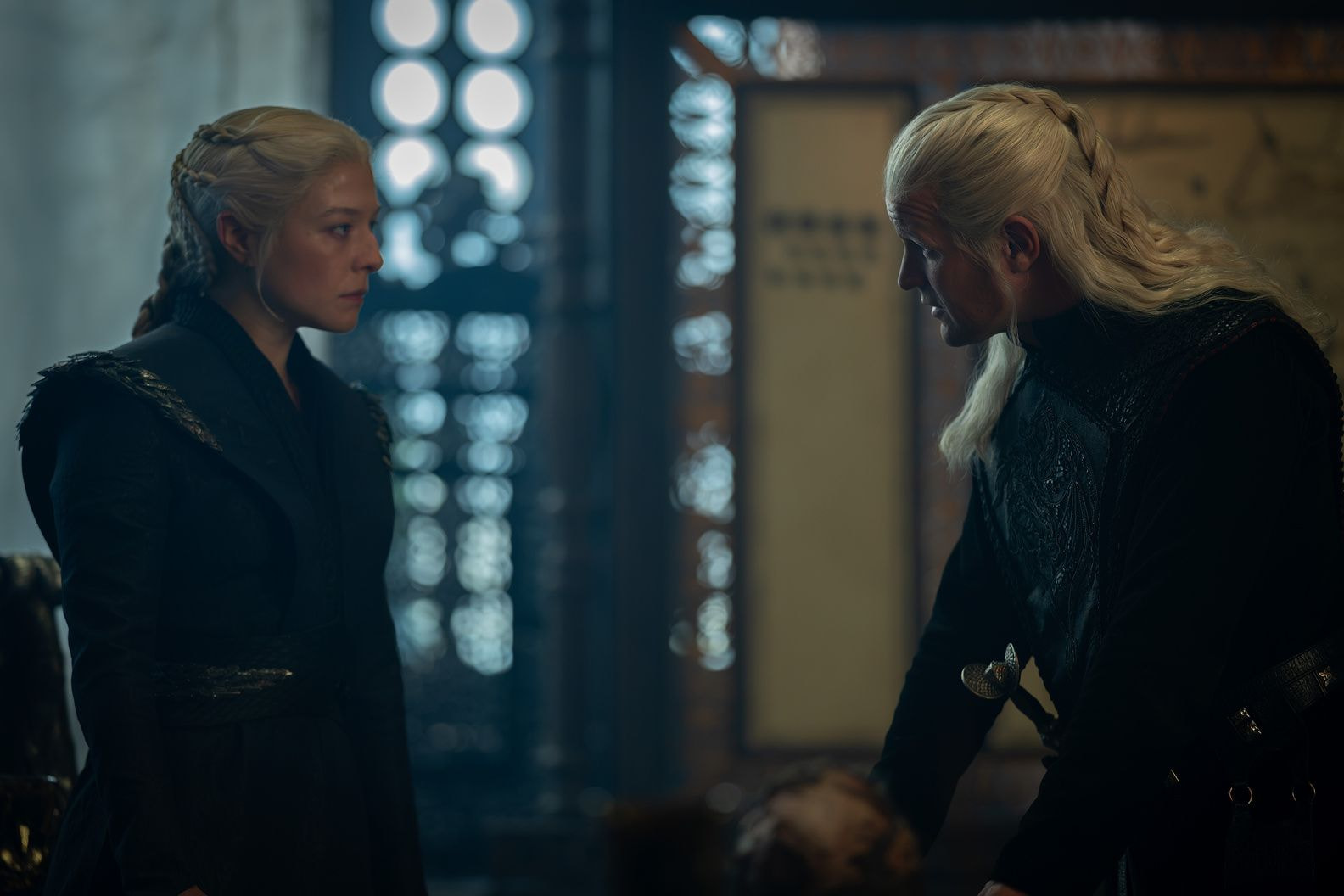
House of the Dragon Season three. Photos courtesy of HBO Max.


Words: Raja Izz


Most stories about succession are written by people who have never had to inherit anything harder than a business card. House of the Dragon, now in its third season, is not one of them. Built on George R.R. Martin's account of House Targaryen two centuries before the events of Game of Thrones, the series has become, almost by accident, the most honest study of power currently airing anywhere. Its subject is not dragons. It is bloodline, and what it actually costs to carry one.

There is a comforting fiction, repeated often in corporate literature and family offices alike, that bloodline confers legitimacy on its own. House of the Dragon dismantles that idea within its first hour and never lets it reassemble. Rhaenyra Targaryen is named heir not because succession is settled by birth order, but because her father decides it should be, a decision the realm immediately treats as negotiable the moment his back is turned. Her half brother Aegon inherits a claim he never wanted and cannot carry. Their shared blood does not resolve the conflict between them. It is the conflict.

House of the Dragon Season three. Credit Ollie Upton l HBO l HBO Max.


This is where the series earns its place in a conversation usually reserved for management theory rather than prestige television. Every dynasty, fictional or otherwise, eventually confronts the same bare truth: blood determines who is entitled to lead, but never who is capable of it. The distance between those two things is where House of the Dragon lives. Alicent Hightower did not need dragons to accumulate influence; she needed patience, a father willing to manoeuvre on her behalf in Otto Hightower, and a court where loyalty was never fixed but constantly being re-priced. Daemon Targaryen, meanwhile, is proof that raw entitlement without restraint burns as much as it conquers, a warning most inherited institutions eventually learn the hard way.

The dragons themselves complicate the bloodline argument rather than simplifying it. Bound to their riders by something closer to temperament than ownership, they mirror the instability of the humans who claim them, volatile where their riders are volatile, steady where their riders have earned steadiness. It is a clever piece of world building, but it is also, whether intentional or not, an accurate metaphor for how real power behaves. Institutions do not stay loyal to a name. They respond to whoever is actually holding the reins with a clear hand, and they turn without warning the moment that grip slips.

What makes the season compelling beyond the family at its centre is how far the consequences travel. Houses like the Hightowers, the Starks and the Arryns are pulled into a war that was never theirs to begin with, a reminder that dynastic instability rarely stays contained to the dynasty. Every succession crisis, in fiction or otherwise, eventually becomes everyone's problem.

House of the Dragon Season three. Credit Ollie Upton l HBO l HBO Max.


Bloodlines Closer to Malay Nusantara

Fictional dragons aside, Malaysia's own history offers a starker illustration of what a divided bloodline actually costs. In 1875, Negeri Sembilan was consumed by the Bukit Putus War, a civil conflict fought between two men drawn from the same royal house. Tunku Antah's claim ran through his father, Yamtuan Radin ibni Raja Lenggang, while his rival Tunku Ahmad Tunggal claimed ran through his father, Yamtuan Imam ibni Raja Lenggang carried real economic weight behind him, control over the small tin mines scattered around Kuala Pilah. Support among the territorial chiefs, the Undang, split down the middle, each side calculating which claimant offered more than a name.

Tunku Antah eventually prevailed through foreign interventions and back-door negotiations, but not on his own terms. When his fortifications at Bukit Putus fell in December 1875, the road to the seat of power at Seri Menanti lay open, and he was forced into retreat before a negotiated settlement the following year restored him as Yamtuan Besar. It was, by most accounts, one of the most consequential civil conflicts fought among Malay royal bloods during that period, and it left the door open for greater British involvement in the state's affairs.

The lineage that followed Tunku Antah, through his son Tuanku Muhammad and his grandson Tuanku Abdul Rahman (Malaysia's first Agong), carried the Seri Menanti throne forward into the twentieth century and beyond, an unbroken thread from a war that very nearly severed it. What the Bukit Putus War makes plain, and what House of the Dragon dramatizes at scale, is that bloodline disputes rarely resolve on the strength of birthright alone. They resolve on the strength of who can hold the ground and multiple deal-makings once the fighting actually starts.

House of the Dragon Season three. Credit Ollie Upton l HBO l HBO Max.


The Bare Truth

Strip away the scale, the dragons, the Valyrian, and what remains is a story about the gap between inheritance and legitimacy, and how quickly that gap gets exploited by whoever notices it first. Otto Hightower notices it. Larys Strong notices it and says nothing, which is its own kind of weapon. Rhaenyra spends much of the series trying to close that gap through sheer legitimacy of claim, only to discover that legitimacy without demonstrated command persuades almost no one who matters.

This is the uncomfortable lesson beneath the spectacle. Bloodline opens the door. It has never, in any dynasty worth studying, been sufficient to keep someone standing once they walk through it. The series has been rewarded for understanding this with a Golden Globe for Best Television Series, Drama, alongside Emmy recognition for the craft holding its world together, costume and makeup work precise enough to make two centuries of Targaryen history feel lived in rather than staged.

For a publication built on the idea that character carries more weight than pedigree, House of the Dragon is less an indulgence than a case study. It argues, patiently and at considerable cost to nearly everyone in it, that a name can secure a seat at the table but never the authority to remain in it. Everything after that has to be earned in full view of the people deciding whether you deserve to keep it.

Stream new episodes of the HBO Original House of the Dragon Season three every Monday, with the finale episode on August 10, only on HBO Max.


RELATED READING: Punca Sebenar Perang Bukit Putus

About the Author

YM Raja Izz

Raja Izz (MBA) is the co-founder and Editor-in-Chief of Gentleman's Code (GC), a publication devoted to elegance, cultivated taste, and the art of refined living.

Since its founding in 2018, under Raja Izz’s discerning guidance, GC has achieved distinction on the global stage: honored at the LUXLife 9th Annual LUX Global Excellence Awards 2025 as Men’s Luxury & Culture Thought Leaders of the Year – Asia, and lauded as one of the Top 20 Digital Men’s Magazines on the Web by Feedspot for five consecutive years.

He builds the platform - for others to rise, for noble values to return, and for men to remember who they once aspired to be.

Related posts