

01.01.2026

GC discover Carcosa Seri Negara: From the seat of power to an enduring legacy of modern Malaysia

A reflective journey through Carcosa Seri Negara, where colonial power ended and Malaysia’s independence was negotiated - revealing supreme heritage and gentlemanly statecraft.
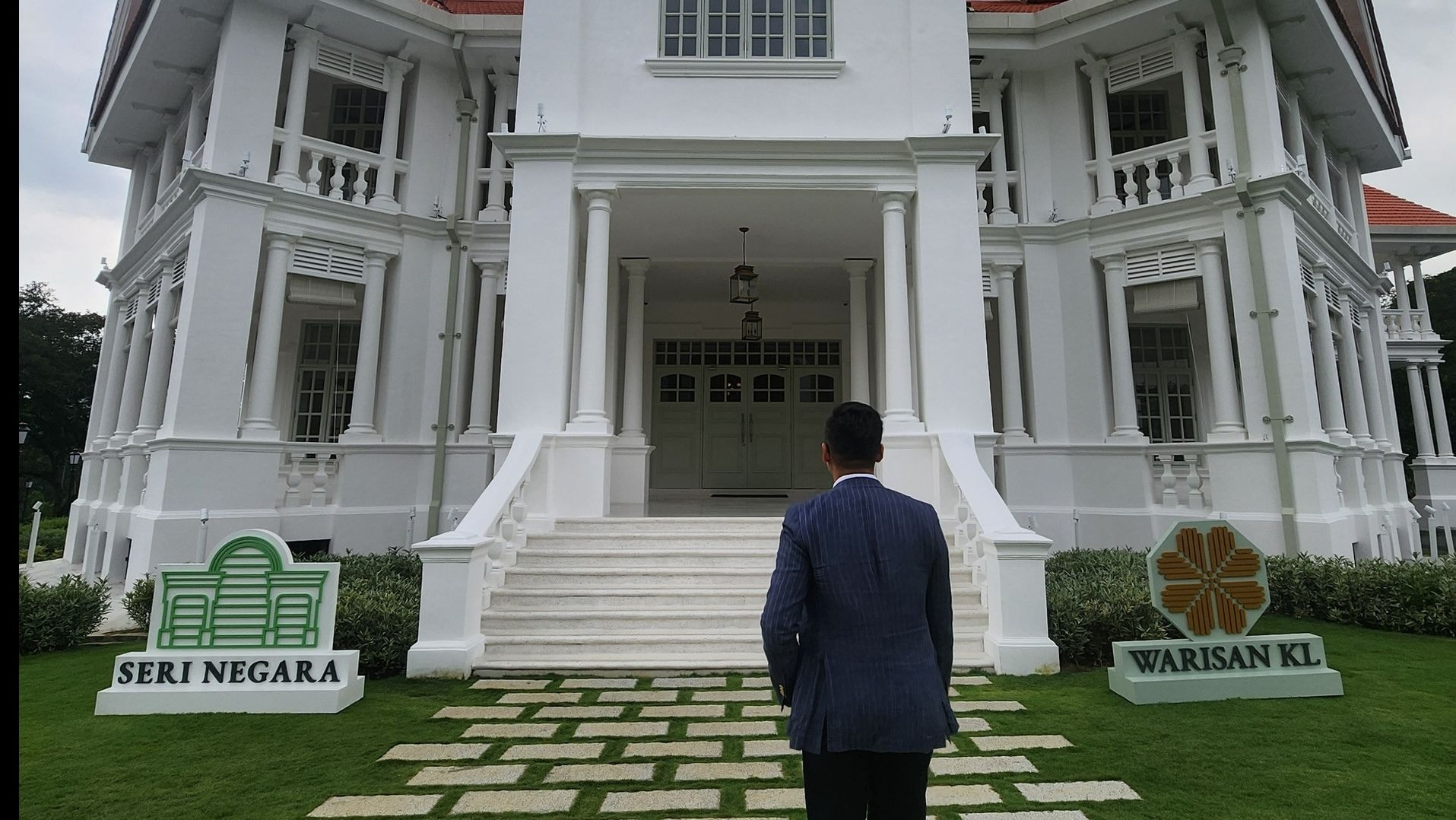
Words: Raja Izz


"You think you know a story... but you only know how it ends. To get to the heart of a story you have to go back to the beginning."

Henry VIII's line from The Tudors plays in my head as I walk toward Carcosa Seri Negara. The white mansion sits pristine behind its geometric stone path. Opposite of it, the Malaysian flag moves against grey clouds. State flags line the driveway below.

I thought I knew this place. I was wrong.
Built for Empire

Inside, the air is cool. An exhibition panel reads: "Rakyat, Kuasa, dan Tempat: People, Power, and Place, 1900-1948." This building isn't just colonial architecture. It's where our nation was forged.

The story starts in 1896 with Carcosa, the first mansion. Sir Frank Swettenham, Britain's Resident-General, built it as his official residence - a neoclassical statement of imperial power over Kuala Lumpur. They called it the King's House.

Seventeen years later, in 1913, Seri Negara went up next door to host visiting dignitaries with appropriate grandeur.

Carcosa Seri Negara entrance gate.


After independence, Malaysia's first Yang Di-Pertuan Agong used Seri Negara as the official guest palace. His successor would "mangkat" (passed away - a term reserved for monarchs) here in 1960 and lie in state within these walls.

I stop at a 1948 photograph: Malay rulers and British officials in formal dress. You can see it in their faces - the careful negotiation between dignity and diplomacy. This is what sovereignty being reclaimed looked like.

The Room That Changed Everything

Then I walk into the room.

A period dining table sits in the center, surrounded by wooden chairs. Screens wrap the walls, showing archival footage: crowds demanding independence, the Malayan Agreement being signed, our founding fathers - Tunku Abdul Rahman, Tun Tan Cheng Lock, Dato' Onn Jaafar - negotiating not as subjects but as equals.

I stand where they sat. Between 1955 and 1957, this building hosted the discussions that would draft our Constitution. Legal minds and political leaders gathered here, day after day, to build a nation from nothing. What laws would govern us? How would power be shared? How could different races, religions, and traditions live together under one flag?

The answer came on August 5, 1957, twenty-six days before Merdeka. Here, in this building, the nine Malay Rulers signed the Merdeka Agreement.

This table was where words proved more powerful than armies. Where compromise meant wisdom, not weakness. Where the impossible happened: a peaceful transfer of power, negotiated with dignity.

History's ironies didn't end there. In 1957, Malaysia gifted Carcosa Seri Negara to Britain as a gesture of goodwill. For thirty years, it remained British property. Queen Elizabeth II stayed here in 1986 in the very building where Malaysian sovereignty had been negotiated three decades before.

Ownership didn't return to Malaysian hands until 1987. Even the building's journey mirrors our nation's: from colonial possession to independent gift to sovereign reclamation.

(1) An exhibition "Carcosa: Behind the Walls of Empire".

(2) A portrait showing Tunku Abdul Rahman, Tuanku Abdul Rahman and High Commissioner Donald Gilllivray on the steps of Sri Negara after the Merdeka Agreement was signed.


One Moment, Built from Thousands

Deeper in the gallery, another exhibition: "Carcosa: Behind the Walls of Empire." Historical photographs show the Malay rulers through different moments. The subtitle reads: "that led to one moment."

August 31, 1957. Independence Day.

But standing here, I realize it wasn't one moment. It was thousands. Patriots like Abdullah Hukum building civil society in Kuala Lumpur. Visionaries like Haji Abdul Rahman Limbong proving that determination matters more than approval. Every act of cultural preservation, every assertion of identity, every refusal to disappear.

What Remains

Outside, the flags continue moving in the wind. The building looks as perfect as it did under empire, but everything has changed. What Britain built as a symbol of dominion became the place where that dominion ended.

There's something here for us today. True power isn't a facade. It's sitting across from those who once ruled you and negotiating as equals. It's transforming symbols of oppression into monuments of liberation. Real victories don't happen on battlefields. They happen at tables where courage wears a suit.

Carcosa Seri Negara doesn't just preserve the past. The leaders who negotiated here understood something fundamental: building a nation requires not the strength to conquer, but the character to unite.

Walking back down the stone path, I feel the weight of it. The empire that built these walls is history. But the nation born inside them continues to rise, each generation writing the next chapter of a story that began when we chose to become masters of our own destiny.


Carcosa Seri Negara

Persiaran Tuanku Ja’afar, Tasik Perdana, Kuala Lumpur, Malaysia 50480

Advance reservation is required: serinegara.com.my/booking/

About the Author

YM Raja Izz

Raja Izz (MBA) is the co-founder and Editor-in-Chief of Gentleman's Code (GC), a publication devoted to elegance, cultivated taste, and the art of refined living.

Since its founding in 2018, under Raja Izz’s discerning guidance, GC has achieved distinction on the global stage: honored at the LUXLife 9th Annual LUX Global Excellence Awards 2025 as Men’s Luxury & Culture Thought Leaders of the Year – Asia, and lauded as one of the Top 20 Digital Men’s Magazines on the Web by Feedspot on five consecutive years.

With his signature blend of gravitas and grace, Raja Izz shuns the spotlight. Instead, he builds the platform - for others to rise, for noble values to return, and for men to remember who they once aspired to be.

Instagram

Related posts