



29.08.2026

Why most institutions never become great: The missing layer between entrepreneurs and nation builders

A thought leadership piece from Tarmizi Tun Dr. Ismail & Partners on how stewardship and statesmanship accelerate institutional and national greatness.

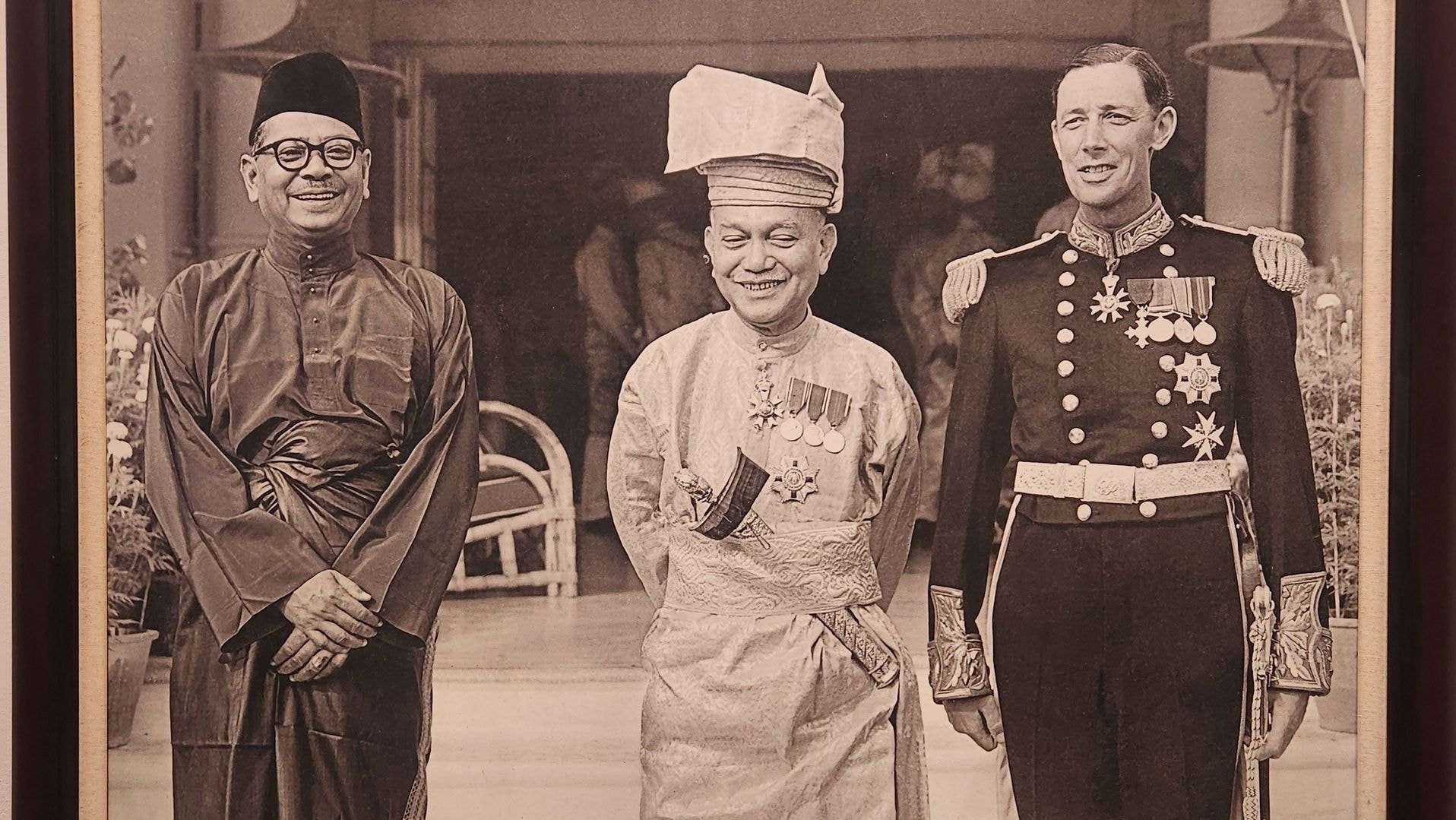
From l to r: Prime Minister Tunku Abdul Rahman, HRH Yang Di-Pertuan Agong Tuanku Abdul Rahman ibni Almarhum Tuanku Muhammad, and High Commissioner Donald MacGillivray during the signing of the Federation of Malaya Agreement in Kuala Lumpur on 5 August 1957.


Words: Tarmizi Tun Dr. Ismail

The previous piece established that institutionalisation and entrepreneurial pursuit are not points on a single spectrum but answers to different questions, and that effective leadership is a matter of fit between judgment style and the problem an organisation is actually solving at that stage of its life. This raises the natural next question: can stewardship do more than simply protect an institution from bad bets? Can it actively accelerate the pathway to greatness, and if so, what happens when the unit of analysis is no longer a single institution, but a nation?

The short answer to the first question is yes, but only when stewardship is redesigned as a mechanism for compounding value-creation rather than a brake upon it. The short answer to the second is that nation-building introduces a third register above entrepreneurship and institutional stewardship, statesmanship, which does not compete with value creation so much as it reorders what value creation is for.

Part I: Stewardship as Accelerant, Not Brake

The apparent tension between value creation and stewardship is real at the level of a single decision, since no decision can simultaneously optimise for speed and for consensus. But it is false at the level of an institution's whole life. An institution is not one decision; it is thousands of them, compounding over decades. Stewardship's true function is to determine which decisions get to be entrepreneurial and which get to be standardised, allocating boldness correctly, rather than suppressing it.

Three mechanisms make this concrete:

1. Stewardship lowers the cost of risk-taking, which raises the rate of value-creating bets.

An entrepreneur outside an institution bears the full downside of a bad bet personally, which is why even bold entrepreneurs are conservative about which bets they place. An institution with strong governance, capital reserves, and succession depth can absorb a failed bet without existential damage, which is what allows it to fund several ambitious initiatives where a standalone founder could only afford one. Properly built, governance is not opposed to boldness; it is what makes boldness affordable at scale.

2. Stewardship converts a single entrepreneurial win into a repeatable capability.

An entrepreneur who succeeds once has proven an idea. An institution that succeeds once and institutionalises the judgment behind it, codifying what made the bet work into hiring, decision rights, and capital allocation, has built a compounding engine. This is the actual pathway to greatness: not one great decision, but a system that reliably reproduces great decisions after the original decision-maker has moved on.

3. Legitimacy is a value-creation asset, not merely a risk-reduction one.

Legitimacy, public trust, regulatory standing, stakeholder buy-in, is what earns an institution access to capital, talent, land, licences, and political cover that no purely entrepreneurial venture could obtain at the same cost. Well-run stewardship converts trust into strategic optionality. Institutions that reach greatness fastest are usually the ones that used legitimacy as leverage for bold moves, not as a reason to avoid them.

Stewardship does not oppose value creation. It is the mechanism that determines whether a single good bet becomes a permanent capability.

Part II: Introducing Statesmanship, The Register Above the Institution

Nation-building adds a layer that neither entrepreneurship nor institutional stewardship, on their own, can supply: statesmanship. Where entrepreneurship operates at the scale of the venture and stewardship at the scale of the organisation, statesmanship operates at the scale of the polity itself, and its time horizon, currency of legitimacy, and decision logic all change accordingly.


Entrepreneurial Pursuit

Institutional Stewardship

Statesmanship

Scale

Venture / individual

Organisation

Nation / polity

Time horizon

Immediate to medium-term

Multi-generational (decades)

Civilisational (generations to centuries)

Legitimacy currency

Proof, traction, conviction

Stakeholder trust, governance credibility

National unity, sovereignty, the social contract

Decision logic

Judgment, conviction, speed

Process, precedent, risk-adjusted structure

Balancing competing goods across the whole polity

Function of value creation

The end goal

The compounding mechanism

The instrument of a larger purpose

Statesmanship's defining feature is that it does not optimise a single metric, growth, return, even institutional survival, but balances competing goods that a purely economic logic cannot resolve on its own: equity against growth, unity against efficiency, sovereignty against openness, present welfare against generational obligation. A statesman's legitimacy is not earned through stakeholder trust in one organisation; it is earned, or lost, in the social contract with an entire people.

Tun Dr. Ismail.

Photo: Writer's own


Part III: Does Statesmanship Supersede Value Creation, or Coexist With It?

The honest answer is neither pure supersession nor simple coexistence, statesmanship reorders the telos of value creation without eliminating its necessity.

At the level of purpose, statesmanship does supersede value creation: it subordinates the pursuit of returns to a higher aim, national cohesion, equitable development, sovereignty, resilience, and it is willing to accept a lower economic return in one place in exchange for a strategic or social gain elsewhere. This is precisely why nations build institutions, such as government-linked companies, that a purely private-capital logic would never construct in the same form: strategic infrastructure in unprofitable regions, industries nurtured for sovereignty rather than near-term margin, capability built for resilience against shocks that may never come.

But at the level of execution, statesmanship is entirely dependent on value creation. A statesman's vision, however sound, is inert without the economic surplus, technical capability, and institutional capacity that only entrepreneurial and institutional value-creation can generate. Statesmanship without value creation is rhetoric; value creation without statesmanship is directionless. The relationship is not competitive but hierarchical and instrumental: statesmanship sets the mandate and the boundary conditions; institutions convert that mandate into compounding capability; entrepreneurial judgment inside those institutions supplies the specific bets that create the value in the first place.

Statesmanship does not replace value creation, it decides what value creation is for, and stewardship is the connective tissue that carries that purpose down into execution.

Part IV: The Nesting Structure in Practice

This is precisely the architecture that government-linked companies exist to embody, and it explains why they cannot be evaluated by either a pure statesmanship standard or a pure commercial standard alone. A statesman-level mandate, a national development agenda, a resilience objective, a sovereign capability, is handed down to an institutional layer, which is then responsible for two things simultaneously: protecting that mandate's legitimacy across decades, and creating the protected space within which entrepreneurial judgment inside its operating companies can take the specific bets that make the mandate real.

  • The statesman sets why value should be created and for whom: the national purpose the institution exists to serve.

  • The institutional steward decides which bets are protected, how failure is absorbed, and how a single win becomes a repeatable capability across the group.

  • The entrepreneurial operator inside each operating company supplies the specific, ground-level judgment that turns protected space into realised value.

When this nesting works, greatness accelerates because each layer is doing the job only it can do: statesmanship supplies purpose and legitimacy at national scale, stewardship supplies the compounding architecture, and entrepreneurial judgment supplies the velocity. When it breaks down, when statesmen attempt to pick individual bets, when institutions absorb the statesman's role and lose commercial discipline, or when operating companies are denied the protected space to take risk, the nation-building mandate stalls at exactly the layer where the breakdown occurred.

The Deeper Point

Nation-building via value creation and nation-building via statesmanship are not rival theories of how a country develops, they are different layers of the same system, and the pathway to greatness runs through all three simultaneously. A nation that has only entrepreneurial energy produces isolated pockets of brilliance that never compound. A nation that has only institutional stewardship produces durable but sluggish capability. A nation that has only statesmanship produces vision without the machinery to realise it. It is the interlocking of all three, statesmanship setting purpose, stewardship compounding capability, entrepreneurship supplying velocity, that allows a country, and the institutions that carry its mandate, to reach greatness faster than any one register could achieve alone.

Tarmizi Tun Dr. Ismail & Partners Sdn Bhd | Executive Search & Human Capital Advisory

About the Writer

Tarmizi Tun Dr Ismail

Tarmizi began his career with Bank Negara Malaysia where he served for eight years in various departments of the Central Bank, including with the Office of the Advisor, Office of the Governor as well as at the Bank Negara Malaysia Office located in New York.

Upon completion of his service, he was appointed as Head, Fund Management with a leading investment bank for the next five years managing funds under management totalling RM 2 billion by the end of his tenure in 1995.

His experience in analysing and investing in various listed companies on Bursa Malaysia led him to his next career milestone as General Manager, Business Development and Corporate Services at Land and General Berhad, a conglomerate with businesses spanning across the property development, oil and gas, forestry as well as industrial businesses.

By 2000, he decided to embark on his own entrepreneurial pursuits and eventually established his own Executive Search firm, Tarmizi Tun Dr Ismail & Partners Sdn Bhd in 2002 where it continues to operate to this day.

During many of his assignments, his significant accomplishments have been working closely with Ministries, Government owned institutions as well as corporations alongside other large and medium sized companies where strategic top level leadership is needed to be strengthened as well as to provide advisory services and solutions to enhance the capability needs..

Having had the fortune of coming across many top level professional talents and corporate leaders over the last two decades, Tarmizi is now venturing to build and coalesce a repository of top level Malaysian professionals with numerous functional areas and across numerous industries to come together as a cohesive community of leaders so that they may contribute their vast and expansive knowledge and expertise in the service of nation building.

Related posts