

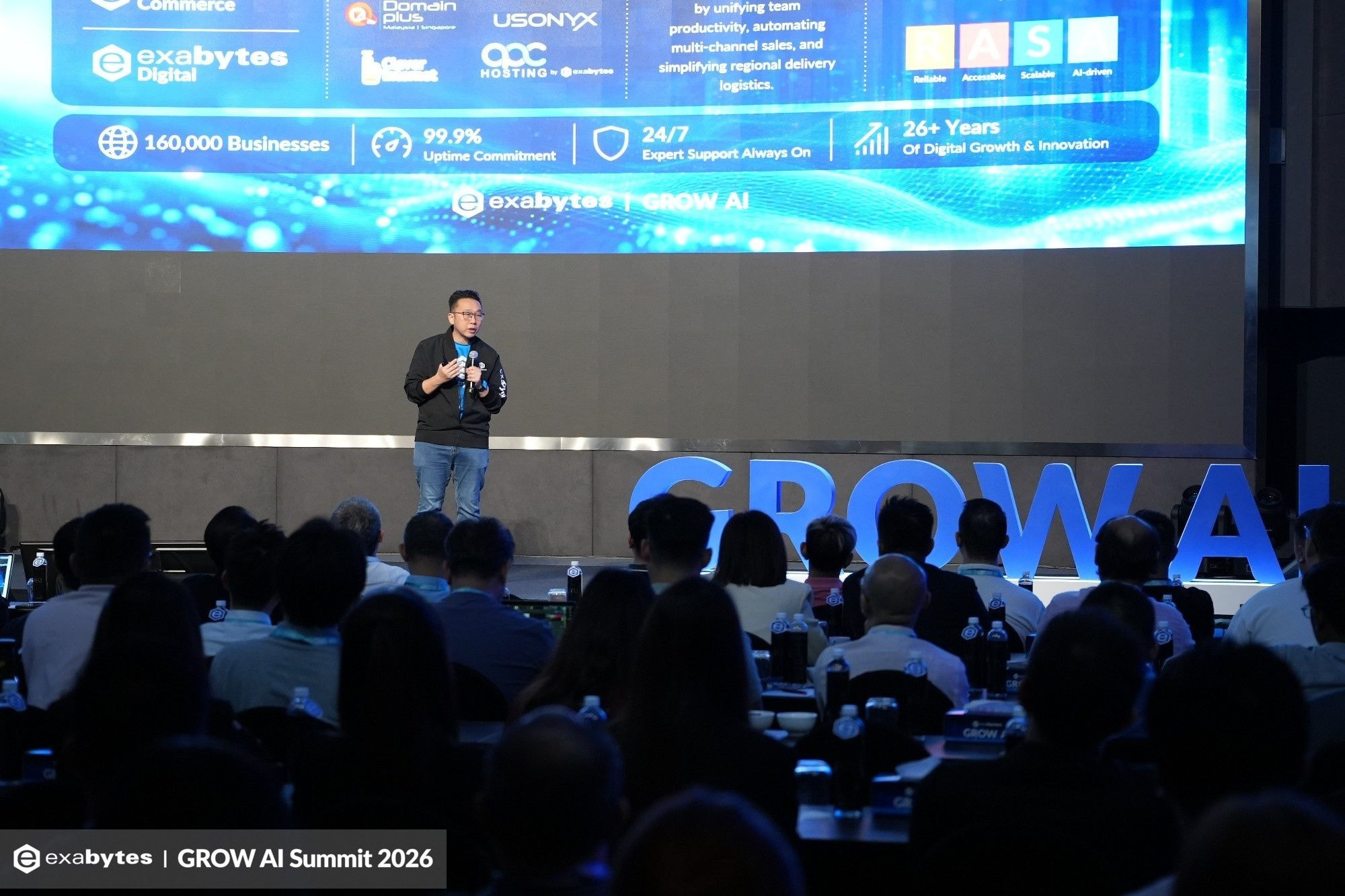
Mr. Chan Kee Siak, Founder & CEO of Exabytes Group during his opening keynote. Photos courtesy of Exabytes Group.
Words: GC Editorial Team
There is a version of corporate ambition that ends at the balance sheet, and there is a version that understands scale as a form of duty. Exabytes, twenty-five years into building Southeast Asia's digital backbone, has chosen the latter with the launch of GROW AI, a strategy less concerned with selling artificial intelligence (AI) than with making sure the businesses least equipped to adopt it are not left to fend for themselves.
The numbers explain why this matters. A 2025 study by Ecosystm, conducted with Red Hat and backed by the National AI Office, found that only one in five Malaysian SMEs surveyed had moved past the pilot stage with AI. Six in ten cited a lack of in-house expertise as the barrier. This is the quiet crisis beneath every AI headline: interest has outpaced capability, and the businesses with the least room for error are the ones most exposed to that gap.
GROW AI is Exabytes' answer, built on what the company calls the RASA principles: Reliable, Accessible, Scalable, AI-driven. It is the next chapter of a mission that began with helping businesses simply exist online and now extends to helping them think, decide and operate with AI woven into the fabric of the enterprise. Announced at the GROW AI Summit 2026 in Kuala Lumpur, before an audience of roughly 500 business owners, executives and public-sector figures, the strategy carries a target that reads more like a civic pledge than a sales projection: one million businesses empowered to adopt AI by 2030.
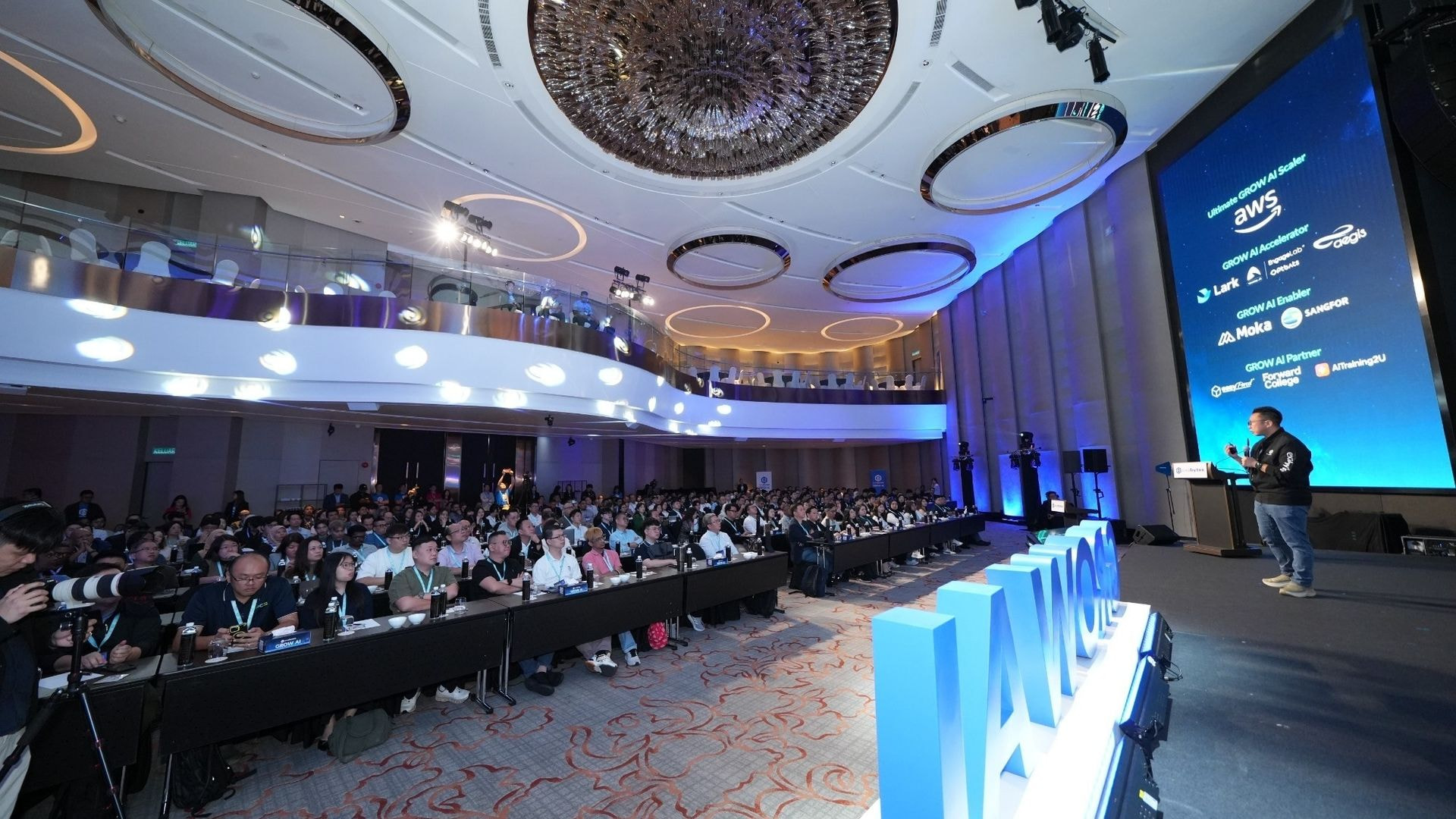
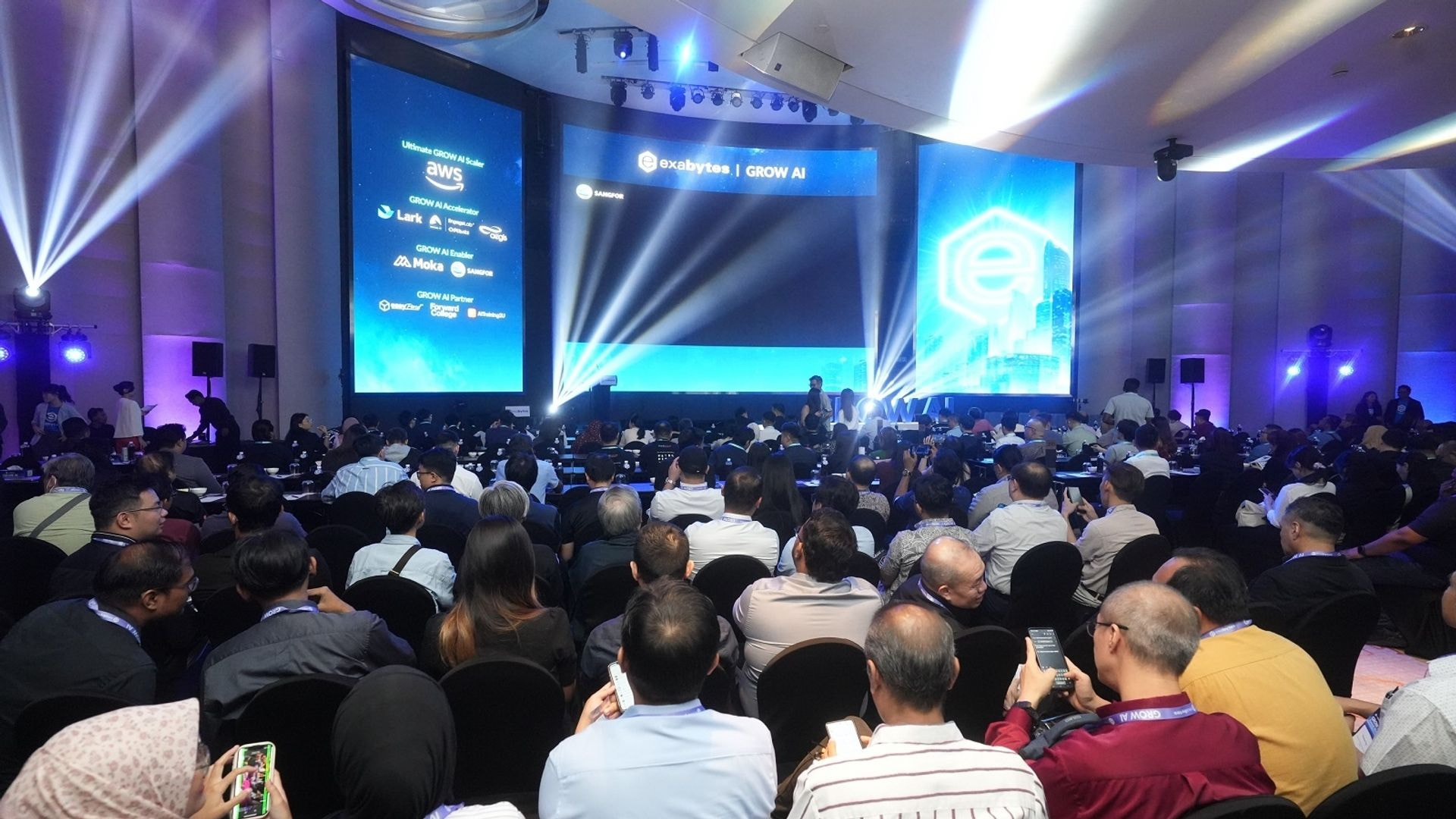
Exabytes GROW AI Summit 2026.
Chan Kee Siak, the company's Founder and Chief Executive, framed the moment as a natural continuation rather than a pivot, noting that the company's role has always been to reduce complexity for businesses uncertain of where AI fits into their operations. It is a modest way of describing what amounts to a redistribution of capability, from the companies that already have it to the thousands who do not.
The summit's centrepiece was a three-year partnership between Exabytes and Aurora Mobile, the NASDAQ-listed enterprise AI platform behind GPTBots.ai, signed by Chan and Aurora Mobile's Founder and CEO, Chris Lo. The alliance pairs Exabytes' regional infrastructure and customer reach with Aurora Mobile's expertise in AI agents and workflow automation, aimed at producing tools that scale from a single SME's customer-service assistant to full enterprise AI deployments for larger organisations and government bodies. Lo's own framing was instructive: enterprise AI transformation, he suggested, is not a matter of switching on a chatbot, but of connecting intelligence to an organisation's knowledge, workflows and people, with the governance to sustain it.
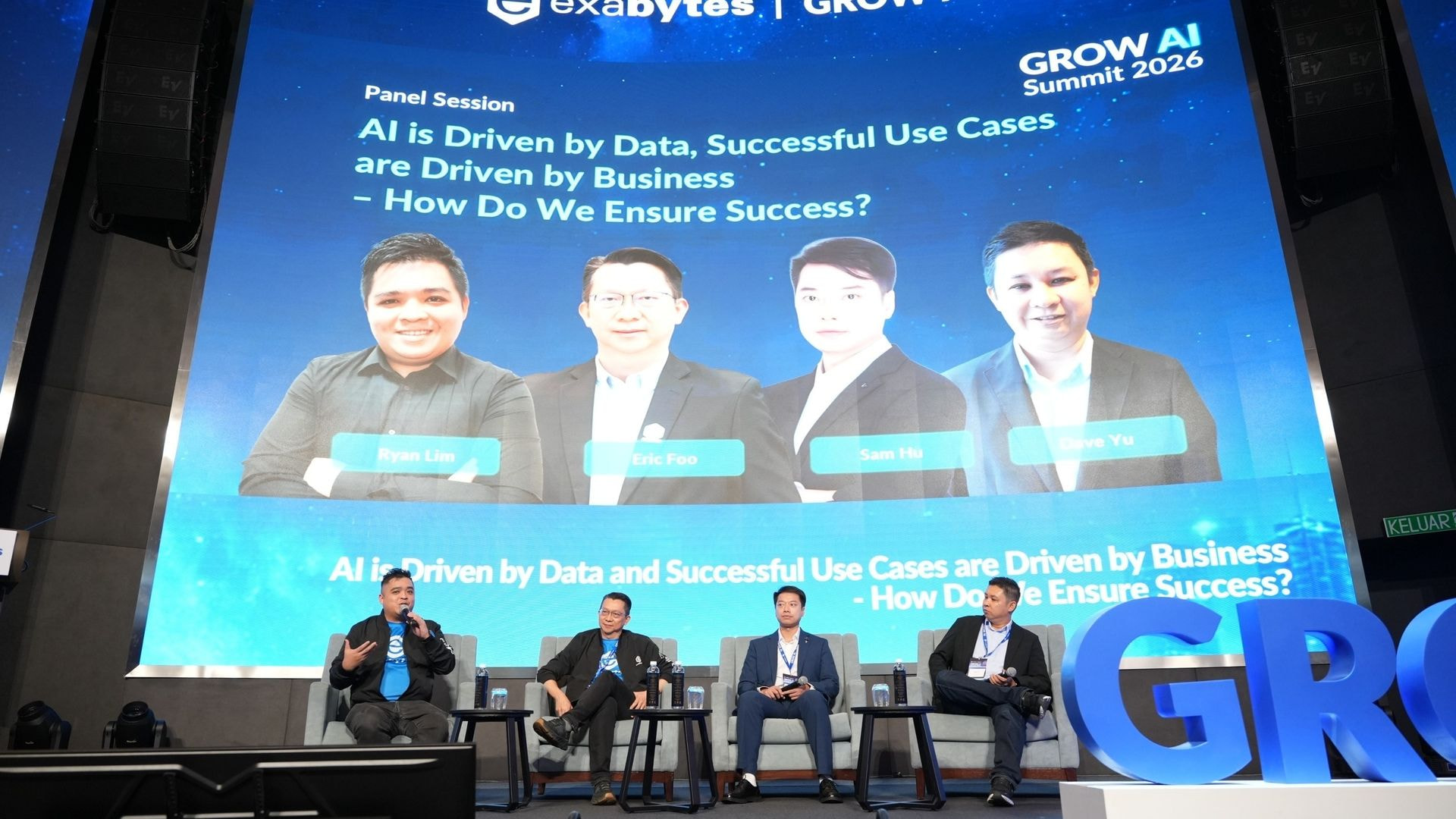

(From L to R) Mr. Ryan Lim, Enterprise Sales & Account Manager, Exabytes Group, Mr. Eric Foo, Deputy CEO, Exabytes Group, Mr. Sam Hu, AI Solution Manager, Sangfor Technologies, and Mr. Dave Yu, COO, Aegis Clouds during the second panel session entitled “AI is Driven by Data and Successful Use Cases are Driven by Business – How Do We Ensure Success?”