
24.10.2026
Penyata Razak legacy: The classroom united us, but ancestry and wealth still divide us. Why?
Penyata Razak promised a unified Malaysia through education, but can shared classrooms overcome the enduring divides of royal lineage, social class and wealth? From MCKK, STAR and SDAR to elite golf clubs and marriage circles, Tengku Putera explores Aristotle’s idea of aristocracy, the limits of meritocracy and the true meaning of nobility.
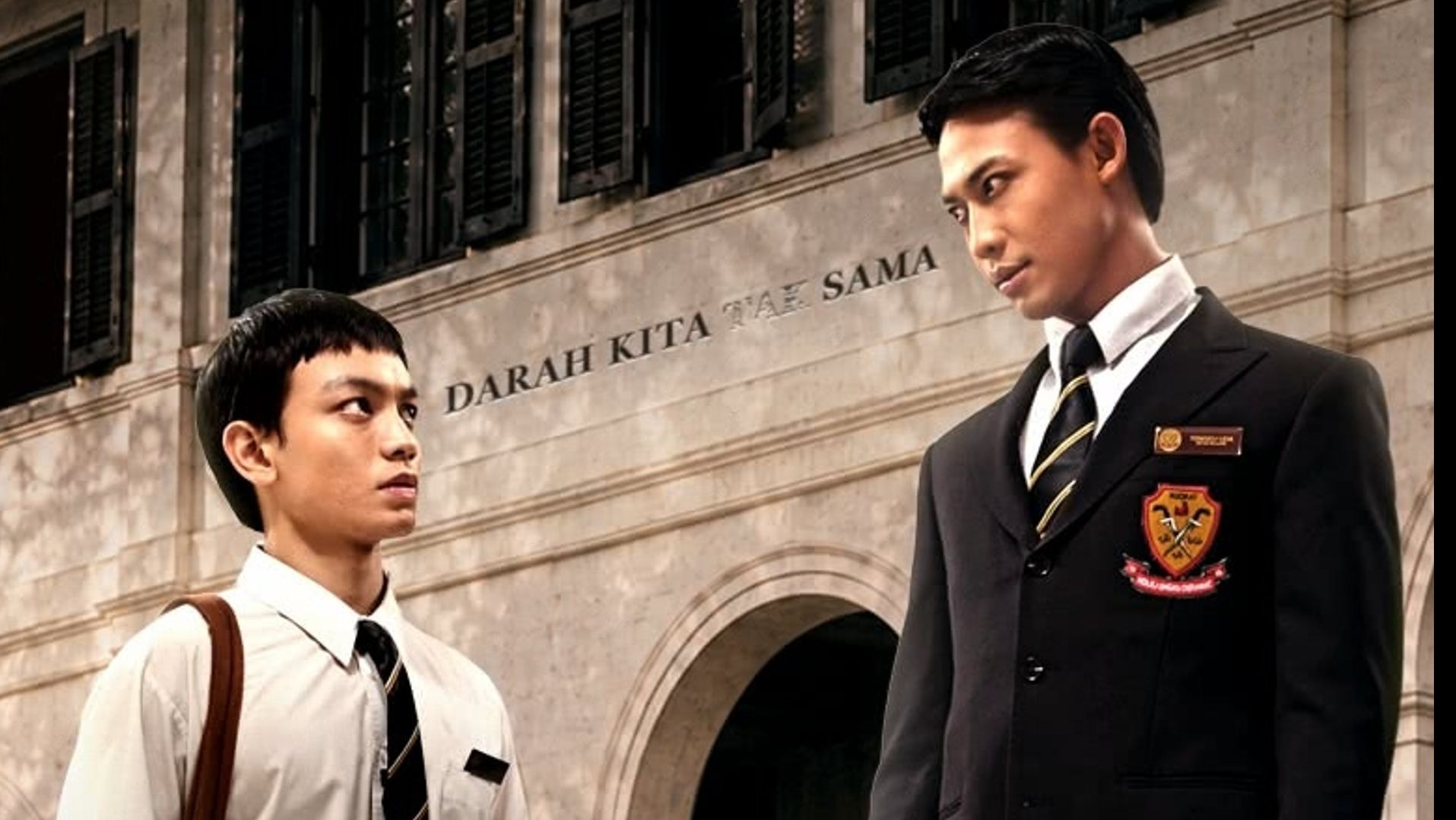
Kudrat 1968: High Council.
Photo credit: ASTRO Shaw.
Words: Tengku Putera
Disclaimer: The views and opinions expressed in this article are those of the author and do not necessarily reflect the views, opinions, or position of Gentleman’s Code (GC), its editorial team, or its associates.
In 1956, Malaysia's second Prime Minister Tun Abdul Razak put his name to a report with a generous promise. The Ministry of Education’s own history records it clearly: one national education system, Bahasa Malaysia as the eventual main medium, a curriculum rooted in the Malaysian setting, and one common examination for every child. The 1957 Education Ordinance gave it legal form. The Rahman Talib Report and the 1961 Education Act then added foundations in reading, writing and arithmetic, spiritual grounding, discipline, and eleven years of schooling instead of nine.
The schools gave the promise a face. Malay College Kuala Kangsar, opened in 1905 for the sons of royalty, welcomed talent from the kampung. In January 1957, 360 children aged thirteen to fifteen gathered in old wooden army barracks on Ashby Road, Ipoh, and began what became STAR, Sekolah Tuanku Abdul Rahman. Its sibling, SDAR, Sekolah Dato’ Abdul Razak, grew to stand in Seremban. Ministers, generals and professors with no royal blood walked the same corridors as princes. For a generation, the vision shone.
But school is a season. Adulthood is the rest of the story.
Bankers Club Kuala Lumpur.
Watch where those classmates meet on a Saturday. One drives to the private golf club, where membership is by introduction, the fairway is quiet, and friendship and business share a table. The other takes the family to the Mamak or the shopping mall, where the weekend sale is on. Nobody forbids anyone. Nobody needs to. We simply drift toward the room where we never have to explain ourselves.
That is the honest truth: we are most comfortable with our own kin, whatever the education system shaped in us.
Marriage is where this becomes plain, because marriage is where families vote with their children. For centuries royalty married royalty, guarding bloodlines the way a vault guards gold. Today the tycoon marries the tycoon, and corporate dynasty find partners among equals. The classroom produced classmates. It rarely produced in-laws.
So what is the point of centralisation, if the core values of the blue blood and the common people still differ? Here is the gentle hallucination: we believed that sitting together meant belonging together. A child from a royal family home returns each evening to a house where tradition and manner are a language. A child from a rural home returns to a house where the language is endurance, the loan, the sacrifice for next term’s fees. Same textbook, two answers to what a good life requires. Centralisation can unify the exam paper. It cannot unify the value.
Aristotle taught Alexander the Great from ages 13 to 16 in Mieza, imparting ideas on ethics, politics, science, and the concept of an exceptional leader, though Alexander's actual rule diverged heavily from Aristotle's ideal vision.
Aristotle would nod. In the Politics, he described the rule of the best, aristocracy, from aristos, meaning excellent. Not the best born. The best in virtue and capability. He also noted that when this rule narrows into the rule of a wealthy few, it becomes oligarchy. When royal bloods marry royal bloods to preserve values and status, or tycoons marry tycoons and the golf club becomes the real boardroom, the circle closes. Both use the word “best.” Ask people from Taman Tun or Bukit Tunku if you disagree with my point of view.
Here is the part Aristotle would applaud. He believed education should be common to all citizens, because a city has one purpose and its young must be shaped toward it together. The report never promised to erase the gap in one generation. It promised to make the gap crossable.
Photo: Tengku Uda and Tunku Ghafar (middle) | Kudrat 1968: High Council.
Photo credit: ASTRO Shaw.
That is the lasting gift of the common school. It is the one place where virtue can be seen without a surname attached. At MCKK, STAR or SDAR, the farmer’s son can outshine the prince before the same teacher, on the same paper, in the same hour. The 1950s gave us a shared measuring stick. Without it, “the best” is decided in the delivery room by the name on the cot. With it, the best must step forward and prove itself.
Yet we applaud merit at prize giving, then measure by lineage at the engagement and by net worth at the club. We celebrate the scholarship student on stage and hesitate to seat the same student at the family table.
Values will never be unified by a syllabus. They travel through who we invite home, who we trust with our children, and who we are willing to call family. The curriculum opens the door. Only we can walk through it.
For us, the invitation is personal. True nobility is the code of conduct. The next rule of the best belongs to families who open their doors wider than their traditions, to tycoons who fund a scholarship before they plan a dowry, and to clubs bold enough to invite talent through the gate.
Penyata Razak gave Malaysia its classroom. The next chapter will be written in the drawing room, and on the fairway.
Sources: Kementerian Pendidikan, Imbasan Sejarah, Sekolah Tuanku Abdul Rahman, Sekolah Dato’ Abdul Razak