26.01.2026

GC at the Australian Open 2026: Lessons on grace and growing older in tennis

A spontaneous layover at the Australian Open turns into a reflection on aging athletes, discipline, and why tennis remains the ultimate gentleman's sport.

Words: Captain "Six Packs" Faeez Bustaman


Sometimes the best experiences come from impulse decisions made at 30,000 feet.

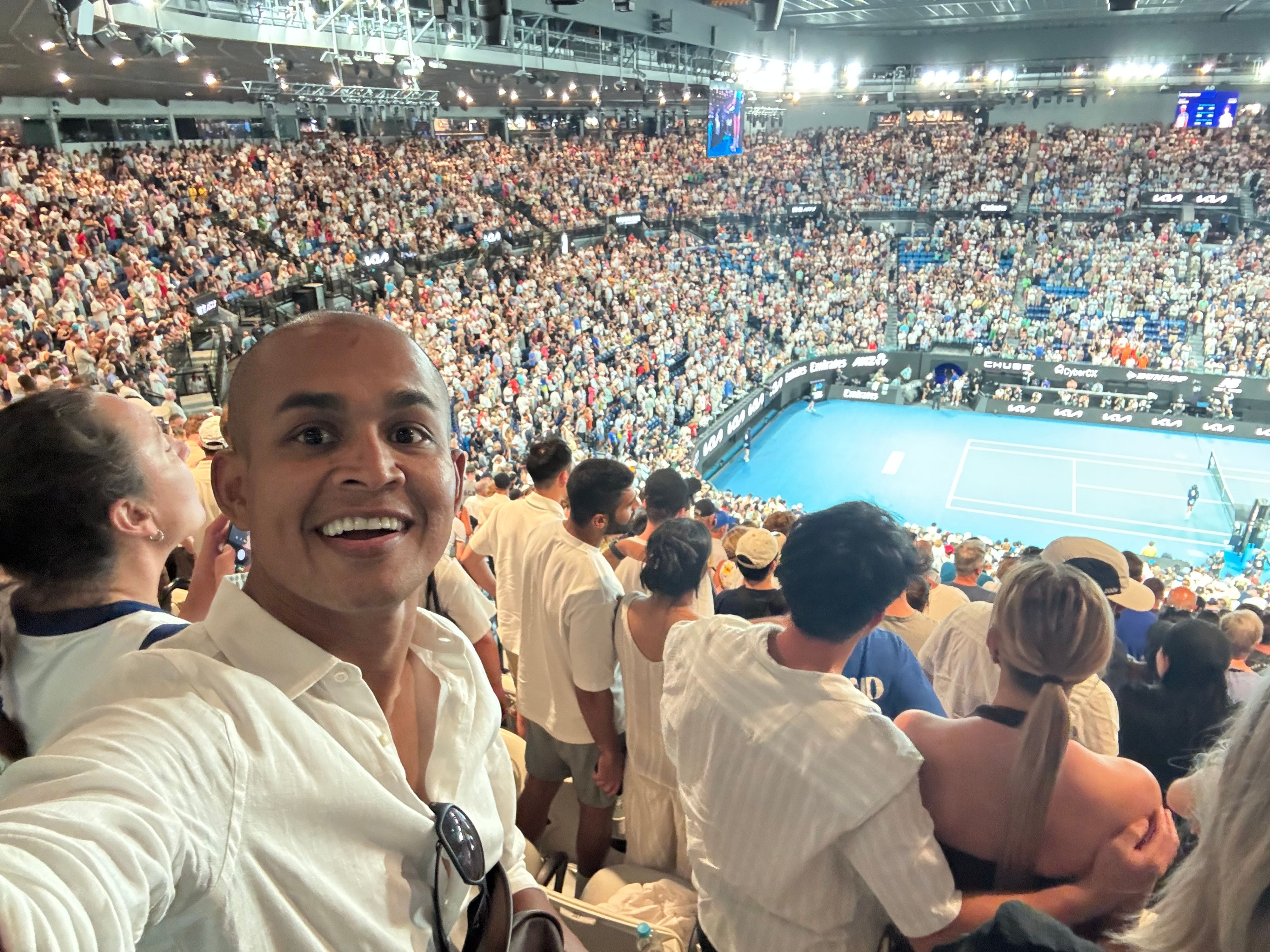
Between flight rosters and time zone confusion, I found myself with a rare layover in Melbourne during the Australian Open. Most airline crew would probably sleep through their downtime. The sensible choice, really. Instead, I bought a ticket to watch world-class tennis in blistering heat, hoping to catch a glimpse of greatness before it retires. What started as a spontaneous detour turned into something more: a masterclass in discipline, a lesson in aging gracefully, and a reminder that sometimes the journey matters more than the destination. Even if that destination involves sitting outdoors in temperatures that could grill a steak.

The Experience

The Melbourne weather was scorching hot that day. The kind of heat that makes you wonder if you've accidentally walked into a convection oven. Luckily, there was a free tram running directly from near my stay along Flinders Road straight to the Australian Open. Free transport to watch world-class tennis? Melbourne was already winning points with me.

In just about ten minutes, I arrived at one of the world's most iconic tennis venues. It was my first time attending a Grand Slam, and I was determined not to embarrass myself by accidentally cheering at the wrong moment or confusing the players' names.

I can't speak for other tournaments, but what stood out immediately was how incredibly organised everything was. From the moment I waited for the tram until I reached Rod Laver Arena, crew members were everywhere, guiding spectators like tennis-loving shepherds. They had clearly mastered the art of crowd control — probably from years of managing fans desperate for bathroom breaks between sets.

I arrived a little late and unfortunately missed the opening round between Jannik Sinner — the world number two from Italy — and Eliot from the United States. Typical. My first Grand Slam and I'm already fashionably late like I'm attending a casual brunch instead of elite-level sport.

Every staff member I encountered was warm and helpful. Step by step, they guided me all the way to my seat, probably sensing I had the navigational skills of someone who'd get lost in their own backyard.

During the break, I bought a bag of chips for the girl sitting beside me. She was very friendly and shared her experience attending the US Open. Traveling and watching alone, it felt surprisingly nice to make a new friend. A reminder that sport has a beautiful way of connecting strangers. Also, sharing chips is apparently universal friendship language.

Sinner went on to win the match after battling some cramps. He admitted he played much better after they closed the roof — a decision made under the Australian Open's heat policy, which protects players when conditions become extreme. Fair enough. It's hard to serve aces when you're simultaneously auditioning for a dehydration documentary.

I was hoping to watch Novak Djokovic play, perhaps before he eventually retires (which, let's be honest, might be in the year 2045 at this rate). But his match was scheduled that night, and with an early flight the next day, I had to leave. Airline crew life means sleep is part of the job — and staying up to watch tennis, however tempting, doesn't mix well with safety demonstrations at 30,000 feet.

Even so, for a first Grand Slam experience, it couldn't have started better.

Playing Tennis After 35

At above 35 years old myself, watching legends like Djokovic hits differently. It's like watching a masterclass in defying biology while the rest of us struggle to get off the couch without our knees making sound effects.

Competing at elite level against players nearly half his age is no small achievement. After 35, recovery slows down. Flexibility decreases. Muscle strength becomes harder to maintain. Injuries take longer to heal, and fatigue builds up faster. Basically, your body starts sending you passive-aggressive reminders that you're not 25 anymore.

For athletes over this age, performance is no longer just about talent or technique. It becomes a lifestyle. A very, very disciplined lifestyle that makes the rest of us feel guilty for eating pizza at midnight.

You have to train smarter, not just harder. Recovery sessions become as important as court time. Mobility work, stretching, sleep, hydration, and nutrition are no longer optional. They are essential. Younger players might bounce back overnight; older players need discipline and structure. And possibly a personal masseuse on speed dial.

What truly separates champions like Djokovic is adaptation. He said in his interview, "I take care of my mind and my body." He also admitted that things were different 15 years ago - which is athlete speak for "I used to eat whatever I wanted and now I look at a croissant and feel guilty."

They refine movement, manage energy, invest deeply in recovery, and rely on experience. They understand their bodies better. They don't chase every ball. They choose the right ones. They play with patience, strategy, and emotional control. In other words, they've learned that sometimes not running is the smartest move, which coincidentally is also my life philosophy.

Age may slow the body, but it sharpens the mind. And in tennis, that balance matters.

Why Tennis Is a Gentleman's Sport

Tennis has always been more than just competition. It's a sport built on respect - for opponents, officials, and the game itself. Players shake hands after matches, even when they'd probably rather shake their racket at the umpire. Crowds stay silent during rallies, which is a miracle considering humans can barely keep quiet during a library visit. There's etiquette in how you enter the court, how you dress, and how you carry yourself.

Unlike many sports, tennis demands self-control. Players often call their own lines at amateur levels, which requires honesty levels not typically found in, say, group chat arguments. There's no hiding behind teammates. Every point reflects your character. Every tantrum is yours alone to own.

A gentleman in tennis doesn't just win gracefully. He loses with dignity. He controls his emotions (or at least tries to before the racket gets involved). He respects the rules. He acknowledges good shots from his opponent, even when it hurts his soul. He understands that integrity matters as much as trophies.

Watching professionals compete reminds us that tennis mirrors life: discipline, patience, resilience, and respect go a long way. Sometimes it's not just about the match. It's about the journey, the atmosphere, the people you meet, and the quiet inspiration drawn from watching greatness up close — even under the blazing Australian sun that makes you question every life choice that led you to sit outdoors in 40-degree heat.

But hey, at least the tennis is worth it.

About the Contributor

Captain Faeez Bustaman

Captain Faeez Dato Bustaman is a seasoned airline pilot known as "Six-Pack Captain" who balances his 7,000+ flight hours with an unwavering dedication to fitness.

When not crossing time zones in the cockpit, this globetrotter has stamped his passport in 73 countries, documenting hidden gems on his travel blog while mentoring aspiring aviators on accessible pathways to the skies. His Gentleman Code magazine columns blend aviation insights with fitness wisdom and travel adventures, all delivered with the same wry humor that reminds followers his impressive abs photos are "sekadar hiasan" (merely for illustration).

Related posts