

22.02.2026

Dr Ean Chan, Aesthetic & Functional Wellness Expert, on why many Malaysians in their 30s and 40s are ageing faster than they should

Why high-performing Malaysian men in their 30s and 40s are ageing faster, and the data-driven wellness approach reversing it.

GC Illustration.


Words: GC Editorial Team


Across urban Malaysia, a growing number of working adults do not feel unwell. Yet no longer feel well.

They navigate long workdays, family responsibilities, and social commitments with apparent composure, yet many live in a persistent state of low-grade exhaustion. Fatigue lingers despite adequate sleep. Weight becomes resistant despite reasonable effort. Skin loses its vitality, stress takes longer to recover from, and the mental sharpness that once defined their professional edge begins to dull, gradually, almost imperceptibly.

These changes are easy to dismiss. They arrive slowly, without drama, and are often rationalised as the natural cost of a busy, accomplished life. But according to Dr Ean Chan Boon Khai, Aesthetic and Functional Wellness Expert at KALO Cosmetics, what many high-performing Malaysians are experiencing is not simply ageing. It is accelerated biological ageing, driven by chronic stress, systemic inflammation, hormonal disruption, and metabolic strain.

The World Health Organisation now formally recognises burnout as an occupational phenomenon arising from chronic workplace stress that has not been successfully managed. Research published in The Lancet Healthy Longevity further shows that prolonged stress, inflammation, and metabolic burden can accelerate biological ageing independently of chronological age. Yet most people do not seek care. Because these symptoms do not feel acute or alarming, they occupy what Dr Ean describes as the “in-between” state — not sick enough for conventional medical treatment, but far from optimal health.

Dr Ean is well-positioned to speak to this growing gap. Trained in nutritional medicine, nutrigenomics, and aesthetic medicine, he works with individuals who are outwardly high-functioning but internally depleted. His clinical approach at KALO centres on identifying how the accumulation of lifestyle overload, poor recovery, hormonal disruption, and low-grade inflammation quietly erodes energy, resilience, and appearance over time — and, crucially, how to reverse it before the damage becomes permanent.

In this interview, Dr Ean shares his clinical insights on why early-onset fatigue is so prevalent among Malaysian professionals, what distinguishes accelerated biological ageing from normal chronological ageing, and how a personalised, data-driven approach to functional wellness can restore vitality, performance, and appearance without disrupting the pace of modern life.

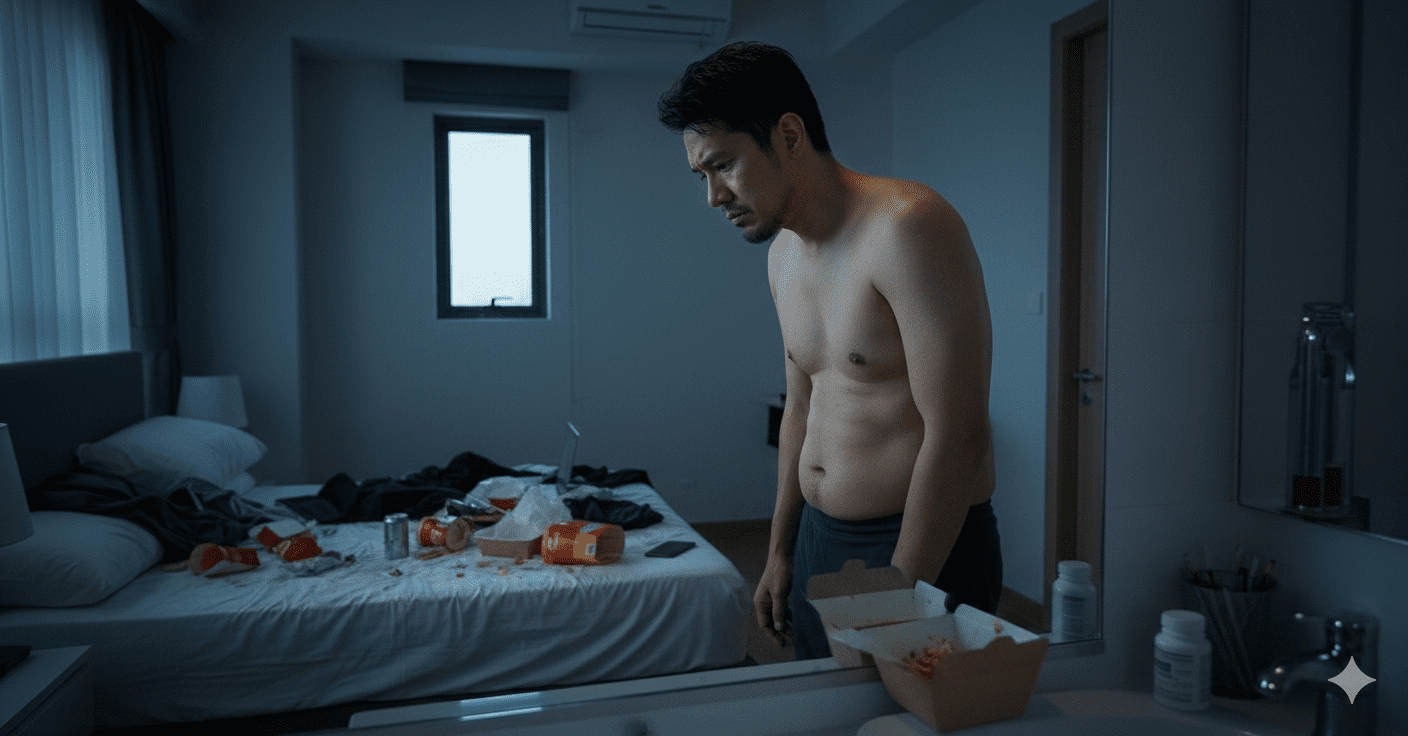
Many high-performing Malaysians in their 30s and 40s report feeling persistently drained despite a busy, accomplished life. From your experience, what subtle habits or lifestyle patterns accelerate this early-onset fatigue?

Early-onset fatigue in high-performing men is rarely caused by a single major problem. In clinical practice, what we consistently observe is the accumulation of subtle daily stressors — individually manageable, but collectively corrosive over time.

One of the most common contributors is a sedentary, desk-bound lifestyle. While this may seem unremarkable in the context of office work, prolonged physical inactivity reduces mitochondrial efficiency — the cellular machinery responsible for energy production. When the body is not regularly challenged through movement, its capacity to generate and sustain energy gradually declines. Pair this with a high intake of processed foods, refined sugars, and late-night dining, and the metabolic environment within the body becomes increasingly unfavourable.

Chronic psychological stress, experienced by most professionals as a baseline condition rather than an acute episode, compounds the problem further. Without proper recovery cycles built into daily life, the body’s stress response systems remain in a state of prolonged activation, draining hormonal reserves and disrupting the quality of sleep. Digital overstimulation — the near-constant exposure to screens and information — prevents the nervous system from transitioning into the deep, restorative stages of sleep that are essential for cellular repair.

Over time, these patterns increase systemic inflammation and oxidative stress, causing the body to age biologically faster than it does chronologically. At KALO, we frequently see professionals whose lifestyle achievements have significantly outpaced their cellular recovery. The body, in other words, is paying a debt it was not given the means to repay.

How can a man distinguish between normal chronological aging and accelerated biological aging caused by stress, hormonal imbalance, or metabolic strain?

Chronological ageing is expected — it is the passage of time expressed in the body. Accelerated biological ageing, however, shows up differently, and crucially, it shows up earlier than it should.

There are several clinical red flags that suggest biological age is outpacing chronological age. The rapid accumulation of visceral, or abdominal, fat despite no major change in overall body weight is one of the most telling signs. This pattern reflects underlying shifts in insulin sensitivity and cortisol regulation that are not visible on a standard scale. Persistent brain fog or a reduced sense of mental sharpness — the kind that professionals often attribute to stress or overwork — is another early indicator worth taking seriously.

A paradox that we see frequently is the combination of daytime exhaustion alongside an inability to sleep deeply at night. This is not simply poor sleep hygiene; it often reflects a dysregulated cortisol rhythm, where the stress hormone that should be high in the morning and low at night has become inverted or disrupted. Slow recovery from exercise or minor illness is another signal, as is the presence of chronic low-grade inflammation markers in routine blood tests — markers that conventional medicine may interpret as “within normal range” but that functional medicine views as early warning signals.

Importantly, biological ageing is measurable. Through comprehensive functional blood profiling, we can assess hormonal shifts, inflammatory markers, insulin resistance, and oxidative stress levels. This allows us to intervene strategically before long-term cellular damage accumulates — turning what might otherwise become an irreversible decline into a manageable and correctable trajectory.

Hormones, inflammation, and oxidative stress are often overlooked. How do these elements shape not just energy and weight, but also appearance and recovery?

This is a connection that is frequently underestimated, even by individuals who are relatively health-conscious. Hormones and inflammation do not only affect how you feel — they directly and measurably affect how you look.

When hormonal balance is disrupted or systemic inflammation rises, a cascade of visible changes begins to unfold at the cellular level. Collagen production slows, resulting in deeper wrinkles and a loss of skin firmness that cannot be attributed solely to sun exposure or external ageing. Micro-inflammation in facial tissue manifests as persistent puffiness and uneven skin tone — the kind that skincare products alone cannot resolve, because the source is internal rather than topical.

Oxidative stress, which I often describe as a form of “cellular rust” accumulating within the body, damages melanocytes — the cells responsible for hair pigmentation — contributing to premature greying that many men assume is simply genetic. Impaired circulation, another downstream consequence of chronic inflammation, produces dull, lifeless skin and significantly slows wound healing. And elevated cortisol, the body’s primary stress hormone, drives a characteristic redistribution of fat toward the abdomen and face, creating the “tired look” that many men in their late 30s begin to recognise in the mirror.

This is why KALO addresses ageing at the cellular level, not merely through surface treatments. Restoring appearance and vitality requires addressing the biological environment that produces these visible changes, not just managing their outward expression.

For a gentleman juggling demanding careers, family, and social obligations, what are the most effective daily practices to preserve vitality and resilience?

Vitality, in my clinical experience, is not built through dramatic interventions or complex routines. It is sustained through consistent fundamentals, practised with intention and discipline.

Diet forms the foundation. A balanced, anti-inflammatory diet rich in whole foods — vegetables, quality proteins, healthy fats, and minimally processed carbohydrates — creates the biochemical environment that supports cellular energy and recovery. This does not need to be restrictive or complicated; it simply needs to be consistent.

Physical activity is equally non-negotiable. Resistance training combined with moderate cardiovascular exercise supports mitochondrial function, hormonal balance, and metabolic efficiency. For busy professionals, the goal is not hours in the gym but regularity — three to four sessions per week of purposeful movement make a measurable difference over time.

Sleep is the most undervalued recovery tool available to us. Seven to eight hours of high-quality, uninterrupted sleep is not a luxury — it is the period during which the body repairs cellular damage, consolidates memory, regulates hormones, and clears metabolic waste from the brain. Protecting sleep quality should be treated as a professional priority, not a personal indulgence.

Strategic stress management rounds out the fundamentals. Structured downtime, breathing practices, and the deliberate creation of recovery space within a demanding schedule are not soft wellness concepts — they are physiological necessities. And underpinning all of this, routine biomarker monitoring ensures that any emerging imbalances are identified and corrected before they become clinically significant.

Functional wellness claims to go beyond conventional health advice. How does a personalised, data-driven approach redefine what it means to age well and perform at peak levels?

Conventional medicine, by design, operates reactively. It waits until something is abnormal before intervening. Functional wellness, by contrast, looks at trends and trajectories before they reach the threshold of clinical pathology. We are not waiting for a problem to declare itself — we are identifying its precursors.

By analysing biomarkers over time — hormonal levels, inflammatory markers, metabolic efficiency, oxidative stress, and more — we gain the ability to make precise, strategic micro-adjustments today that prevent long-term cellular decline tomorrow. The analogy I often use is that of oxidative stress as “cellular rust.” By the time you feel unwell, the rust has been accumulating for years. A data-driven approach allows us to intervene at the stage of early discolouration, before structural damage has occurred.

This changes the entire framework of what it means to age well. Peak physiological performance can be maintained, not passively hoped for. Hormonal balance can be optimised rather than left to decline at its natural rate. Biological ageing can be measurably slowed. Recovery and resilience can be enhanced in ways that directly improve daily functioning and professional output.

At KALO, we design highly specific, adaptive protocols tailored to the individual — because no two people age in exactly the same way, and no two people’s optimal state looks identical. Vitality and longevity, in this model, are not left to chance. They are intentionally engineered.

Are there measurable routines, biomarkers, or interventions that men can adopt to track and optimise their long-term cellular health?

Yes, and this is one of the most actionable areas of functional wellness. Comprehensive health testing is the starting point, and it goes considerably beyond the routine screenings offered in most conventional clinics.

KALO’s Wellness Blood Test evaluates a range of critical markers that are frequently overlooked in standard health assessments but are deeply implicated in fatigue, accelerated ageing, weight resistance, and poor stress recovery. These include high-sensitivity C-reactive protein, a sensitive indicator of systemic inflammation; homocysteine, which reflects cardiovascular and cognitive risk; fasting insulin and the HOMA-IR index, which provide a nuanced picture of insulin resistance well before it progresses to pre-diabetes. Testosterone and cortisol balance reveal hormonal dynamics that directly influence energy, mood, and body composition. Oxidative stress markers quantify the degree of cellular damage accumulating within the body, while advanced lipid profiles offer a more detailed cardiovascular risk picture than standard cholesterol tests alone.

Once these markers are measured and assessed, a truly personalised protocol can be designed. This may include targeted anti-inflammatory strategies, antioxidant support calibrated to the individual’s oxidative load, metabolic optimisation through dietary and lifestyle adjustments, and nutritional correction where deficiencies are identified. The key distinction from generic supplementation or wellness advice is that every intervention is grounded in measurable biology — making the approach more precise, more legitimate, and considerably more effective.

The certified specialists at KALO Cosmetics - Dr Ean, Dr Chai, and Dr Lee

Photo credit: KALO Cosmetics


Finally, how can functional wellness be seamlessly integrated into the life of a modern gentleman — enhancing performance, appearance, and recovery — without turning wellness into a chore?

This is perhaps the most important practical question, and it is one I take seriously. The professionals I work with are not looking for another demanding commitment on top of an already demanding life. Functional wellness, done well, should reduce burden — not add to it.

At KALO, we make wellness efficient and personalised. Our protocols are designed to support cellular efficiency through targeted nutrients, reduce systemic inflammation through evidence-based interventions, optimise hormonal balance through precise, science-backed strategies, and improve recovery from both physical and psychological stress. Depending on individual needs and biomarker findings, this may include personalised nutrient optimisation, hormone support for those whose sleep and mood are significantly affected, IV therapy for individuals whose lifestyle demands make replenishment through diet alone insufficient, and aesthetic interventions that restore skin health from within — addressing the biology of tired-looking skin rather than simply masking it.

The result is that busy professionals can maintain peak performance, a youthful, vital appearance, and faster recovery — without disrupting the rhythm of their existing lives. Wellness, in this model, is not a separate project requiring willpower and sacrifice. It is an intelligent, invisible infrastructure that enables everything else to work better.

A Broader Shift in How We Think About Health

Dr Ean’s perspective reflects a broader global shift in how health-conscious individuals and leading institutions are rethinking the relationship between lifestyle, biology, and performance. The Cleveland Clinic notes that functional medicine focuses on restoring balance by addressing the root contributors to health decline rather than isolated symptoms. McKinsey’s Future of Wellness report similarly highlights growing consumer demand for sustainable energy, stress resilience, and long-term vitality — a move away from short-term fixes toward genuinely optimised living.

For Malaysian professionals navigating the particular pressures of urban working life — long commutes, demanding workdays, family responsibilities, and the cultural expectation of composure under pressure — this shift carries real practical significance. The experience of low-grade exhaustion, weight resistance, diminished skin vitality, and slower recovery is not an inevitable feature of a successful life. It is, in many cases, a correctable one.

Studies published in Frontiers in Endocrinology demonstrate that chronic stress disrupts hormonal balance and metabolic health in ways that contribute to fatigue, weight resistance, and mood instability. Research in The Journal of Clinical Endocrinology & Metabolism links prolonged cortisol dysregulation to sleep disturbance, visceral fat accumulation, and accelerated ageing — all conditions that Dr Ean and his team address through personalised, clinically grounded protocols.

The message from KALO is ultimately one of agency rather than alarm. The biological processes that underpin early-onset fatigue and accelerated ageing are measurable, addressable, and reversible. For the modern Malaysian gentleman who has built a successful life but finds himself running on diminishing reserves, functional wellness offers not a departure from ambition, but a means of sustaining it.


Dr Ean Chan Boon Khai is an Aesthetic & Functional Wellness Expert at KALO Cosmetics, specialising in nutritional medicine, nutrigenomics, and personalised preventive health strategies.

About the Contributor

Captain Faeez Bustaman

Captain Faeez Dato Bustaman is a seasoned airline pilot known as "Six-Pack Captain" who balances his 7,000+ flight hours with an unwavering dedication to fitness.

When not crossing time zones in the cockpit, this globetrotter has stamped his passport in 73 countries, documenting hidden gems on his travel blog while mentoring aspiring aviators on accessible pathways to the skies. His Gentleman Code magazine columns blend aviation insights with fitness wisdom and travel adventures, all delivered with the same wry humor that reminds followers his impressive abs photos are "sekadar hiasan" (merely for illustration).

Related posts