

11.08.2026

The maestro returns: Dato’ Johari Salleh and the Royal Concert UKM 2026

After 10 years, the Royal Concert UKM returns, with Dato' Johari Salleh, 86, still writing for full orchestra at PETRONAS Philharmonic Hall.
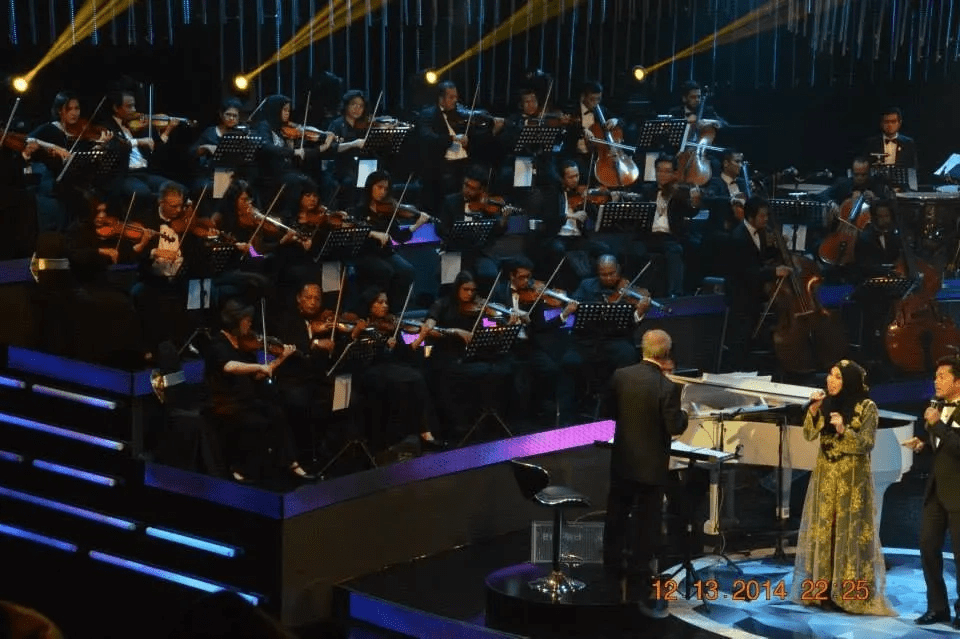
Malaysia Broadcasting Orchestra.


Words: Dena Adnan


After a decade-long absence, Royal Concert UKM returns to the stage with a new ambition. Last held in 2016, Konsert DiRaja UKM returns on 8 August 2026, moving beyond its usual university setting and into the grandeur of Dewan Filharmonik PETRONAS, one of Malaysia’s most prestigious concert halls.

Titled Konsert DiRaja UKM 2026: Simfoni DiRaja: Legasi Irama Sepanjang Zaman (Royal Symphony, A Legacy of Melody Through the Ages), the evening brings together three generations of Malaysian voices: Dato’ Zainal Abidin, Dayang Nurfaizah, and Nadeera, accompanied by Orkestra Kuala Lumpur under the baton of Maestro Dato’ (Dr.) Johari Salleh alongside conductor Mohd Isa Ismail.

At the centre of the evening is Dato’ Johari Salleh, one of Malaysia’s most respected composers, arrangers, and orchestral figures. For more than six decades, he has played a significant role in shaping the country’s musical landscape, from broadcast orchestras and popular recordings to large-scale symphonic works.

For audiences travelling from Singapore and beyond, the concert offers a rare opportunity to experience a living connection to the golden era of Malaysian and Singaporean orchestral music, still actively creating new work for today’s audiences.
For the first time in years, the Royal Concert UKM steps out of its usual campus hall and into the grandeur of Dewan Filharmonik Petronas — and the man behind the orchestration of the evening is, fittingly, a legend who has been shaping Malaysia’s popular and symphonic music for over six decades: Dato’ (Dr.) Johari Salleh.

It’s a night built in support of UKM’s education and human capital development fund, and for those of us watching the region’s music scene from Singapore, a rare chance to see one of the last working links to Malaya and Singapore’s golden era of orchestral pop still very much at the podium.
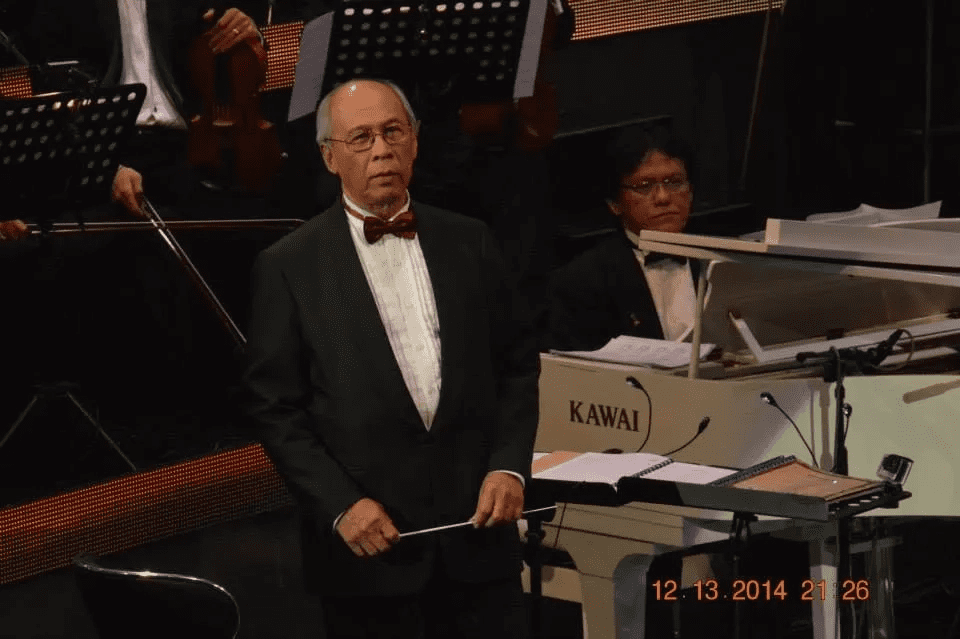

Dato’ (Dr.) Johari Salleh with legendary Malaysian pianist Hassan Ahmad during a Maestro Concert live broadcast performance.


Born in Singapore, A Malaysian Maestro Still Writing Orchestral Works at 86

Dato’ Johari Salleh was born on 9 February 1940 in Geylang, Singapore, the son of a Melaka-born father and a Singaporean mother. Music ran in the family early. He began learning composition and arrangement informally from his own father and a music teacher named Saaban Saliman before pursuing it formally. In 1967, RTM, then Malaysia’s government broadcaster, sent him to the Berklee College of Music in Boston to deepen his training in composition and arrangement, making him one of the earliest Malaysians, and by some accounts the first student from Malaysia and Singapore, to attend the school. He completed his studies there in 1968. It’s worth noting what that kind of formal training actually covers: composition and arrangement study at a school like Berklee isn’t just about backing up a singer, it trains musicians to score for full orchestras and ensembles across genres, including music for film, which is the same symphonic skill set behind the kind of large-scale orchestral writing Dato’ Johari Salleh has built his career on.

His career found its home at the Broadcasting Orchestra, Malaysia, - (RTM Orkestra) where he joined as a staff musician in 1961 and rose to become its Music Director by 1976, a post that placed him at the centre of Malaysia’s broadcast orchestra sound for nearly two decades. He left in 1983 to run his own music company, but his real legacy was already taking shape: in 1988, he founded what is now known as Orkestra Kuala Lumpur (OKL), the Kuala Lumpur City Hall’s own orchestra, which remains active today.

What makes Dato’ Johari Salleh remarkable isn’t just the scale of his back catalogue (commercial hits for stars like Rahimah Rahim and S.M. Salim, national songs, and orchestral works performed by ensembles as far afield as the New York Symphonic Ensemble and the St. Petersburg Philharmonic) but that at 86, he is still actively writing and arranging symphonic composition. The arrangements for this year’s Royal Concert UKM are entirely his own new work, not archival reissues.


When Malaysian Songs Meet the Symphony

For Royal Concert UKM 2026, Dato’ Johari Salleh composed or reworked eight pieces into full orchestral scores specifically for the evening, taking each song’s melody and harmonizing it across strings, brass, woodwinds, and percussion, a process musicians call orchestration.

The programme includes:

  1. Nusajaya

  2. Nilai Cinta

  3. Medley: Biarlah Aku Pergi
    A medley combining Biarlah Aku Pergi, Aku Dia dan Lagu, and Sejak Ku Bertemu Denganmu.

  4. Overture Purnama
    The opening work of the evening.

  5. Azizah: Dalam Variasi
    A symphonic interpretation of the late Tan Sri P. Ramlee’s classic, presented as an instrumental showcase for the orchestra.

  6. Medley: Bossanova Antonio Carlos Jobim
    A tribute to the Brazilian composer widely associated with the bossa nova movement, whose compositions helped define the genre internationally.

  7. Medley: Beatles
    An instrumental journey through the catalogue of one of popular music’s most influential bands.

  8. Semerbak Mewangi
    The closing overture piece of the concert.

Together, these works reflect the unique role of orchestral arrangement: creating a bridge between familiar songs and new musical experiences.

The Difference Between a Band Arrangement and a Symphonic Work

For readers less familiar with orchestral music, a symphonic arrangement is the process of transforming a song, often one originally written as a pop recording, into the language of a full orchestra.

It goes beyond simply assigning a melody to different instruments. Through orchestration, the arranger shapes the instrumentation, harmony, dynamics, and musical texture, deciding how the strings, woodwinds, brass, and percussion work together to create movement, emotion, and dramatic depth.

The result preserves the heart of the original song while expanding its scale, colour, and expressive possibilities through the full palette of a symphony orchestra. It is the same discipline practised by celebrated composers and orchestrators such as John Williams, Hans Zimmer, and Joe Hisaishi, whose orchestral writing has demonstrated how familiar melodies can become cinematic and immersive experiences.

In Dato’ Johari Salleh’s hands, Malaysian classics are not replaced; they are reimagined. Songs audiences already know are given new dimensions through the power and richness of a full orchestra.

It’s a programme that moves fluidly between homegrown Malay classics from Malaysian and Singaporean legends, a tribute to P. Ramlee, and international songbooks, bossa nova and the Beatles alongside Azizah, which is very much Dato’ Johari Salleh’s signature as an arranger: he treats Malaysian popular song as material worthy of full symphonic treatment, on the same footing as anything from the Western canon.

The Orchestra He Built

Orkestra Kuala Lumpur, the ensemble performing the evening’s programme, was founded by Dato’ Johari Salleh in 1988 during his time as Music Director of the Broadcasting Orchestra, Malaysia, and has since become a fixture of Kuala Lumpur City Hall’s cultural life, playing everything from state functions and royal weddings to rock concerts over its 36-plus years. Today it’s a 70-piece outfit led by Dr. Isabella Pek, DBKL’s Head of Music, a trained pianist and arranger for bands and orchestras who has worked with the Broadcasting Orchestra Malaysia. Conducting the orchestra on the night is Mohd Isa Ismail, its regular conductor, with Dato’ Johari Salleh himself joining as guest conductor for the pieces he arranged — a rare occasion where founder and current ensemble share the same podium.

Dato’ (Dr.) Johari Salleh with renowned Malaysian singer Jamal Abdillah and Orkestra Kuala Lumpur.


The Royal Patronage: A Quick Note on Negeri Sembilan’s Monarchy

The concert is held under the patronage of the Yang di-Pertuan Besar of Negeri Sembilan, DYMM Tuanku Muhriz Ibni Almarhum Tuanku Munawir, who also serves as UKM’s Chancellor, together with DYMM Tunku Ampuan Besar Tuanku Aishah Rohani.

For readers outside Malaysia, a brief primer: Malaysia has nine royal houses, and most pass their throne down by hereditary succession, father to son. Negeri Sembilan is the exception. Its ruler is elected, chosen by a council of four hereditary chiefs known as the Undang, from among the eligible male members of the royal family, following a Minangkabau-derived custom that dates back to the 18th century. It’s the only elective monarchy among Malaysia’s states, which is part of why Negeri Sembilan’s royal house carries a slightly different texture from its neighbours, chosen rather than simply inherited.

Dato’ Johari Salleh alongside wife Datin Zurina post-concert session with DYMM Tuanku Muhriz Ibni Almarhum Tuanku Munawir, Chancellor of UKM.


Why This One Matters

The venue change isn’t incidental. On 21 July 2026, UKM’s Vice-Chancellor, Prof. Dato’ Dr. Sufian Jusoh, signed a Memorandum of Understanding with Dewan Filharmonik PETRONAS and the Malaysian Philharmonic Orchestra, aimed at building talent, education, and cultural collaboration between the university and the country’s premier concert hall. Royal Concert UKM 2026 is the first initiative under that partnership, a deliberate move by the new VC to place UKM’s flagship royal concert on a stage built for orchestral music, rather than treating it as a one-off booking.

Royal Concert UKM has long been a modest, campus-scale affair. This year’s move to Dewan Filharmonik Petronas (paired with a guest lineup spanning three generations of Malaysian pop: Dato’ Zainal Abidin, Dayang Nurfaizah, and Nadeera) signals something a little bigger — a royal concert stepping into a genuinely world-class concert hall, still guided by the same maestro who’s been arranging Malaysian orchestral pop since before most of tonight’s audience was born.

Photo : Dewan Filharmonik Petronas

Worth the Weekend Trip

If you want to see Dato’ Johari Salleh in action at 86, this is the kind of night worth building a weekend around. Some ticket categories have already sold out, but other tiers are still available, priced from RM299 up to RM799–RM899 for suite seating. That works out to roughly S$94 to S$250–S$280 in Singapore dollars, or about US$73 to US$196–US$220. Promo codes UKMDIRAJA26 (20% off, for one or three tickets per transaction) and UKMPAYDAY (40% off for four tickets and above) are still live.

For those of us across the Causeway, it’s a solid excuse for a short KL getaway: a proper cultural evening at Dewan Filharmonik Petronas, real Malaysian songbook classics reimagined with a full orchestra behind them, and a working legend still leading from the podium. Dress code is business or lounge suit for men, baju kurung or kebaya for women — this one calls for dressing up.

Tickets and full event details: Royal Concert UKM 2026

About the Author

Dena Adnan

Editor-In-Chief of Kulture Insider

After 15 years as a professional violinist with Malaysia’s National Symphony Orchestra and Malaysian Broadcasting Orchestra, Adinazeti understands what most business leaders miss: culture is not decoration — it’s business strategy. From backstage orchestra concert halls to luxury hotel ballrooms across Southeast Asia, she witnessed how corporations invest in cultural excellence to elevate their brand. Kulture Insider emerged from this insider perspective, exploring where artistry intersects with influence.

Related posts