

22.02.2026

Old Money curriculum 2026: Lesson One – What 'old money' really means and why it matters

Discover the true definition of 'Old Money', its roots in Boston's merchant class, and how anyone can adopt its values of education, thrift, and purposeful living to build lasting wealth and a richer life.

Words: Byron Tully

Prince William and JFK's grandson - John Bouvier Kennedy Schlossberg.

Photo credit: JFK Library


As 2026 gets underway, I’ve decided to offer a curriculum of sorts (hence the name) for our Members of the Tribe, old and new.

In each lesson, I’ll be presenting a specific Old Money concept or a collection of related fundamentals. Some of the information will be a refresher course for those of you who’ve read The Old Money Book or for those who’ve followed the blog for a period of time. Some other readers will find the insights and strategies I offer to be new and hopefully helpful.

So without further delay, let’s dive in…

Lesson One:  Introduction/Definition of Old Money/Why I’m doing this

As there’s a lot of talk these days about the concept of ‘Old Money’, let me clarify my focus. It has not changed since I published The Old Money Book and launched this blog over ten years ago.

My mission is this: 

I’m going to show you how anyone from any background can adopt the values, priorities, and habits of America’s Upper Class in order to live a richer life. 

Definition of 'Old Money'

With that in mind, I think the next order of business should be to provide you a working definition of 'Old Money'.

Old Money is the culture that develops after a family enjoys three consecutive generations of wealth and privilege. 

It’s very important to understand that it’s not enough to simply ‘be rich’ for three generations. If your grandfather made a fortune, and your parents preserved that fortune, but no one in your family has been educated or socialized to best enjoy an elevated quality of life as a result of the fortune, then you, as the third generation will most likely not be considered ‘Old Money’. You’ll simply be someone with money who doesn’t know how to behave or to make the most of their lucky situation.
Carolyn Bessette Kennedy and JFK Jr.

Photo: Getty


However, most wealthy families who don’t prioritize education won’t have anything to worry about: the money will be squandered long before it gets to the third generation. (Refer to the Introduction found in The Old Money Book for a classic example.)

That’s where the word ‘privilege’ comes in. In this context, it does not mean ‘advantage’. It means having the good fortune to be raised and influenced by educated, ethical, polite, healthy, and far-sighted people who embrace what I call ‘Old Money Values’.

You can adopt these values and benefit, just like someone who was born into this culture. And you do need to see it as a culture, like French culture or hip hop culture. There are rules, rituals, codes of behavior, and modes of dress.

Contradict them at your peril. Embrace them and prosper. It’s that simple.

The Origins of Old Money 

The culture of Old Money in America has its roots in Boston. Not so much with the first settlers who landed there, but more as a result of the merchant princes whose self-made wealth (shipping, banking, railroads) established Boston’s First Families in the 1800s.  (Read The Proper Bostonians by Cleveland Amory for a detailed and enthralling history of this.)

These hardworking and high-minded entrepreneurs not only had strong ideas about making money for themselves; they had definite ideas about making their city a great place to live. They prized education, morality, culture, and family and were not hesitant to press their philosophy on their descendants and the general public. This is one of the reasons that Boston has been referred to as ‘the Athens of America’.

In short, the culture they created–emphasizing modesty, thrift, education, and hard work–is the basis for what we think of when we refer to ‘Old Money’ today. It should be noted that many of these families and fortunes are still intact, with generation after generation of discreet, healthy, happy, and productive individuals contributing to society and enjoying life.

Jean-Christophe, Prince Napoléon.

Photo: Getty


Characteristics of Old Money

Very briefly, here are some obvious and not-so-obvious attributes you’ll find in Old Money Gals and Old Money Guys (OMGs):

Focused on Accomplishing rather than Slacking/Spending

Focused on Purpose rather than Distraction

Focused on Experiences rather than Material Possessions

Focused on Quality of Life rather than Standard of Living

Focused on the Long Term rather than the Short Term

Focused on Value rather than Price

Focused on Discretion & Privacy rather than Bragging & Showing Off

How this helps you: adopting this philosophy, you’ll be more likely to live better, spend less, and become financially independent sooner rather than later. You’ll enjoy a higher quality of life, and you’ll be more likely to enjoy meaningful relationships and raise happy, healthy kids. 

Pearl of wisdom: as you’re reading this, don’t be put off and think that Old Money Values are just for snobs. We are snobs: we think that this is the best way to live.  We don’t understand why everyone doesn’t live like we do (quietly, productively, with the long term in mind). But ignore us for now. Just look at the Old Money way of life as a resource you can use to improve your life, right now.

Why I’m doing this: to level the playing field, to give everyone a chance to succeed. This way of life has served me and my family well for generations. There’s no reason it can’t benefit you and your family going forward. 

Join me next time for Lesson Two, and remember…

Class is never dismissed.

Contributor

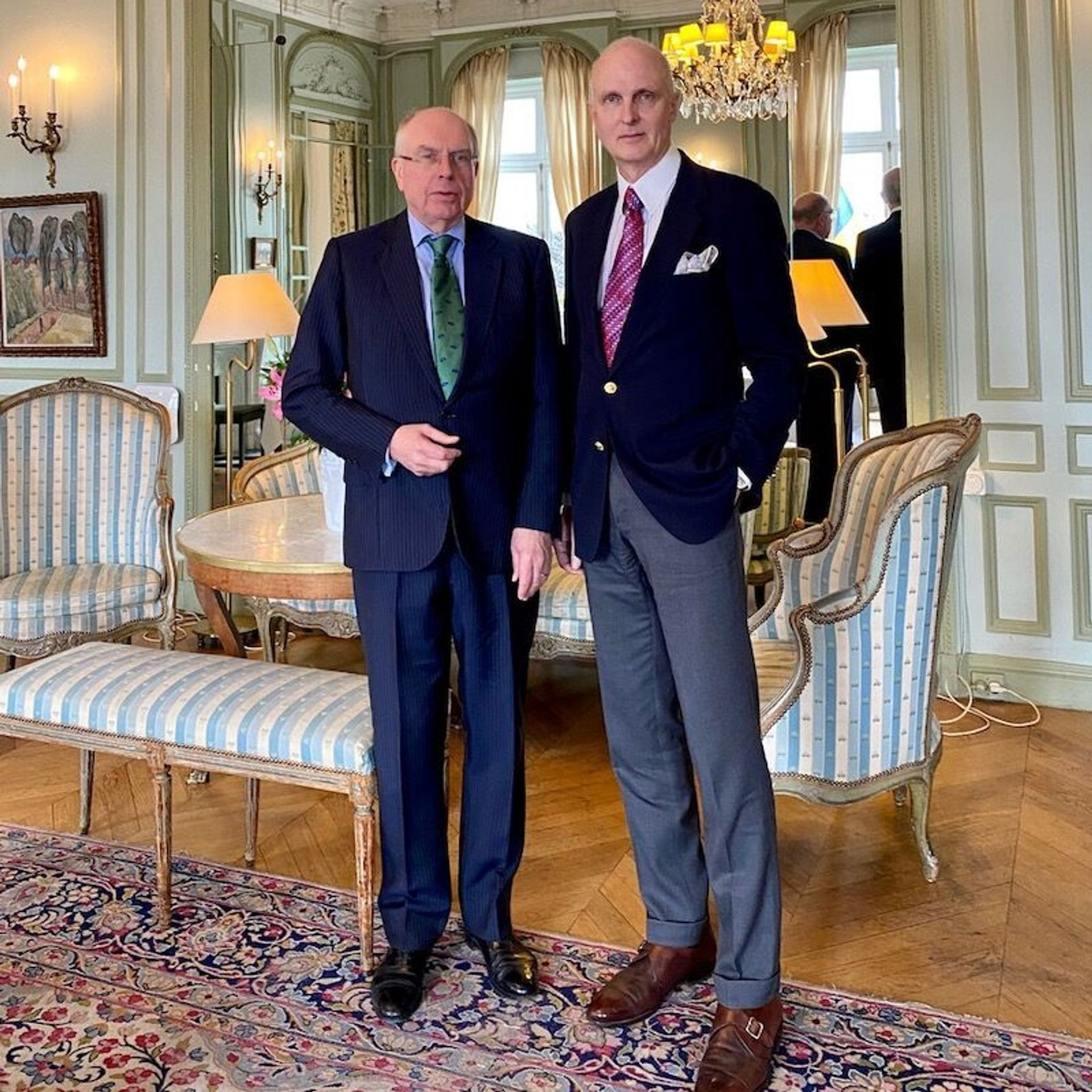
Byron Tully (right)

Grandson of a newspaper publisher and son of an oil industry executive, Byron Tully is an author who also writes for the entertainment industry. His nonfiction debut, "The Old Money Book," was published in April of 2013 to excellent reviews and enjoys consistently strong sales worldwide. His other works include "The Old Money Guide To Marriage", "Old Money, New Woman: How To Manage Your Money and Your Life", and "Old Money Style - The Gentleman's Edition".

Byron regularly contributes to its blog, www.theoldmoneybook.com, which has been visited by over 1 million readers since 2014.

In February of 2020, "Old Money Style - The Gentleman's Edition" was published by Acorn Street Press. This fourth book in the Old Money series reveals the fundamentals of dressing well in a classic and timeless style. In November of 2020, Byron published a 2nd Edition of "The Old Money Book", which expands on his original classic. This 2nd Edition includes vital information and insights for readers as they navigate a very different, post-pandemic world.

Byron speaks frequently about the culture and values of Old Money. He has been interviewed by KABC New York's Financial Quarterback Show, The Huffington Post, and The Simple Dollar, among others.

He lives in Paris and is happily married to an Old Money Gal from Boston.

Related posts