
07.08.2026

Christopher Nolan's The Odyssey proved the code is the only thing stopping man from collapsing

Tunku's observation inside Nolan's The Odyssey, on how Zeus's Law becomes the gentleman's code that decides who survives, and who gets erased.
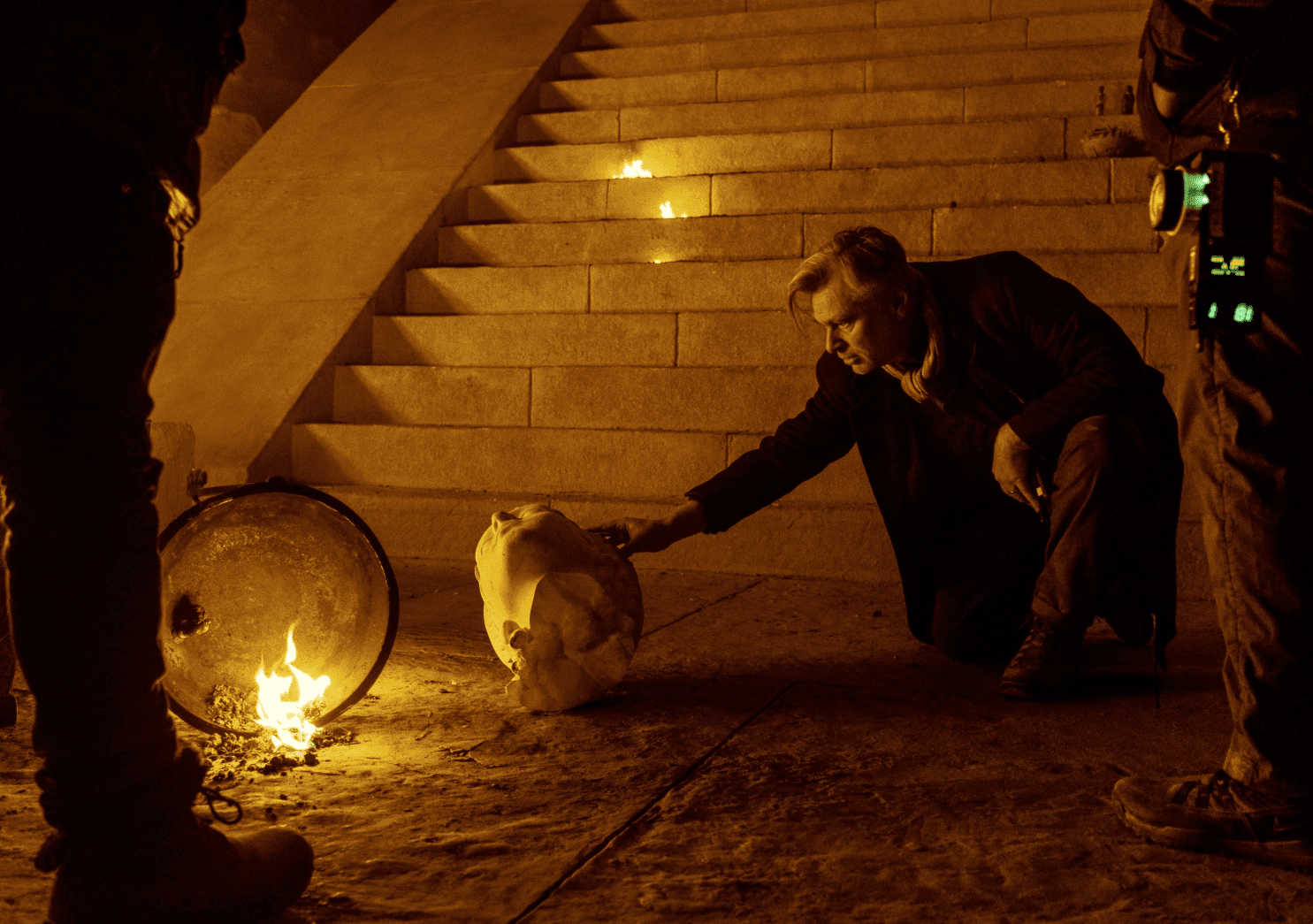
Director Christopher Nolan works on the set of his new film, “The Odyssey.” (Courtesy of Universal Pictures)


Words: YM Tunku Sophia


SPOILER WARNING: This article contains major spoilers for Christopher Nolan’s The Odyssey. Proceed only if you have seen the film or do not mind key plot details being revealed.


Dear readers of Gentleman's Code,

Forget the idea that this is a film review. Consider it a reminder instead. And here it is: Christopher Nolan just directed 2026 summer blockbuster movie to tell every man in the audience that the code is the only thing standing between him and the collapse of everything he calls civilisation. That is the entire film, laid bare.

Nolan has always chased the biggest idea in the room. He built The Dark Knight around the fragile architecture of order against chaos. He built Inception around the notion that a single planted thought can topple an empire of the mind. He built Oppenheimer around a man forever haunted by the guilt of what he created. Given that history, it makes total sense that Nolan's next ambition, his boldest yet, is a three-thousand-year-old Greek poem, and that the idea he extracts from it is law rather than adventure, monsters, or homecoming. Specifically, the law of hospitality the Greeks called xenia, which the film's characters simply invoke as Zeus's Law, again and again, until the phrase stops sounding like myth and starts sounding like a verdict.
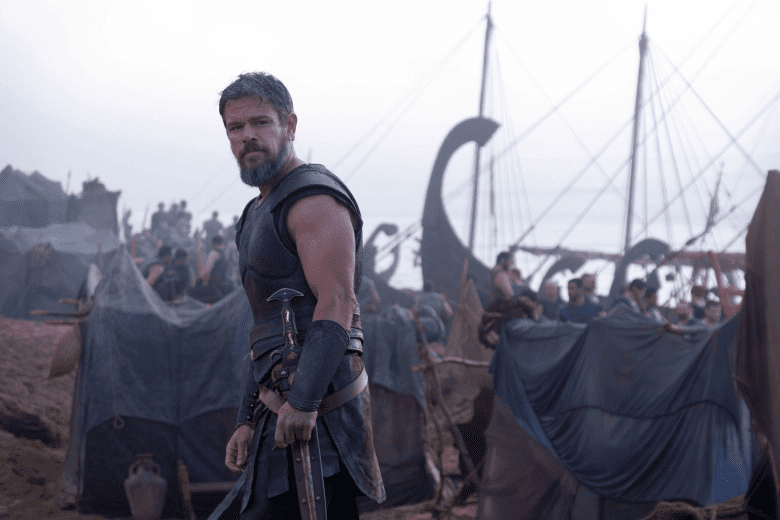
Matt Damon stars as Odysseus in "The Odyssey," written, produced and directed by Christopher Nolan. Says Nolan: (Courtesy of Universal Pictures)


Here is the code, stripped to its bones:

Welcome the stranger, however ragged he looks, because he might be a god in disguise, and because the entire fabric of a lawless world hangs on that single act of restraint. Feed him. Shelter him. Treat him with dignity. Expect the same dignity from him in return.

It is chivalry with teeth, structural rather than decorative, the load-bearing wall of an ancient society. Break it, and the world exacts payment. Sophia, watching this unfold in a cinema, felt something close to indictment. This is a gentleman's code that predates the very word gentleman.

Odysseus, played by Matt Damon, becomes the film's proof of principle. He holds the line even when the line costs him everything. He restrains himself in the cave of the Cyclops when pride screams at him to boast his own name into the wind, a moment Nolan reshapes precisely to expose the vanity underneath heroism. He corrects his men, pleads with them, tries endlessly to remind them what separates civilised sailors from the Sea People, those raiders who take whatever they want and answer to nobody. Odysseus practises chivalry because he understands, viscerally, what becomes of men who abandon it.

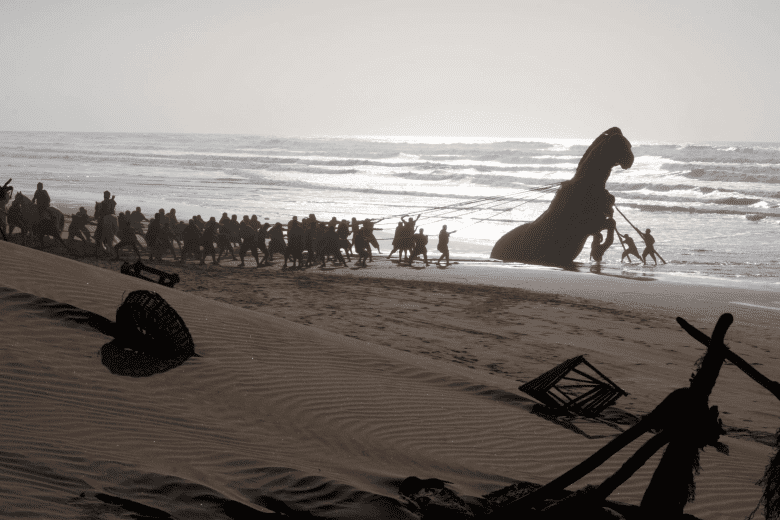
The fall of Troy. (Courtesy of Universal Pictures)


This is where the film turns genuinely savage. One by one, Odysseus's crew vanish, and their deaths arrive as consequence rather than accident or spectacle. They devour cattle that belong to a god. They plunder a village that offered them welcome instead of war. They mistake a host's home for conquest rather than shelter. And the sea, the gods, the story itself, whichever force you believe is doing the punishing, closes over every one of them in turn. Nolan makes the arithmetic explicit: disobedience carries a body count, paid in full. By the time Odysseus reaches Ithaca alone, stripped of every man who sailed with him from Troy, the film has already shown its reasoning. A code that only matters when convenient was merely a suggestion wearing the costume of a law.

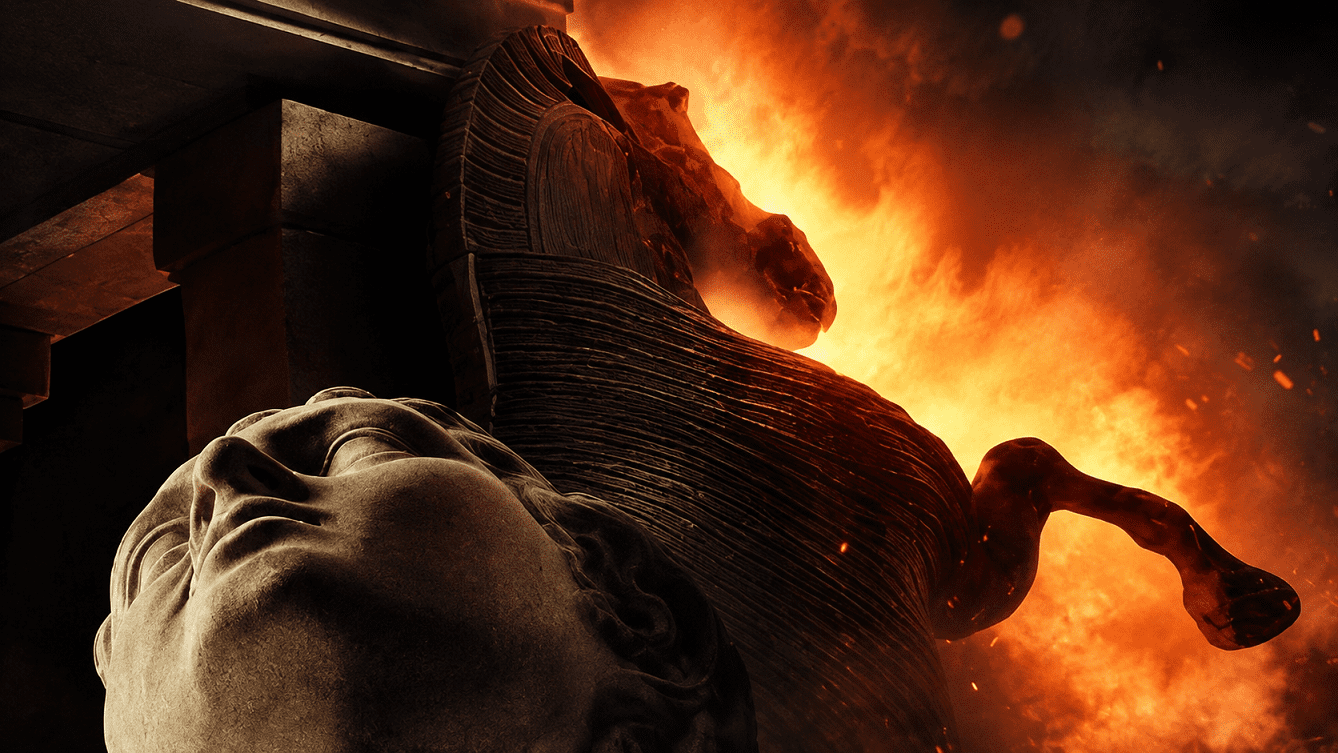
Then the ending delivers its real gut-punch. Odysseus finally confronts his own original sin: the Trojan Horse, remembered by history as a triumph of cunning, was in truth a gift twisted into a weapon, hospitality itself corrupted into ambush. He has carried that guilt across eighteen years of ocean because, somewhere beneath the pride, he always knew he broke the law before anyone else did. Home at last, he finds Penelope's suitors committing the same sin on a smaller, pettier scale, treating an open door as entitlement and mistaking a grieving woman's patience for permission. He kills them inside his own house, and in doing so, breaks the law one final, unavoidable time. Nolan refuses him a clean ending. Odysseus hands the throne to Telemachus, the one character in the film who actually absorbed the code rather than merely repeating its name, and sails away into exile alone, carrying his dead to a distant shore.

Writer-director Christopher Nolan's nonlinear approach to "The Odyssey" allows the Trojan Horse to appear in different points in the film. (Courtesy of Universal Pictures)


That is the unfiltered truth Gentleman's Code exists to say aloud: the code was always about something deeper than manners. It was always about something more than which fork to use or how generously to tip a valet. It measures what a man does when nobody forces him toward the right choice, and what happens to him, and to everyone tethered to him, the moment he decides the rules can bend just this once. Nolan has just spent nearly three hours proving that civilisation stands one broken guest-right away from becoming another Bronze Age collapse, one more empire reduced to ash and legend. Watch it purely as spectacle if that satisfies you. Sophia would rather you watch it as a warning, addressed directly to every man who has ever assumed decency was a courtesy rather than a debt.

There is a reason the suitors read as villains from their very first scene, long before a single sword is drawn. They never earned their welcome. They simply claimed it, again and again, mistaking a household's grief for an invitation, mistaking silence for consent. Every gentleman watching this film should feel the discomfort of recognising some version of that entitlement in himself, however small, however well disguised as charm.


RELATED READING: Nine Worthies: Legendary men of chivalric ideals and their enduring legacies

About the Author

Y.M. Tunku Sophia

Tunku Sophia brings a rarefied sensibility to GC, where her role as Editor-at-Large extends far beyond editorial finesse. She is both a custodian of heritage and a tastemaker of modern refinement - navigating the intersections of nobility, intellect, and global sophistication.

Educated in Europe and raised amidst the protocols of international diplomacy, Tunku Sophia has cultivated a lifelong devotion to the codes of high society - those unwritten rules that govern elegance, discretion, and true class.

Her editorial lens champions a revival of chivalry in a world increasingly enamoured with the superficial. Whether spotlighting princely heirs who exude understated gravitas or offering unflinching critiques of nouveau extravagance, Tunku Sophia remains committed to the pursuit of timeless values in an age of fleeting trends.

Related posts