
12.10.2026

Prince Abdul Mateen's speech at the 81st UN General Assembly: Chivalry is back

In the hours when the world’s stakes are highest, Prince Abdul Mateen showed it at the 81st UN General Assembly with calm, courtesy and a promise kept.
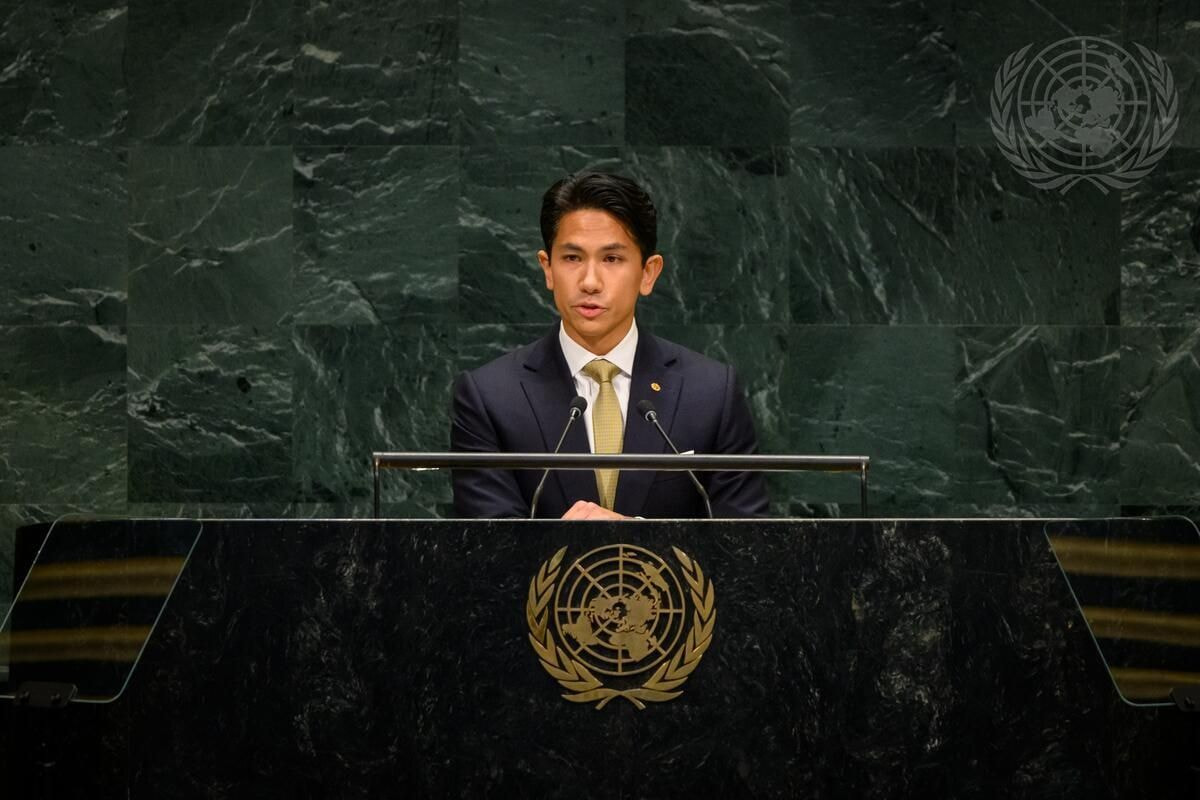
His Royal Highness Prince ‘Abdul Mateen Ibni His Majesty Sultan Haji Hassanal Bolkiah Mu’izzaddin Waddaulah, Minister of Foreign Affairs of Brunei Darussalam, has taken the podium at the 81st Session of the United Nations General Assembly to deliver Brunei Darussalam’s national statement.

Credit: United Nations.


Words: Tunku Sophia


Has chivalry come back to us, and would we recognise it if it walked into the room?

I believe it has, and I believe I saw it at the 81st session of the UN General Assembly, in the hour when the world’s attention rests on its most delicate questions. H.R.H. Prince ‘Abdul Mateen, Minister for Foreign Affairs for Brunei Darussalam,took his place before the nations, and I found myself smiling before he had finished his first paragraph. There was no flourish and no reaching for the room. He stood as someone who knows that grace does not need to announce itself. It is in such hours, when the stakes are at their highest, that a person’s manners show what they are made of.
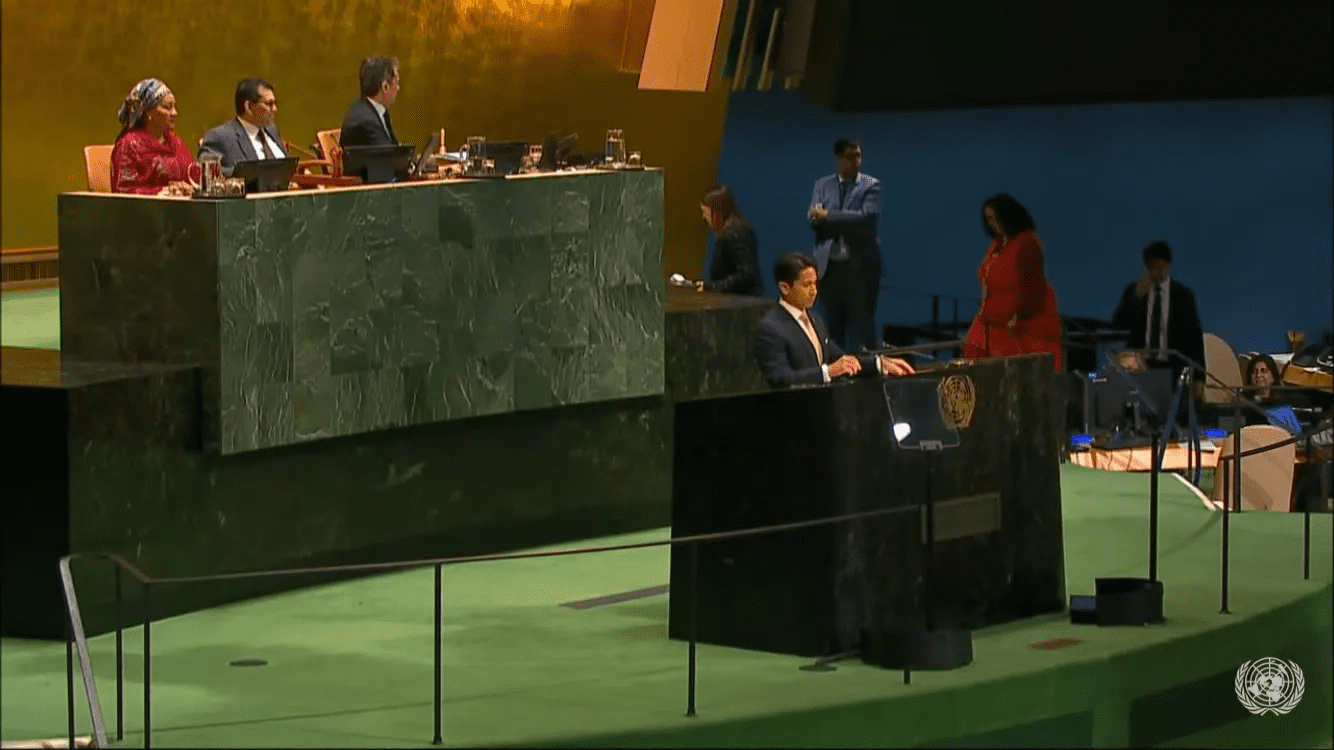

His Royal Highness Prince ‘Abdul Mateen Ibni His Majesty Sultan Haji Hassanal Bolkiah Mu’izzaddin Waddaulah, Minister of Foreign Affairs of Brunei Darussalam, has taken the podium at the 81st Session of the United Nations General Assembly to deliver Brunei Darussalam’s national statement.

Credit: United Nations.


He began with trust, which he said is difficult to build, and warned that without it institutions become arenas for accusation. He said it without reproach, in the tone of a host reminding guests of the beauty of the table they share. Then came the sentence I have carried since: “Rebuilding confidence does not mean returning to a world that no longer exists.” It honours what has been without asking anyone to stay there. Reform, he added, must be felt beyond the Hall, and should not rest in the arrangement of chairs.

Here is where chivalry returned, as our grandfathers taught it. The strong do not take the largest chair. They make sure each person is offered one, and they greet that person by name. For Brunei, he said, multilateralism assures that sovereignty is respected, that every nation, irrespective of size, has a voice, and that international law protects the weak as surely as it restrains the strong. The Charter, he said, cannot mean one thing in one moment and another in the next. It is the courtesy of someone who believes each guest has a story worth hearing.

He spoke of the Palestinian people, who have waited for generations for “justice, statehood and dignity,” and asked for one standard for all. He called for a ceasefire, open humanitarian access and the protection of civilians. He asked, too, that those who serve under the UN flag be protected, and noted that Brunei co-sponsored Security Council Resolution 2823 for that purpose. He said it all with tenderness, and I felt it in the room. Strength that is gentle is the kind that stays with you.

He then turned to home. ASEAN, he suggested, shows how differences can be met with dialogue and restraint, and this year the Treaty of Amity and Cooperation marks fifty years. A country, he reminded us, is strong when its people are strong, which places the human being at the centre of every policy.

In the same week, he deposited Brunei’s ratification of the BBNJ Agreement for the protection of the oceans. I smiled at that too. A speech about trust, and a signature that keeps a promise. A lady learns early to trust the man whose actions arrive on the same day as his words. He closed by asking the Assembly to “honour the promises we have already made.” He had already begun.

Afterwards I thought about the young men who read GC, and I could not help picturing the prince as he is remembered on the polo field: a knight in modern dress, mallet in hand, riding with the easy poise of one who has nothing to prove. The same hands that guide a spirited horse with a light touch now guide a delegation through the great halls of the world, and I found it a lovely thing that the gallantry never left him. It simply changed fields. The field is now diplomacy, the mallet is a measured word, and the code he rides by is the one our ancestors honoured, in which strength is something you place gently at the service of others.

In him I see our hope of the ancient code of chivalry, and I hope the young men who read GC will carry away three small gifts from this prince. The first is that composure is the most elegant form of confidence, because a calm bearing invites the room to listen. The second is that a gentleman is truly measured by his courtesy toward the smaller voice. The third is that a promise kept quietly gives every public word its weight.

I have seen many speeches. From the Tunku and Tun. I have admired the polished and the inspirational. Yet it is the calm ones that I remember, because they leave behind a feeling, and feelings last longer than phrases.

So, has chivalry come back?

I believe it has. It came in a quiet voice, and the whole Hall, quite without being told to, lowered its own to answer.


RELATED READING: Chivalry isn’t about opening doors, but elevating society in its hour of maximum danger

RELATED READING: Merdeka Heroes: The 8 Malaysian men in 2026 who embody chivalry, heroism, and sacrifice

About the Author

Y.M. Tunku Sophia

Tunku Sophia brings a distinctive sensibility to GC as Editor-in-Chief, serving as both custodian of heritage and advocate of modern refinement. Educated in Europe and shaped by the world of international diplomacy, she advocates the codes of elegance and high society.

Her editorial vision champions timeless values, reviving chivalry and celebrating the intersection of nobility, intellect and understated sophistication in an age of fleeting trends.

Related posts