

09.08.2026

GC EIC speaks: Chivalry is dying in 2026, and neither modern men nor women are fully ready for what replaces it

Chivalry's old rules are being rewritten. GC explores what respect, generosity, and care look like between equals, and what a modern gentleman's code actually asks of him now.
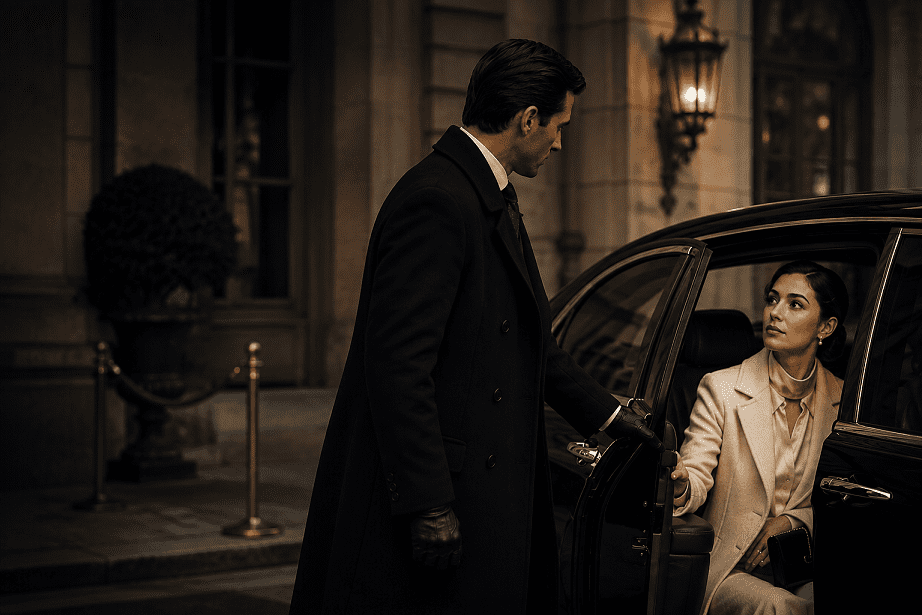
GC illustration.


Words: Raja Izz


A male reader wrote to us recently with a question that, at its core, is genuinely worth exploring: chivalry, as a code, was built for a particular era. Men protected, provided, opened doors. Women were cared for, and walked through them. That era has moved on, and it's worth asking what chivalry looks like now that so much has changed.

This is a conversation with real history behind it, though GC has largely approached the subject through aesthetics, the suit, the gesture, the manners, rather than the deeper question underneath: what is chivalry actually for, now that the world it was built around looks so different?
From l to R: John Wick, Ghost of Tsushima.


A BRIEF HISTORY OF THE CODE

Chivalry began centuries ago as a code for knights: courage, loyalty, generosity toward the weak, and, eventually, courtly devotion toward women. Over time it drifted from the battlefield into the drawing room, becoming a set of social manners: the held door, the offered coat, the walk on the traffic side of the pavement. These gestures carried real meaning once, symbols of protection in a world where protection genuinely mattered.

Each generation since has inherited the gestures while quietly renegotiating the meaning behind them. What counted as protective devotion in one century can read as paternalism in another. This is worth remembering whenever the conversation turns tense: the code has always been in motion. What feels like a sudden shift is often simply the latest chapter in a very long story.

THE OLD CONTRACT

Traditional chivalry was, at its core, an exchange. Men offered protection, resources, and deference; women occupied a role shaped by domesticity and care. It was rarely universal in practice, and its elegance in theory often exceeded its elegance on the ground, but as a cultural script it was legible. Everyone understood their part, and the clarity itself was a kind of comfort.

That script has been evolving for decades, alongside a world that grew around it rather than despite it. Women today build careers, own property, propose marriage, and are, in most of the societies GC's readers live in, equals in every material sense. A code built around one set of assumptions was always going to need updating once those assumptions shifted. It has, and continues to.

A NEW CONTRACT, STILL TAKING SHAPE

What's emerging is a contract still finding its final form. Call it modern chivalry, or simply mutual respect: the idea that courtesy, generosity, and care are offered freely between equals who choose to extend them to one another, rather than assigned by role. This is, in many ways, a more honest arrangement than the old one. And like any honest arrangement still being worked out, it comes with real, human questions both men and women are navigating together.

Who pays on a date. Who initiates. Whether being looked after still feels welcome, or whether independence is what's wanted instead. These remain living questions, open to real answers, which is a good thing: it means the answer gets to be personal rather than prescribed. Some women want doors held and bills split evenly. Some want an entirely different balance. Some men find real joy in generosity that's reciprocated in kind; some women want to feel both capable and cherished, on their own terms. Every one of these preferences deserves room, and the range itself is part of what makes the current moment interesting rather than merely difficult.

What often helps most in this evolving conversation is treating it as a shared project between two willing participants, rather than terms handed down by one side for the other to simply accept. A gentleman raised on the old code deserves genuine conversation about what the new one asks of him. A woman who wants equality in ambition and partnership in cost, while still wanting to feel cherished, is asking for something GC finds genuinely admirable: to be seen fully, as capable and worthy of care, both at once.

Prince Harry and Meghan Markle.


WHAT RESPECT LOOKS LIKE NOW

If chivalry is going to keep meaning something, it's likely because it becomes less a fixed set of gestures and more a practice of attention: noticing what the person in front of you actually wants, rather than performing what tradition or trend suggests they should want. This is a more demanding, and ultimately more rewarding, discipline than opening a door purely from habit. It asks a man to read the room, ask rather than assume, and stay genuinely curious about an answer that might differ from what he expected.

It also invites a broader shift in how the conversation around gender gets held: recognising that pointing toward where men can grow leaves room for genuine respect for men as a whole, and that adjusting to a changing world can honour what was good about the old one even while building something new. Holding both at once is entirely possible, and GC believes most men and women already lean this way, given the chance.

Practically, this might look like a couple discussing, early and honestly, what generosity means to each of them, rather than assuming the other shares an inherited script. It might mean a man offering care as a genuine gift rather than an obligation, and a woman receiving it as exactly that, a gift, freely given and freely accepted, rather than a debt either side is quietly keeping score of. Small, ordinary conversations like these tend to do more for a relationship's health than any grand gesture borrowed from an older era.

THE QUESTION WORTH SITTING WITH

Chivalry was, at its deepest level, always more about character than gender. It was about restraint, generosity, and dignity, offered freely to someone a man is choosing to treat well. That part remains constant. What continues to evolve is who that care is extended to, and how, shaped by conversation rather than assumption.

The gentleman's code GC has always championed, character over convention, was built to move with the times it serves. The current evolution is proof the conversation is very much alive, and worth having with curiosity rather than defensiveness. The task ahead is simply to keep building, together and in good faith, a code that reflects who we are becoming, alongside everything worth keeping from who we used to be.

Have a perspective on this worth adding to the conversation? GC welcomes reader correspondence for future features. Write to us.


RELATED READING: Nine Worthies: Legendary men of chivalric ideals and their enduring legacies


About the Author

YM Raja Izz

Raja Izz (MBA) is the co-founder and Editor-in-Chief of Gentleman's Code (GC), a publication devoted to elegance, cultivated taste, and the art of refined living.

Since its founding in 2018, under Raja Izz’s discerning guidance, GC has achieved distinction on the global stage: honored at the LUXLife 9th Annual LUX Global Excellence Awards 2025 as Men’s Luxury & Culture Thought Leaders of the Year – Asia, and lauded as one of the Top 20 Digital Men’s Magazines on the Web by for five consecutive years.

With his signature blend of gravitas and grace, Raja Izz shuns the spotlight. Instead, he builds the platform - for others to rise, for noble values to return, and for men to remember who they once aspired to be.

Instagram

Related posts